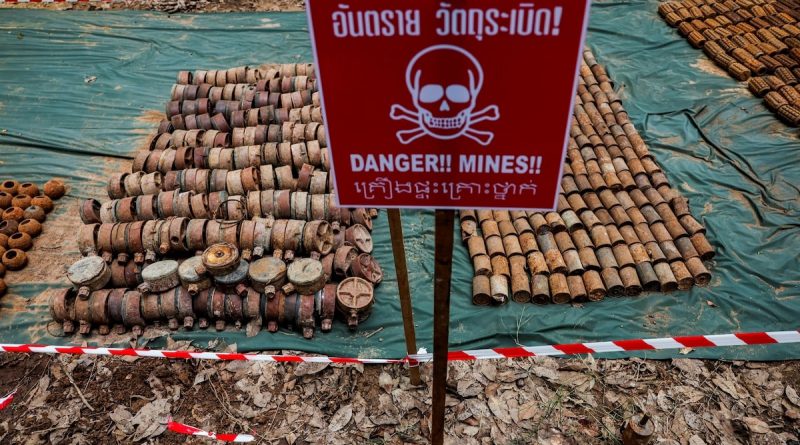
Landmine Casualties Surge to Four-Year High as Treaty Withdrawals Raise Global Concerns
Geneva — Landmine casualties reached a four-year high in 2024, rising sharply across conflict zones and highlighting concerns over global humanitarian security.
A new international report shows a persistent surge in both fatalities and injuries, driven by ongoing violence in several regions and the growing number of states withdrawing from the longstanding global treaty banning anti-personnel landmines.
The data indicates more than 6,000 landmine-related incidents last year, marking the highest figure since 2020.
Nearly 90 percent of the victims were civilians, demonstrating the continued impact of these explosive remnants on communities far removed from active frontlines.
Women and children accounted for almost half of those harmed, underscoring the multi-generational nature of landmine risk.
Humanitarian observers say the numbers reflect both renewed conflict and the increasing presence of leftover ordnance in areas where displaced people are returning.
Syria and Myanmar recorded some of the most severe spikes, driven by intensified fighting and the unsafe return of residents to previously contested territories.
In Syria, unexploded ordnance remains scattered across former battlegrounds, posing immediate danger to families rebuilding their lives.
Myanmar, meanwhile, reported more than 2,000 incidents, the highest globally. Both state military forces and armed groups have been cited in the report for extensive mine deployment across several regions.
The Mine Ban Treaty, which came into force in 1999, currently binds 166 countries and prohibits the use, stockpiling, production, and transfer of anti-personnel mines. It also obligates member states to clear contaminated land and provide assistance to survivors.
However, several European nations have begun legal processes to withdraw from the treaty, citing heightened security concerns and rising geopolitical tensions.
This shift has raised alarms among disarmament advocates who warn that the trend could weaken the decades-old global norm against landmine use.
Estonia, Finland, Latvia, Lithuania, and Poland are among the states moving toward formal withdrawal, prompted by what they describe as growing military threats.
Analysts say the departure of these countries could set a precedent that undermines broader international commitments to mine prohibition.
Ukraine also announced its exit earlier this year, with officials arguing that the move would support defensive operations amid ongoing conflict.
Military experts say the withdrawal may significantly alter the regional security landscape as the war continues.
The report additionally cites new instances of mine use in Ukraine, alongside allegations exchanged between Thailand and Cambodia following a border clash last July.
Cambodia denies deploying anti-personnel mines, while Thailand maintains its claims based on debris found in affected areas.
Russia and Myanmar, both non-signatories to the treaty, remain among the most extensive users of landmines according to the findings.
Their continued reliance on these weapons contributes to widespread contamination and long-term risks for civilians.
Another concern highlighted in the report is the decline in donor funding for mine clearance and survivor assistance programs.
Several major funding contributors have reduced support, resulting in the scaling back of humanitarian projects in multiple countries.
Budget cuts, including reductions in global assistance programs, have slowed clearance operations and forced some initiatives to shut down entirely.
Aid groups warn that without sustained funding, casualty numbers may continue to climb in coming years.
Member states to the Mine Ban Treaty are meeting in Geneva this week to discuss the rising challenges and reaffirm commitments to the treaty’s obligations.
Delegates are expected to examine the implications of recent withdrawals and the urgent need to strengthen international cooperation.
Humanitarian organizations emphasize that landmines continue to endanger communities long after fighting ends.
They call for renewed political will, sustainable funding, and broader adherence to the global ban to prevent future loss of life.