Global Nuclear Experts Convene in Riyadh to Address Emerging Risks and Future Preparedness
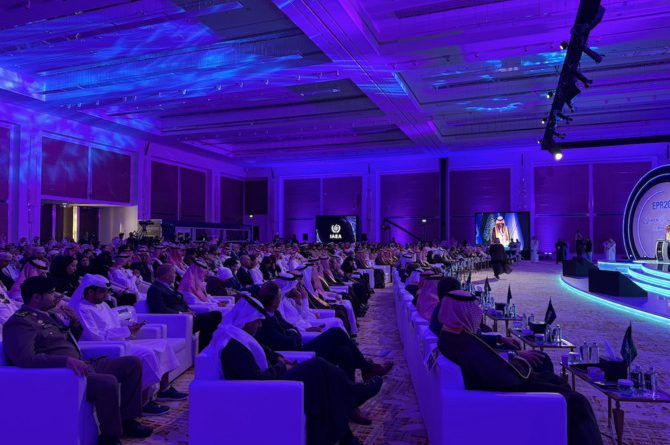
Riyadh – The International Nuclear Emergency Preparedness and Response Conference opened in Riyadh on Monday, bringing together global experts to assess rising nuclear-related risks and the evolving technologies shaping emergency management.
The four-day event, held from Dec. 1 to 4, focuses on identifying future threats and strengthening international readiness across radiological and nuclear sectors.
The gathering is organized in partnership with the Nuclear and Radiological Regulatory Commission and the International Atomic Energy Agency, creating a platform for cross-border cooperation and coordinated planning.
Delegations from multiple regions are participating in discussions that examine shifting risk landscapes, new response tools, and institutional strategies needed for modern emergency systems.
The conference began with a keynote address by its president, Khaled Al-Eissa, who emphasized the central role of institutional preparedness in handling radiological accidents.
He outlined how past incidents have shaped global policies, reminding attendees that nuclear emergencies require unified systems rather than isolated technical responses.
Al-Eissa noted that historic catastrophes such as the 1986 Chernobyl disaster demonstrated how a single event can surpass national boundaries and necessitate new standards for transparency, early warning, and shared accountability.
He said these lessons continue to influence global thinking, reinforcing the need for countries to invest in strong, multi-sectoral emergency frameworks.
He reiterated that preparedness must be proactive rather than reactive, supported by long-term planning, well-defined responsibilities, and communication networks designed for rapid crisis implementation.
According to him, progress is measured not only by reducing risks but also by the ability to respond with coordination and collective commitment when emergencies arise.
This year’s conference theme, “Building the Future in an Evolving World,” underscores the challenges posed by modern hazards and technologies.
Sessions concentrate on anticipating new risks, adapting to changing threat profiles, and integrating innovative tools that can strengthen nuclear and radiological emergency response.
IAEA Director-General Rafael Mariano Grossi addressed participants via video, stating that traditional preparedness systems must evolve as global conditions transform.
He emphasized that modern risks differ significantly from those predicted a decade ago, urging nations not to rely solely on outdated scenarios.
Grossi highlighted three pillars needed for effective preparedness — trust, understanding of emerging risks, and investment in innovation, cooperation, and training for future generations.
He encouraged all countries to strengthen national response capabilities, expand regional partnerships, and engage fully with international conventions that govern nuclear and radiological safety.
He warned that gaps in global emergency systems pose collective vulnerabilities and stressed that preparedness and response must operate in tandem.
His remarks reinforced the central objective of building integrative systems that can adapt to technological and geopolitical changes.
Conference sessions cover a wide range of specialized topics, including decision-making during nuclear crises, emergency systems for floating and mobile reactors, and strategies for managing small modular reactor incidents.
Speakers are also addressing best practices for building resilient public health workforces capable of supporting radiological emergency responses.
Discussions will further explore how international organizations and member states can maximize their emergency preparedness and response effectiveness while maintaining sustainability and resilience in long-term operations.
Participants aim to identify practical frameworks that can be implemented at national and regional levels.
The event is being livestreamed to broaden public understanding of nuclear and radiological emergency issues, reflecting a growing global focus on transparency and public-facing communication.
Organizers say that increasing awareness is a key component of improving safety, especially as nuclear technologies expand across multiple sectors.
Attendees include representatives from emergency services, medical response teams, civil protection agencies, law enforcement bodies, nuclear industry professionals, researchers, and academics.
The diverse participation highlights the multidisciplinary nature of nuclear emergency management and the importance of cross-sector cooperation.
As the conference progresses, experts are expected to propose updated guidelines, collaborative frameworks, and technology-driven solutions designed to support global preparedness in an era of rapidly shifting threats.
The discussions held in Riyadh may help shape future international standards and strengthen collective resilience against radiological and nuclear risks.