UK’s Starmer Says China Presents Security Concerns while Calling for Deeper Business Cooperation
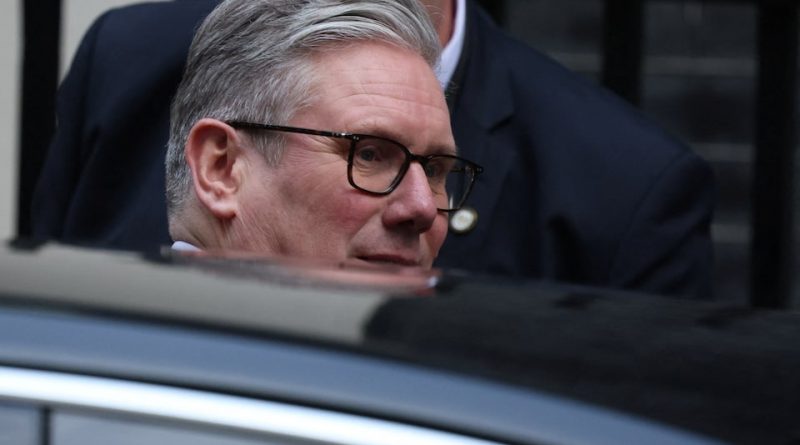
London – UK Prime Minister Keir Starmer has stated that China presents national security concerns for Britain, while simultaneously urging stronger business engagement, arguing that economic cooperation with Beijing remains firmly in the national interest.
Starmer’s government has placed recalibrating relations with China among its key foreign policy priorities. However, the bilateral relationship has experienced continued strain due to allegations of espionage activities that London has previously linked to Beijing.
Speaking to business leaders in London, the prime minister said that the UK’s approach over the past decade has shifted too frequently, creating an inconsistent and unclear policy direction. He argued that Britain must establish a stable, long-term framework guiding how it collaborates with China.
Starmer said that the relationship should avoid the extremes of either overly optimistic enthusiasm or rigid distrust. He described this new direction as a “serious approach” that acknowledges both risks and opportunities.
He emphasised that Britain can maintain open channels for trade and dialogue while also implementing firm measures to protect its national security. This balanced model, he said, is essential for guiding future cooperation with a major global power.
Starmer’s comments on national security come shortly after the collapse of a high-profile espionage trial earlier this year, which prompted questions about how the UK publicly characterises security challenges linked to China.
The Chinese embassy in London issued a response criticising the remarks and describing them as unfounded. The statement said Beijing viewed such characterisations as inaccurate and not conducive to stable bilateral relations.
Starmer also criticised the previous Conservative government, arguing that it allowed relations with Beijing to erode. He referred to this deterioration as avoidable and said it represented a missed opportunity for British diplomacy.
He drew comparisons with other European leaders, noting that French and German leaders have visited China multiple times in recent years. In contrast, the last British prime minister to visit China was Theresa May in 2018.
According to government sources, Starmer is preparing for a formal visit to China next year. This follows recent visits by several UK cabinet ministers since the Labour government took office, signalling efforts to rebuild structured engagement.
The prime minister rejected the idea that the UK must choose between economic benefits and national security protections. He said his government would not compromise security for increased economic access, describing security as the country’s “first duty”.
At the same time, Starmer encouraged UK companies to expand trade with China when operating in sectors without significant security risks. He highlighted industries such as finance, professional services, pharmaceuticals, creative industries, and luxury goods, describing them as strong avenues for potential growth.
Starmer said that the UK government will support businesses seeking to enter or expand within the Chinese market where appropriate safeguards exist. He framed trade expansion as an important tool for strengthening Britain’s global competitiveness.
He stressed that cooperation is possible when built on clear boundaries, transparency, and strategic planning. He added that mutual economic engagement does not diminish the need for precautions in sensitive areas.
The speech reflects the Labour government’s attempt to redefine Britain’s China policy away from reactive shifts and toward a stable, pragmatic middle path. Officials say this model will allow the UK to manage economic opportunities while maintaining security partnerships.
Starmer’s remarks also signal an effort to provide clarity to the business community, which has sought consistent guidance on trade relations with China. Analysts say the UK’s challenge is to preserve competitiveness while aligning with its security commitments.
The prime minister said the government aims to build resilient diplomatic and commercial links, while at the same time ensuring that the UK remains protected in an era of rapid geopolitical change.