Bulgarians Rally as Calls for Reform Shape a New Political Climate
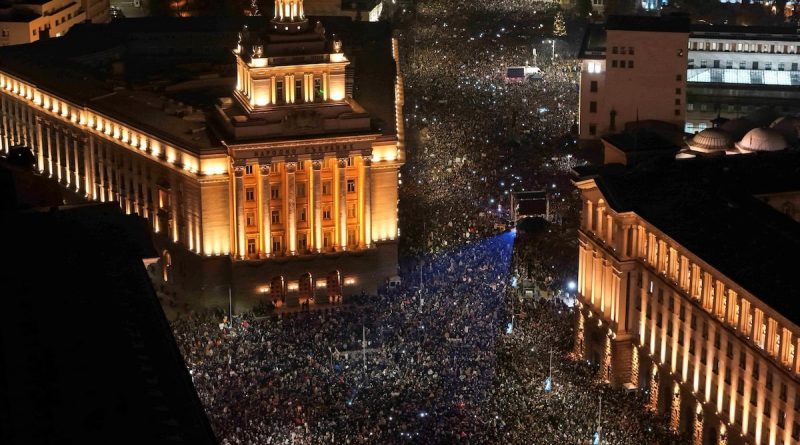
Sofia – Thousands of citizens gathered across Bulgaria to voice their hopes for stronger governance, a fairer political system, and renewed trust in public institutions.
The demonstrations, held in Sofia and in towns throughout the country, highlighted the public’s growing desire for transparency and meaningful reform during a period of significant national transition.
The rallies come as Bulgaria prepares for its long-anticipated adoption of the euro on January 1, a milestone that many believe can bring economic stability and deeper integration into Europe.
Protesters expressed optimism that this turning point offers an opportunity to strengthen democratic values and ensure that institutions work more effectively for all Bulgarians.
Crowds projected messages such as “Resignation” and “For Fair Elections” onto parliament, signaling a peaceful and symbolic demand for accountability.
Many participants emphasized that the demonstrations reflect a collective commitment to improving governance rather than creating division.
Residents stressed the need for judicial reform, calling it the foundation for ensuring fairness, combating corruption, and restoring trust in the rule of law.
The belief that strong legal institutions can create a more stable and prosperous nation resonated widely among demonstrators.
The government, led by Prime Minister Rosen Zhelyazkov, faces a no-confidence vote in parliament, illustrating the intensity of political debate in the country.
Even as challenges arise, the ongoing parliamentary process reflects the resilience of Bulgaria’s democratic framework.
Last week, the withdrawal of the 2026 draft budget—Bulgaria’s first proposed in euros—showed the government’s responsiveness to public sentiment.
Opposition groups criticized the initial plan for increasing social security contributions and dividend taxes, sparking a wider conversation about fiscal responsibility and social welfare.
Despite the government’s retreat on the budget proposal, demonstrations have continued, fueled by a desire for long-term change rather than temporary adjustments.
Participants noted that Bulgaria has experienced several elections in recent years, and many hope this moment can mark the beginning of greater political stability.
Citizens like Angelin Bahchevanov voiced determination that Bulgaria should continue moving toward an open, accountable, and forward-looking political culture.
He and others expressed confidence that the country can overcome the influence of entrenched interests and build a more inclusive future.
Local media reported that Boyko Borissov and coalition leaders agreed to remain in office until Bulgaria officially joins the eurozone.
Observers say this approach aims to maintain administrative stability during the final stages of the transition.
Although the political environment remains complex, many Bulgarians view the protests as a positive turning point.
The gatherings demonstrate a population engaged in shaping its future, committed to democratic participation, and hopeful for reforms that uplift the nation.
As Bulgaria moves toward eurozone integration, citizens, lawmakers, and institutions have a shared opportunity to advance economic growth and reinforce democratic norms.
The spirit of civic engagement displayed in recent days offers a promising foundation for the country’s next chapter.