Diplomacy and Democratic Aspirations Shape a New Chapter in Venezuela–US Relations
Oslo – Venezuela and the United States are navigating a tense yet transformative moment, as international attention focuses on political change, diplomacy, and the future of democratic governance in the South American nation.
Recent developments have brought renewed global focus to Venezuela’s long-running political crisis. While tensions have risen, international actors are increasingly framing the moment as an opportunity for dialogue and peaceful transition.
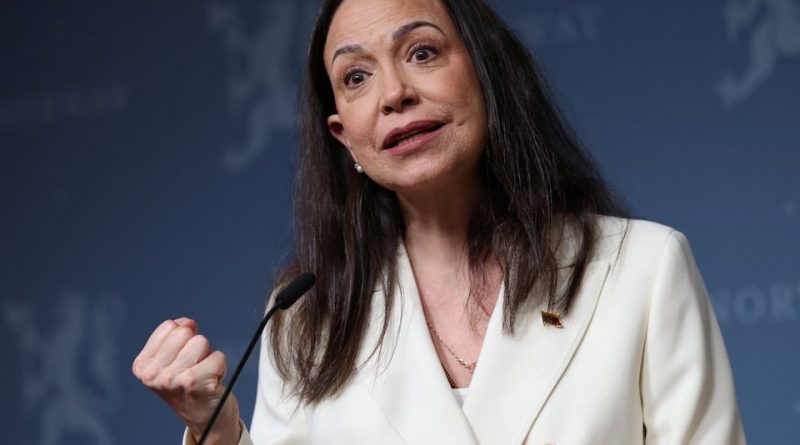
At the center of global attention is Venezuelan opposition leader and Nobel Peace Prize laureate Maria Corina Machado. Her appearance in Oslo to receive the Nobel Prize has been widely interpreted as a symbol of resilience and democratic aspiration.
Machado defied significant personal restrictions to attend the ceremony, emphasizing her commitment to nonviolent change. She described the recognition as belonging not only to her, but to millions of Venezuelans seeking dignity and political voice.
In her remarks, Machado reiterated her vision for a peaceful transition of power. She stressed that lasting change must come through civic engagement, international solidarity, and respect for democratic principles.
Meanwhile, relations between Washington and Caracas have intensified following the seizure of a Venezuelan oil tanker. The incident has drawn strong reactions but also renewed debate about sanctions, enforcement, and diplomatic leverage.
The seizure marked a notable escalation in enforcement of oil-related restrictions. U.S. officials have framed the move as part of a broader effort to apply pressure while supporting political reform.
The economic impact has been significant, with Venezuelan oil exports facing renewed uncertainty. Regional analysts note that energy flows in the Caribbean and Latin America are closely interconnected, making stability a shared concern.
Despite heightened rhetoric, international observers continue to stress the importance of avoiding escalation. Many governments and institutions are calling for restraint, transparency, and renewed diplomatic engagement.
The United States has maintained that its actions are aimed at supporting democratic outcomes. Officials have emphasized that long-term stability in Venezuela depends on credible political processes and respect for human rights.
Within Venezuela, reactions remain mixed. Government authorities have condemned external pressure, while opposition supporters view international engagement as critical to breaking years of political deadlock.
Machado has sought to position herself as a unifying figure, appealing to the global community for support rather than confrontation. She has repeatedly highlighted reconciliation and institutional reform as core priorities.
Her Nobel recognition has amplified Venezuela’s situation on the world stage. For many, it represents hope that peaceful advocacy can still influence entrenched political realities.
Regional organizations and international partners continue to monitor developments closely. There is growing emphasis on negotiated solutions that prevent further economic or humanitarian strain.
Energy markets, diplomatic circles, and human rights groups all see this moment as pivotal. Decisions taken now may shape Venezuela’s trajectory for years to come.
While challenges remain, the focus on dialogue, peaceful transition, and democratic legitimacy offers a constructive path forward. Many believe sustained international engagement can help turn tension into transformation.