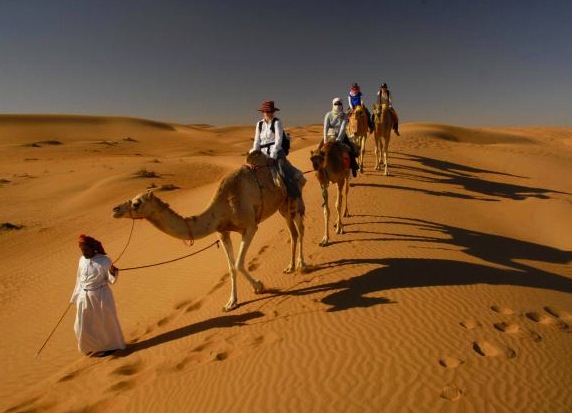
Najran’s Camels Anchor Heritage, Identity, and Living Traditions
Najran – In the southern region of Najran, camels stand as far more than a source of livelihood, embodying a deep cultural presence that continues to shape local identity and social memory.
For generations, these animals have symbolized endurance, adaptability, and harmony with nature, reflecting the rhythms of life in a land shaped by desert landscapes and ancient trade routes.
Local communities in Najran regard camels as living companions woven into family histories, oral traditions, and everyday practices passed down through centuries.
According to regional experts, Najran is home to several distinct camel breeds, each carrying unique physical traits and cultural significance tied closely to the environment.
Among the most prominent is the Awarik camel, an ancient Arabian lineage associated with areas where arak trees grow naturally across southern Arabia.
These camels are known for their light coloring, minimal hair, and exceptional ability to thrive under harsh climatic conditions, making them ideal for desert life.
Equally significant are the Majahim camels, recognizable by their deep black or brown hues and admired for their strength, stamina, and high milk production.
They have long supported pastoral families, offering sustenance and economic stability in remote areas where resilience is essential.
The Asayil camels hold a special place in Najran’s cultural landscape due to their sleek build, elegance, and remarkable speed.
Often associated with competitions and ceremonial events, they represent agility, refinement, and pride among camel owners.
Traditional water systems, locally known as Odood, have played a crucial role in sustaining camel herding across Najran and the surrounding Empty Quarter.
These permanent wells and artesian sources provided reliable access to water, allowing herders to traverse vast grazing lands with confidence and continuity.
Designed with dedicated drinking basins for camels, these wells stand as evidence of human ingenuity shaped by centuries of coexistence with nature.
Notable water points such as Al-Minkhali, Abu Shadid, Hamra Nathil, Tamani, Umm Al-Wahat, and Khujaima remain deeply embedded in regional memory.
Beyond their practical value, camels occupy a profound symbolic space within Arab culture, literature, and collective imagination.
Scholars explain that stories, poetry, and legends spanning thousands of years have portrayed camels as emblems of patience, loyalty, power, and grace.
In Najran, this symbolic connection is reinforced by archaeological sites that preserve ancient carvings and artwork depicting camels alongside human figures.
Locations such as Al-Ukhdood, Mount Al-Tharwa, and Hima reveal how deeply intertwined camels have been with daily life and belief systems since antiquity.
These visual records highlight not only economic reliance but also emotional and spiritual bonds formed between people and animals.
Saudi Arabia’s broader commitment to camel heritage has further strengthened Najran’s cultural narrative in recent years.
The designation of 2024 as the Year of the Camel underscored the animal’s role in national history, cultural identity, and sustainable development.
This initiative brought global attention to camels as valuable contributors to food security, heritage tourism, and ecological balance.
Annual celebrations and festivals dedicated to camels reinforce preservation efforts while educating younger generations about traditional knowledge.
In Najran, these efforts resonate deeply, ensuring that camels remain living symbols rather than fading relics of the past.
As modernization advances, the enduring presence of camels continues to connect Najran’s people to their roots, landscapes, and shared cultural soul.
Through heritage, resilience, and reverence, Najran’s camels remain central to a story that bridges ancient traditions with contemporary pride.