Putin Signals Openness to Territorial Compromise as Diplomatic Efforts on Ukraine Continue
Moscow – Russia’s diplomatic messaging around the Ukraine conflict appears to be entering a more flexible phase, with President Vladimir Putin indicating a willingness to consider territorial adjustments as part of a broader peace arrangement.
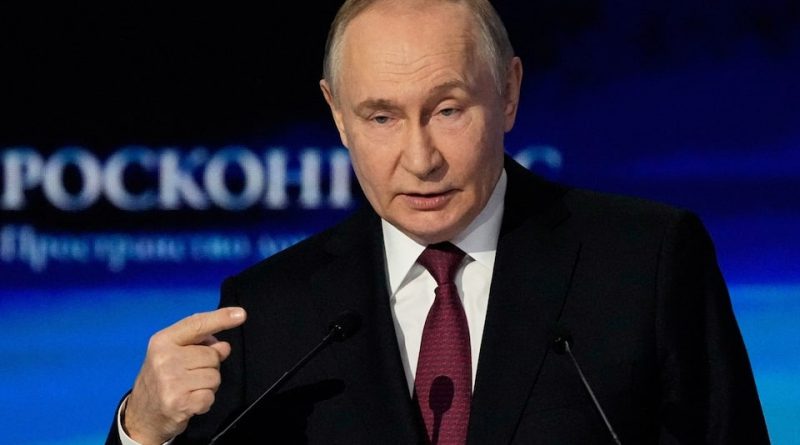
During a closed-door briefing with leading Russian business figures in Moscow, Putin outlined his vision for a negotiated settlement that could bring greater stability to the region.
According to accounts of the meeting, the Russian leader emphasized that dialogue remains possible and that pragmatic solutions are being explored alongside international partners.
Putin reportedly reiterated Russia’s long-standing position on the Donbas region, which Moscow considers central to any final agreement, while also leaving room for discussions on limited territorial exchanges beyond it.
This approach signals a renewed emphasis on diplomacy and compromise, reflecting growing international interest in ending the prolonged conflict through negotiated means.
By engaging influential business leaders, the Kremlin underscored the economic and strategic importance of a durable peace that could restore predictability and regional development.
The discussions highlighted that Moscow is prepared to revisit earlier proposals and explore creative frameworks that could bridge differences between the parties involved.
At the heart of these talks is the idea that stability in eastern Ukraine can only be achieved through clear agreements on territory, security guarantees, and economic cooperation.
Putin’s remarks suggest continuity with previous understandings discussed at high-level international meetings, while also adapting to evolving realities on the ground.
Beyond territorial considerations, the future of critical infrastructure featured prominently in the discussions, particularly the Zaporizhzhia nuclear power plant.
The facility, the largest of its kind in Europe, is seen as a key asset whose safe and efficient operation is vital for regional energy security.
Ideas reportedly under consideration include cooperative management arrangements involving international stakeholders, aimed at ensuring safety, transparency, and shared benefits.
Such proposals reflect a broader recognition that shared interests, especially in energy and infrastructure, can serve as building blocks for trust and cooperation.
On the international front, diplomatic engagement has intensified, with multiple channels open between Russia, Ukraine, the United States, and European partners.
These talks are part of a wider effort to formulate a comprehensive framework that balances sovereignty concerns with long-term regional stability.
The involvement of senior envoys and high-level negotiators underscores the seriousness of current efforts to move closer to a negotiated resolution.
While differences remain, incremental progress has been reported on several points, suggesting that sustained dialogue is yielding constructive outcomes.
Russia’s leadership has repeatedly stressed that any agreement must address security considerations and reflect realities acknowledged by all sides.
At the same time, Moscow’s openness to discussion indicates an understanding that compromise is essential to achieving a lasting peace.
Observers note that framing the talks around economic recovery, energy cooperation, and regional development could help shift the focus from confrontation to collaboration.
The emphasis on practical solutions, including infrastructure management and economic incentives, highlights the potential for diplomacy to deliver tangible benefits.
As negotiations continue, the evolving tone from Moscow suggests a calculated effort to present Russia as engaged, responsive, and open to dialogue.
For the wider international community, these signals are being closely watched as indicators of whether momentum toward peace can be sustained.
If successful, a negotiated settlement could mark a turning point, easing tensions and opening the door to reconstruction and renewed cooperation across Europe.
The coming weeks are expected to be critical, as diplomats seek to translate exploratory discussions into concrete agreements that address core concerns on all sides.