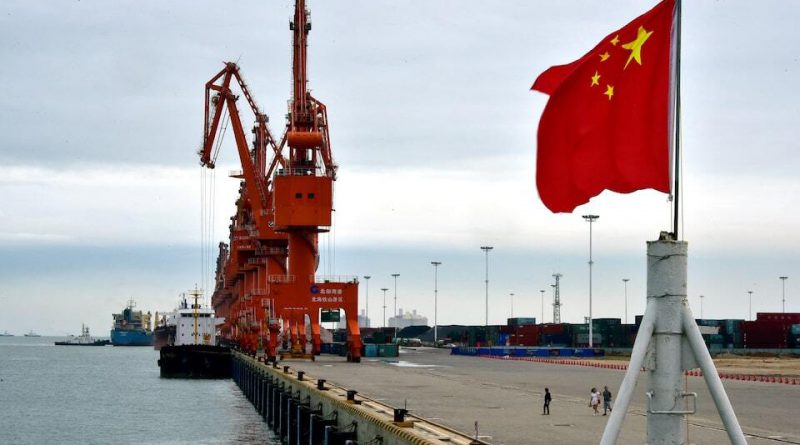
China Strengthens Trade Framework With Revised Foreign Trade Law
Beijing – China has approved revisions to its Foreign Trade Law, marking a significant step toward modernizing its trade governance and strengthening its ability to navigate an increasingly complex global economic environment.
The updated legislation reflects Beijing’s intent to reinforce economic resilience while continuing to expand openness within the world’s second-largest economy.
The revised law, set to take effect in March 2026, updates a framework first introduced in the 1990s and aligns it with contemporary global trade realities.
It emphasizes the role of foreign trade in supporting national economic and social development, positioning trade as a core pillar of long-term growth.
Chinese policymakers have highlighted that the revisions are designed to create a more predictable and transparent trade environment.
By clarifying legal provisions, the law aims to give both domestic and foreign businesses greater confidence in China’s regulatory system.
A key focus of the revised framework is the expansion of digital trade and green trade, two sectors viewed as essential to the future of global commerce.
These areas reflect China’s broader transition toward innovation-driven and environmentally sustainable economic growth.
The updated law also strengthens intellectual property protections, reinforcing China’s commitment to higher international standards.
Such measures are widely seen as important steps toward deeper integration with global trade frameworks and multilateral agreements.
By refining its legal toolkit, China seeks to ensure that trade policies are grounded in clear rules rather than ad hoc decisions.
This approach supports the country’s stated goal of advancing rule-based governance in economic affairs.
The revisions further allow for more flexible market access mechanisms, including the use of negative lists to gradually open restricted sectors.
These mechanisms provide policymakers with tools to balance national interests while encouraging foreign participation in the Chinese market.
Officials have emphasized that the law is not solely defensive but also forward-looking in nature.
It is intended to help China adapt to shifting global supply chains and evolving international trade norms.
The updated legislation also reflects China’s desire to reduce excessive reliance on any single external market.
Diversifying trade relationships and strengthening domestic legal foundations are seen as complementary strategies.
Observers note that clearer trade laws can help reduce friction between regulators and private enterprises.
By spelling out rights and responsibilities more explicitly, the revisions may limit uncertainty and foster healthier state–business relations.
China’s private exporters, which play a growing role in global commerce, stand to benefit from clearer legal standards.
The law acknowledges the increasing prominence of private firms and the need for consistent regulatory treatment.
At the international level, the revised framework signals China’s readiness to engage with high-standard trade agreements.
Aligning domestic laws with global benchmarks enhances China’s credibility as a stable and reliable trading partner.
The emphasis on digital trade also reflects China’s leadership ambitions in e-commerce, data-driven services, and cross-border platforms.
Similarly, green trade provisions support global efforts to address climate change through sustainable production and trade practices.
Taken together, the revisions underscore China’s strategy of combining openness with resilience.
They aim to ensure that the country can respond effectively to external pressures while continuing to expand cooperation.
As global trade faces rising uncertainty, China’s updated Foreign Trade Law presents a framework focused on clarity, adaptability, and long-term development.
The changes highlight Beijing’s intention to remain deeply integrated in the global economy while strengthening its institutional foundations.