Ithra Celebrates a Landmark Year Reviving Handicrafts and Cultural Memory
Dhahran – The King Abdulaziz Center for World Culture, widely known as Ithra, marked 2025 as a defining year in its cultural journey by placing handicrafts at the heart of artistic expression and collective memory.
Throughout the year, Ithra positioned craft not merely as an object of beauty but as a living language that reflects identity, heritage, and the continuity of knowledge across generations.
More than 100 local and international artists participated in over 25 thoughtfully curated programs and events, including seven major exhibitions that explored craftsmanship from historical, social, and contemporary perspectives.
These initiatives highlighted how traditional practices continue to evolve, adapting to modern creative expressions while retaining their deep-rooted cultural significance.
One of the most immersive exhibitions, Eternal Crafts: The Art of the Manuscript, introduced audiences to the refined world of Islamic illumination through papermaking, calligraphy, and gilding by master artisans.
The exhibition was complemented by interactive workshops that allowed visitors to experience the discipline and patience behind manuscript art, bridging theory with hands-on learning.
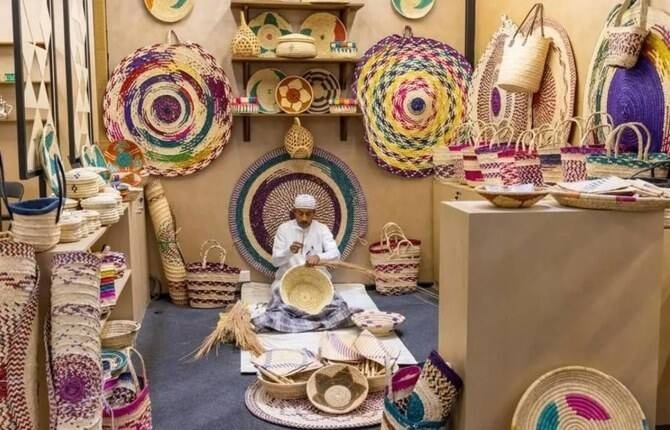
Eternal Crafts: Communal Weaving offered another dimension, presenting weaving as a collective cultural act shaped by shared labor, inherited skills, and social connection.
By reinterpreting weaving through a contemporary lens, the exhibition emphasized how communal traditions remain relevant in today’s creative landscape.
The dialogue between tradition and innovation continued through Crafts in Conversation, an exhibition that brought together contemporary artists who reimagined traditional crafts through experimental artistic practices.
Displayed alongside historical Islamic artworks from Ithra’s collection, the exhibition underscored the fluid relationship between heritage and modern creativity.
Saudi cultural identity was further explored in Continuation of a Craft: Saudi Traditional Costumes, which showcased regional attire and jewelry as expressions of craftsmanship, symbolism, and local diversity.
The exhibition revealed how materials, techniques, and ornamentation serve as visual narratives of the Kingdom’s varied cultural geography.
Women’s artistic voices took center stage in Horizon in Their Hands: Women Artists from the Arab World, which revisited the relationship between craft and modern art from the 1960s to the 1980s.
Featuring works by fifty Arab women artists, the exhibition connected personal memory with broader modernist movements shaping the region’s artistic history.
A pivotal highlight of the year was In Praise of the Artisan, which traced the evolution of Islamic crafts while positioning artisans as vital links between past knowledge and future creativity.
This theme was echoed in Baseqat: The Palm Tree Exhibition, which explored palm-based crafts and demonstrated how nature, environment, and innovation intersect in artistic practice.
Ithra’s commitment to creative development extended to the Khoos Residency, bringing artisans, designers, and artists together to reimagine palm heritage through contemporary design thinking.
The residency culminated in the documentary Sa’fa, offering a reflective visual narrative on the cultural and emotional dimensions of palm weaving.
On the global stage, Ithra expanded its cultural dialogue through exhibitions and forums in London, Dubai, and Barcelona, highlighting Islamic craftsmanship and intangible heritage.
These international engagements reinforced Ithra’s role as a cultural bridge connecting Saudi heritage with global artistic conversations.
Educational outreach remained central, with programs like the Ithra Summer Camp introducing children to crafts through interactive learning and creative exploration.
Panel discussions and guided tours further enriched public understanding, emphasizing the importance of safeguarding handicrafts as a living and evolving cultural legacy.