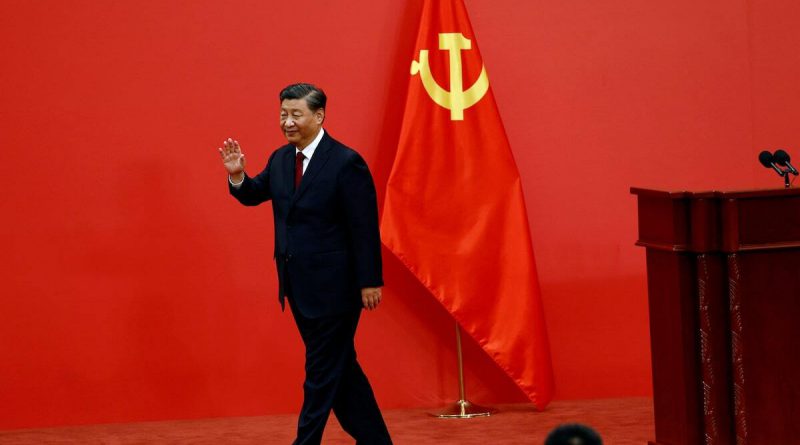
China and South Korea Reinforce Strategic Dialogue as Xi Jinping Hosts President Lee Jae Myung in Beijing
Beijing – China and South Korea are entering a renewed phase of diplomatic engagement as President Xi Jinping prepares to host South Korean President Lee Jae Myung for a state visit beginning Sunday.
The visit reflects a shared intent to strengthen regional cooperation, economic partnership, and political dialogue at a time of evolving dynamics in East Asia.
This high-level engagement comes at a moment when Beijing and Seoul are seeking greater policy coordination amid shifting geopolitical currents and regional sensitivities.
For President Lee, the visit represents a significant diplomatic milestone and an opportunity to reaffirm South Korea’s commitment to balanced and constructive regional relations.
The unusually short gap between meetings of the two leaders signals growing momentum in bilateral ties and a shared willingness to elevate cooperation beyond routine diplomacy.
China’s invitation ahead of Lee’s planned visit to Japan highlights Beijing’s recognition of South Korea’s strategic importance in Northeast Asia.
Both sides are expected to emphasize dialogue over division, underscoring stability, economic interdependence, and people-to-people exchanges as central pillars of the relationship.
President Lee has openly expressed admiration for China’s development trajectory, praising President Xi’s leadership in navigating complex global challenges.
Such remarks reflect Seoul’s broader effort to reset relations with Beijing and focus on pragmatic collaboration rather than ideological differences.
Economic cooperation is expected to take center stage, with discussions spanning advanced manufacturing, artificial intelligence, and future-oriented industries.
China remains South Korea’s largest trading partner, making stable and predictable ties essential for sustained economic growth on both sides.
The visit also reinforces mutual interest in revitalizing tourism, cultural exchanges, and business confidence following years of global disruption.
South Korea’s current leadership has articulated a policy of balance, aiming to maintain strong alliances while expanding cooperation with neighboring powers.
This approach positions Seoul as a bridge-builder in the region, capable of engaging major stakeholders through dialogue and mutual respect.
Security considerations are likely to feature in talks, particularly regarding regional stability and the evolving situation on the Korean Peninsula.
China’s role as a key regional actor places it in a unique position to facilitate communication and confidence-building efforts.
President Lee’s engagement with Beijing is also seen as part of a broader effort to diversify diplomatic options and reduce strategic vulnerabilities.
In parallel, cooperation on supply chains and critical resources is expected to gain prominence during discussions.
South Korea’s reliance on China for rare earth materials and semiconductor-related trade highlights the importance of stable economic coordination.
Both governments have recently signaled their intent to work toward resilient supply chains that support global industrial stability.
Green industries and clean technology are also anticipated to feature prominently, aligning with shared commitments to sustainable development.
The visit reflects a mutual understanding that cooperation, rather than confrontation, best serves long-term national and regional interests.
As Asia continues to play a defining role in global growth, strengthened China–South Korea ties contribute to a more predictable and cooperative regional environment.
This diplomatic engagement underscores the value of dialogue-driven leadership in addressing complex challenges and shaping a shared future.