Iran’s Leadership Faces Mounting Pressure as Protests Intensify and U.S. Actions Abroad Raise Alarm
Dubai – Iran’s ruling establishment is grappling with a widening wave of public unrest at home while closely watching developments abroad that have deepened fears within its political elite.
The recent capture of Venezuela’s long-time leader Nicolas Maduro by U.S. forces has sent shockwaves through Tehran, reinforcing anxieties about Washington’s willingness to directly intervene against governments it deems hostile.
For Iranian leaders already struggling to contain protests driven by economic hardship and political frustration, the episode has sharpened concerns that external pressure could escalate at a volatile moment.
Demonstrations that began in late December over rising prices and declining living standards have spread beyond Tehran into several cities, reflecting anger over inflation, corruption, and long-term mismanagement.
Although the protests remain smaller than the mass unrest seen in 2022 and 2023, their rapid expansion into openly political slogans has unsettled the authorities.
Chants calling for an end to clerical rule and targeting the country’s top leadership signal a deeper challenge to the system rather than isolated economic grievances.
The government’s response has been shaped by overlapping crises, including a battered economy and heightened geopolitical tensions with the United States and Israel.
Iran’s economy has been under strain for years due to sanctions, but the situation worsened after last year’s military strikes on Iranian nuclear and military facilities.
Those attacks, which killed senior security figures and scientists, disrupted already fragile negotiations with Washington over Iran’s nuclear program.
Within this context, statements from U.S. President Donald Trump warning that Washington would intervene if protesters were violently suppressed have amplified unease in Tehran.
Officials privately acknowledge that the swift U.S. action in Venezuela has narrowed Iran’s room for manoeuvre and increased the perceived risks of a heavy-handed crackdown.
Some within the Iranian establishment fear their country could become the next target of an aggressive U.S. foreign policy that prioritizes decisive action over diplomatic restraint.
Iran’s leadership has long viewed Venezuela as a kindred partner, united by shared opposition to U.S. sanctions and pressure.
Tehran has condemned Washington’s move in Caracas as a violation of sovereignty and an example of dangerous interventionism.
At the same time, officials are wary that the message sent by Maduro’s capture could embolden protesters or weaken confidence among Iran’s security forces.
Supreme Leader Ayatollah Ali Khamenei has responded by accusing foreign enemies of exploiting economic grievances to destabilize the country.
While authorities have attempted to distinguish between peaceful economic protests and what they describe as violent unrest, clashes with security forces have already resulted in fatalities.
Rights groups report that at least 17 people have been killed, while the government says members of the security services have also died and dozens have been injured.
The leadership is trying to preserve a sense of national unity that briefly emerged after last year’s military confrontation with Israel and the United States.
However, sustaining that unity has proven difficult as daily economic pressures continue to erode public patience.
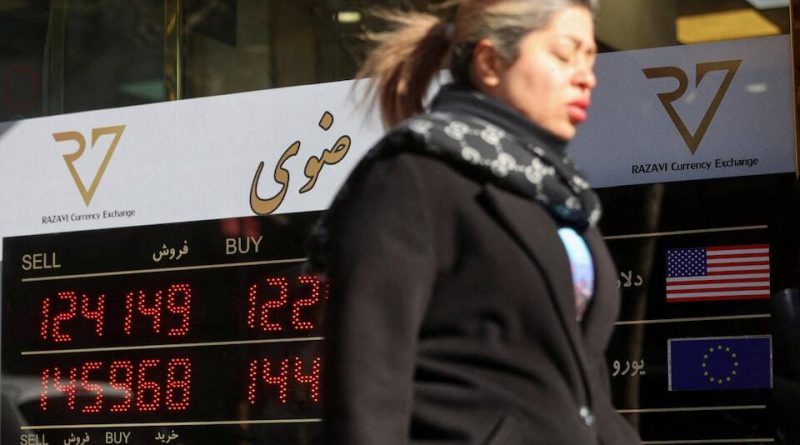
Inflation remains high, the national currency has lost significant value, and wages have failed to keep pace with rising living costs.
Even state media have acknowledged the role of corruption, inequality, and policy failures in driving popular anger.
President Masoud Pezeshkian has called for dialogue and promised reforms aimed at stabilizing the financial system and protecting purchasing power.
The government has announced limited relief measures, including electronic food credits for households, offering modest support to lower-income families.
For many Iranians, these steps provide some relief but fall short of addressing deeper structural problems.
On the streets, heavy security deployments signal the leadership’s determination to prevent protests from spiraling out of control.
Yet the broader challenge remains unresolved: balancing domestic stability with the risk of provoking external intervention.
As Iran’s leaders navigate unrest at home and uncertainty abroad, the combination of economic strain, political dissent, and geopolitical pressure has created one of the most complex tests the Islamic Republic has faced in recent years.