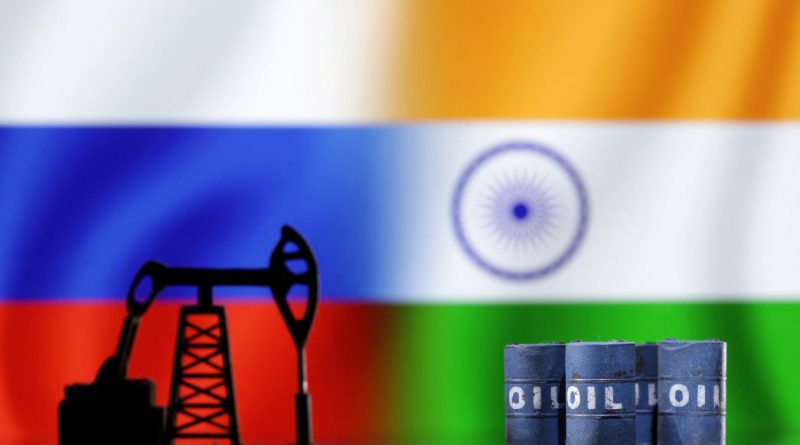
Trump Signals Higher Tariffs on India Amid Dispute Over Russian Oil Purchases
Washington – The United States has intensified trade pressure on India, with President Donald Trump warning that higher tariffs could be imposed if New Delhi does not significantly curb its purchases of Russian crude oil, adding strain to already delicate bilateral trade negotiations.
The warning comes as talks between the two countries remain unresolved, with Washington signaling growing impatience over India’s continued engagement with Russian energy supplies despite Western sanctions linked to the Ukraine conflict.
Speaking to reporters during recent travel, Trump indicated that the United States has the ability to raise tariffs quickly, suggesting that trade measures could be used as leverage to influence India’s energy sourcing decisions.
India has emerged as one of the largest buyers of discounted Russian oil in recent years, a strategy that has helped it manage inflationary pressures and ensure energy security amid volatile global markets.
However, the U.S. administration views these purchases as indirectly supporting Moscow’s war effort, and senior American lawmakers have echoed calls for tougher action against countries that continue buying Russian crude.
Some Indian exports already face steep duties in the U.S. market, with total tariffs reaching as high as 50 percent on certain goods, partly linked to concerns over Russian oil imports, according to trade analysts.
Financial markets in India reacted cautiously to the latest signals, with technology stocks declining as investors weighed the risk of prolonged trade friction and further delays to a long-anticipated bilateral trade agreement.
U.S. officials have argued that sanctions and tariff threats have already reduced India’s reliance on Russian oil, though Indian refiners continue limited purchases to balance cost considerations and supply stability.
Trade experts warn that India’s careful diplomatic balancing act may no longer be sufficient, as Washington appears to be pushing for clearer commitments rather than incremental adjustments or quiet reductions.
Analysts note that even a complete halt to Russian oil imports may not fully ease U.S. pressure, as trade demands could shift toward market access, digital trade rules, or industrial subsidies.
From India’s perspective, policymakers remain cautious about setting precedents that could constrain strategic autonomy, particularly in energy sourcing and foreign policy decision-making.
At the same time, India is seeking to preserve strong economic ties with the United States, one of its largest export markets, especially for pharmaceuticals, information technology services, and engineering goods.
Despite the tariff challenges, Indian exports to the U.S. have shown resilience in recent months, though overall shipments have fluctuated amid global demand uncertainty and trade policy risks.
To address U.S. concerns, Indian authorities have reportedly increased monitoring of oil import data, including more frequent disclosures of purchases from Russia and alternative suppliers such as the United States.
Diplomatic engagement between New Delhi and Washington has continued at senior levels, with multiple high-level conversations aimed at preventing further escalation while keeping the door open for compromise.
The situation highlights the complex intersection of geopolitics, energy security, and trade policy, where economic decisions are increasingly shaped by strategic alliances and global power shifts.
As both sides weigh their next steps, businesses and investors are bracing for continued uncertainty, with tariff policy emerging as a key variable in the future of U.S.-India economic relations.