Mercosur and European Union Set to Sign Landmark Trade Agreement on January 17
Buenos Aires – The Mercosur trade bloc is set to sign a long-awaited free trade agreement with the European Union on January 17. The signing will take place in Paraguay and marks a major milestone in global trade relations.
The agreement brings together South America’s Mercosur bloc and the European Union after decades of negotiations. Officials have described it as one of the most ambitious trade frameworks ever negotiated between two regions.
Argentina’s foreign ministry confirmed the signing date, calling the deal historic and economically significant. The announcement followed confirmation that a broad majority of EU member states support the agreement.
Mercosur includes Argentina, Brazil, Paraguay and Uruguay, representing a major agricultural and industrial region. The European Union is one of the world’s largest single markets.
Negotiations for the agreement began more than thirty years ago and faced repeated delays. Differences over trade access, environmental standards and regulatory frameworks slowed progress.
The upcoming signing signals renewed momentum in trade cooperation between Europe and South America. Supporters say it will strengthen economic ties and expand market access.
Under the agreement, tariffs on a wide range of goods are expected to be reduced or eliminated over time. This could benefit exporters and consumers across both regions.
European manufacturers are expected to gain improved access to South American markets. At the same time, Mercosur exporters could see increased opportunities in Europe.
Agricultural trade is expected to play a central role in the agreement. South American countries are major exporters of beef, soy, sugar and grains.
Industrial goods, services and investment rules are also covered by the deal. Provisions aim to improve transparency and regulatory cooperation.
European Union officials said a strong majority of member states back the agreement. Formal signing clears the way for ratification processes in participating countries.
While some groups have raised concerns over competition and environmental impact, officials focused on economic benefits. Governments emphasized growth, trade diversification and long-term cooperation.
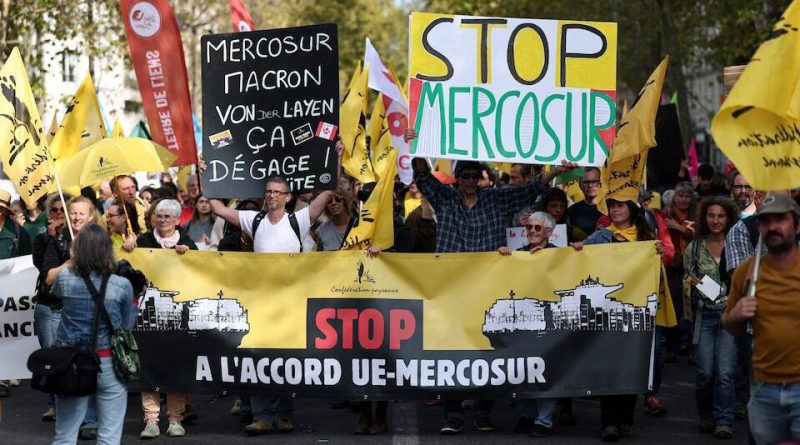
In several European cities, farmers held demonstrations expressing concern about increased imports. Authorities noted that such reactions are part of domestic policy debates.
Despite protests, EU leaders reiterated their commitment to concluding the agreement. They highlighted safeguards and phased implementation measures.
For Mercosur nations, the deal represents access to one of the world’s most valuable consumer markets. It is also seen as a way to attract foreign investment.
Trade analysts say the agreement could reshape transatlantic trade flows. It may influence future trade negotiations globally.
The signing ceremony in Paraguay is expected to include senior officials from both blocs. Statements and next steps will be outlined following the event.
Ratification will require approval by national parliaments and EU institutions. This process could take several months or longer.
If fully implemented, the agreement could cover trade involving hundreds of millions of people. Its economic scale makes it one of the largest trade deals worldwide.
Supporters argue the pact promotes cooperation, stability and economic integration. They see it as a symbol of multilateral engagement.
The January 17 signing represents a turning point after decades of discussion. It signals a new phase in EU–South America relations.