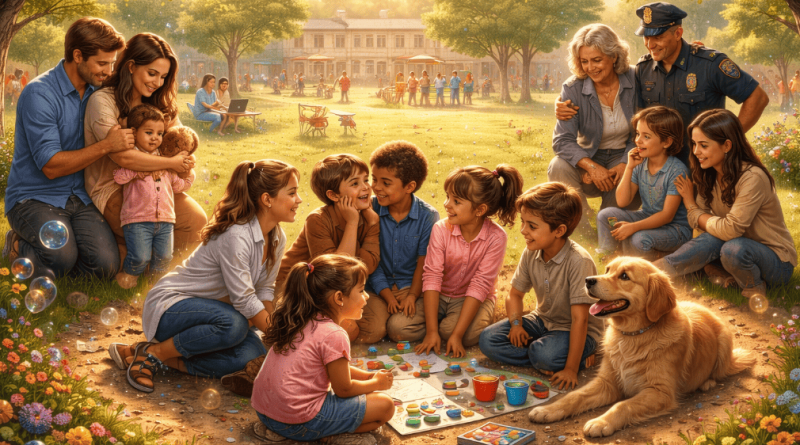
The Safe Circle: Where Childhood Learns to Trust the World

“There can be no keener revelation of a society’s soul than the way in which it treats its children” — Nelson Mandela
Children are not merely growing bodies; they are growing minds, emotions, and identities. In an increasingly complex world, the idea of a “safe circle” for children has never been more urgent. A safe circle is not confined to physical protection alone—it is an ecosystem of emotional security, trust, inclusion, and respect that allows a child to flourish without fear.
Within this circle, a child experiences consistency and care—two elements essential for healthy development. It is the space where a child learns that their voice matters, their feelings are valid, and their presence is valued. Such environments nurture curiosity rather than compliance, confidence rather than fear, and resilience rather than withdrawal. When children feel safe, they are more willing to explore, question, and engage meaningfully with the world around them.
A safe circle also acts as a protective buffer against the uncertainties and pressures children increasingly face—academic expectations, social comparisons, digital exposure, and emotional overload. It offers reassurance in moments of confusion and stability in times of change. More importantly, it equips children with the inner strength to navigate adversity, knowing they are supported and not alone.
This sense of safety does not emerge by chance; it is intentionally cultivated through responsive relationships. Adults who listen without judgment, guide without intimidation, and correct without humiliation lay the foundation of trust. In such spaces, mistakes become learning opportunities, differences become strengths, and vulnerability is met with compassion rather than criticism.
Ultimately, a safe circle shapes not only how children see the world, but also how they see themselves within it. Children who grow up feeling secure develop empathy, self-worth, and a strong moral compass. They learn to extend the same care and respect they received, creating ripple effects that strengthen families, schools, and communities.
In safeguarding children, we are not merely protecting the present—we are shaping the future. A society that invests in safe circles for its children invests in a generation capable of building a more just, compassionate, and resilient world.
Why Safety Means Care, Not Just Protection
Safety is often narrowly defined as the absence of danger. For children, however, safety must also mean the presence of care. A child who is physically unharmed but emotionally neglected, silenced, or excluded is not truly safe. Emotional safety—the assurance of being seen, heard, and valued—is as vital as physical protection in shaping a child’s overall well-being.
When children grow within a secure environment, they develop emotional resilience—the ability to cope with challenges, regulate emotions, and recover from setbacks. Such children learn that difficulties are manageable and that support is available, enabling them to face adversity with courage rather than fear.
They also learn empathy and trust, as safety models healthy relationships. When children experience kindness, fairness, and consistency, they internalize these values and extend them to others. Trust becomes the foundation upon which meaningful social connections are built.
A secure environment fosters confidence and self-worth. Children who are encouraged rather than compared, guided rather than shamed, begin to believe in their own abilities. They develop a positive self-image and the confidence to express themselves without fear of ridicule or rejection.
Most importantly, children who feel safe are more likely to speak up against abuse or injustice. They recognize inappropriate behaviour, trust adults to listen, and feel empowered to seek help. Safety gives children not only protection, but also a voice.
Conversely, the absence of safety—whether through neglect, fear, bullying, or chronic instability—can leave deep and lasting psychological scars. Such experiences may later manifest as anxiety, low self-esteem, difficulty forming relationships, or a persistent sense of insecurity. The impact often extends far beyond childhood, shaping adult behaviour, mental health, and social functioning.
Where Being Heard Becomes a Source of Courage
Parents, teachers, caregivers, and policymakers are the architects of a child’s safe circle. Their responsibility extends beyond protection to the deeper, more demanding task of listening with empathy and intent. Children often communicate distress not through words, but through behaviour—withdrawal, aggression, prolonged silence, anxiety, or sudden changes in routine. These signals are not acts of defiance; they are expressions of unmet needs.
Creating a safe circle requires adults to move away from fear-based discipline and towards guidance rooted in understanding. When correction is delivered with patience rather than punishment, children learn accountability without shame. Guidance teaches right from wrong while preserving dignity, allowing children to grow without fear of humiliation.
Adults must also encourage open dialogue without dismissal. When children are allowed to speak freely—without being interrupted, minimized, or judged—they develop the confidence to articulate their thoughts and emotions. Listening validates their experiences and reinforces the belief that their voice has value.
It is essential to respect children’s boundaries and honour their voices. Children, like adults, deserve autonomy over their bodies, emotions, and personal space. Respecting boundaries teaches children consent, self-respect, and the ability to advocate for themselves—skills that are essential for personal safety and healthy relationships.
Finally, adults shape the safe circle by modelling kindness, fairness, and emotional regulation. Children learn more from what they observe than from what they are told. When adults handle conflict calmly, show empathy, and respond fairly, children internalize these behaviours and replicate them in their own interactions.
A child who is heard learns that their feelings matter. A child who is believed learns courage. Through consistent care, respectful communication, and compassionate guidance, adults can create environments where children feel safe—not just to survive, but to thrive.
From Classrooms to Communities: Building Safe School Spaces
Schools are often the first spaces outside the home where children begin to navigate independence. They must therefore function as sanctuaries—never as sources of fear. When bullying, discrimination, or excessive academic pressure go unaddressed, a child’s sense of security is deeply fractured, undermining both well-being and learning.
An inclusive school culture—where differences are celebrated rather than merely tolerated—significantly strengthens a child’s safe circle. In such environments, children feel accepted for who they are, not pressured to conform to narrow standards. When a genuine sense of belonging is fostered, learning becomes meaningful, relationships deepen, and growth becomes truly holistic—encompassing academic, emotional, and social development.
Safeguarding Young Minds Beyond Screens
In today’s increasingly digital world, a child’s safe circle must extend beyond physical spaces and into the online realm. For many children, digital platforms are not merely tools for learning or entertainment; they are integral to social interaction, identity formation, and self-expression. However, exposure to harmful content, cyberbullying, online predators, and unrealistic portrayals of life can significantly erode a child’s self-esteem, emotional security, and mental well-being.
Unlike traditional forms of harm, digital threats are often invisible and persistent. Hurtful messages, public shaming, or exclusion in online spaces can follow a child beyond school hours, leaving little room for emotional recovery. Constant comparison with curated, idealized images can distort self-perception, fostering feelings of inadequacy and anxiety at an early age.
Safeguarding children in virtual spaces therefore requires more than restriction; it demands digital literacy, thoughtful supervision, and open, non-judgmental communication. Children must be taught how to navigate the online world responsibly—how to recognize harmful content, protect their privacy, and respond to uncomfortable situations. Equally important is the presence of trusted adults who guide rather than control, monitor without invading, and listen without reacting with blame or fear.
Open conversations about online experiences help children feel supported and empowered. When children know they can speak honestly about what they encounter online without fear of punishment or dismissal, they are more likely to seek help when something feels wrong. Such dialogue reinforces trust and strengthens the digital dimension of the safe circle.
In an age where the boundaries between the real and virtual worlds continue to blur, ensuring online safety is not optional—it is essential. By extending care, guidance, and vigilance into digital spaces, we can protect children’s well-being and ensure that technology becomes a tool for growth rather than a source of harm.
Where Many Hands Hold Childhood Safe
A safe circle cannot be held together by families alone. While parents and caregivers form the first protective embrace, the task of safeguarding childhood must be shared by the wider world. Communities, institutions, and governments must stand together, weaving a net of care strong enough to catch every child.
Schools, healthcare systems, social services, and local authorities must move in quiet harmony, shaping spaces where children’s well-being is not an afterthought but the steady pulse guiding every decision. Child-friendly policies, accessible mental health support, and vigilant, responsive protection systems are not gestures of generosity; they are the unseen pillars that hold childhood upright, allowing it to grow without fear and flourish with hope.
Protecting children, therefore, is not an act of charity or benevolence; it is a promise we make to the future. When children are raised within safe, nurturing circles, they grow not only in strength but in empathy, learning to carry kindness and responsibility into the world they will one day inherit. In safeguarding their present, we do more than shield fragile lives—we shape a future woven with compassion, steadiness, and a shared sense of human responsibility.
Disclaimer: Views expressed by writers in this section are their own and do not reflect Milli Chronicle’s point-of-view.