
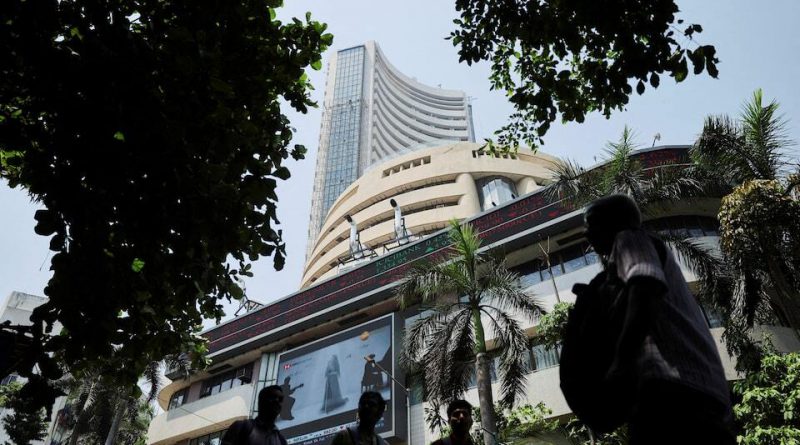
Indian Stock Markets Ease as Global Trade Concerns Weigh on Investor Sentiment
Indian equity markets moved lower as cautious sentiment led to broad-based selling across sectors.
Investors remained watchful amid renewed global trade uncertainty and mixed international cues.
Benchmark indices showed mild declines during the session, reflecting hesitation among market participants.
Profit booking and risk aversion limited buying interest despite recent recovery attempts.
Market observers noted that uncertainty around global trade policies influenced investor behaviour.
Concerns over potential disruptions to international commerce affected overall market confidence.
Optimism related to corporate earnings and overseas trade discussions was present but subdued.
This was not enough to counterbalance worries stemming from external economic signals.
Analysts highlighted that follow-through buying has remained limited in recent sessions.
This has kept the short-term market outlook cautious and range-bound.
Global markets have also shown signs of volatility in response to shifting trade expectations.
Indian equities tend to react to such developments due to increasing global integration.
Foreign portfolio investors have remained selective in their approach toward emerging markets.
Intermittent inflows and outflows have added to day-to-day market fluctuations.
Sector-wise performance showed weakness across several major indices.
Capital-intensive and cyclical stocks experienced relatively higher selling pressure.
Mid-cap stocks showed mixed movement, while select small-cap shares attracted buying interest.
This indicated selective risk-taking rather than broad market optimism.
Energy and infrastructure-linked stocks saw some pressure due to global developments.
Market participants tracked international commodity trends and overseas demand indicators.
Consumer-focused stocks showed resilience in pockets, supported by stable domestic demand.
However, gains were limited as broader sentiment remained cautious.
Technology and service-oriented companies moved in line with global peers.
Currency movements and overseas market trends influenced trading patterns.
Market experts believe investors are awaiting clearer signals on global trade dynamics.
Stability in international markets could help restore confidence in domestic equities.
Liquidity conditions and institutional participation continue to play a crucial role.
Any improvement in foreign investment sentiment may support market recovery.
Volatility levels remained moderate, suggesting controlled selling rather than panic-driven exits.
This indicates that investors are adopting a wait-and-watch strategy.
Analysts recommend a focus on fundamentally strong companies during uncertain periods.
Balanced portfolios and long-term investment horizons are being emphasized.
Domestic economic indicators continue to provide underlying support to the market.
However, near-term movements are expected to be influenced by global developments.
Earnings announcements from major companies are also being closely monitored.
Positive results could offer some relief and help stabilise indices.
Overall, the market’s decline reflects caution rather than structural weakness.
Investors remain attentive to global cues while evaluating domestic growth prospects.

