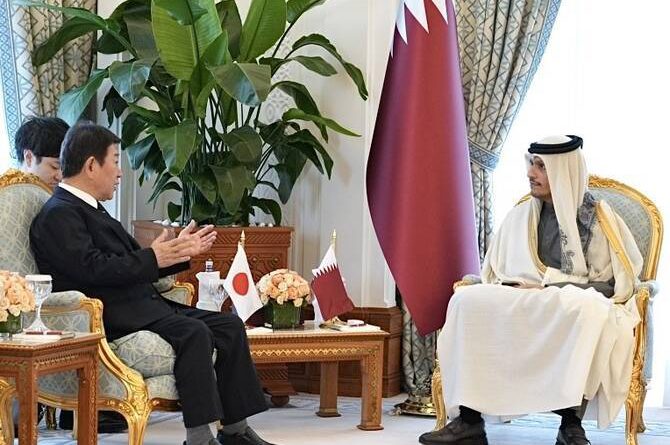
Japan and Qatar reaffirm strong bilateral cooperation
Tokyo – Japan and Qatar strengthen long term partnership through expanded cooperation across key sectors and shared development goals
Japan and Qatar have reaffirmed their strong commitment to deepening bilateral cooperation across a wide range of sectors, highlighting a shared vision for sustainable growth and long term partnership.
The renewed engagement reflects mutual trust, strategic dialogue, and a desire to strengthen ties that benefit both nations and their people.
The discussions emphasized the importance of continuous diplomatic engagement as a foundation for economic stability and international collaboration.
Both sides acknowledged that regular high level dialogue plays a key role in aligning priorities and expanding opportunities for cooperation.
Energy cooperation remained a central pillar of the partnership, with a focus on reliable supply chains and long standing collaboration.
The dialogue underlined how energy security supports industrial growth, economic planning, and broader development objectives.
Economic cooperation was highlighted as an area of growing momentum, driven by investment flows, trade expansion, and private sector participation.
Both countries recognized the value of creating a favorable environment for businesses, innovation, and joint ventures.
Infrastructure development and strategic investment were also discussed as engines for inclusive growth and long term resilience.]
The partnership aims to support projects that contribute to national development plans and regional connectivity.
Education and academic exchange were noted as important drivers of people to people ties and knowledge sharing.
Universities and research institutions from both countries continue to explore collaboration in science, technology, and innovation.
Cultural exchange was recognized as a meaningful way to strengthen mutual understanding and social connection.
Such initiatives help promote shared values, heritage appreciation, and long lasting goodwill between communities.
Sports cooperation and international events were mentioned as platforms that foster friendship and global engagement.
These exchanges encourage youth participation, cultural dialogue, and positive international visibility.
The ministers also discussed cooperation in sustainable development and environmental initiatives.
Shared efforts in this area support global goals while aligning with national sustainability strategies.
Humanitarian collaboration and development assistance were highlighted as areas where both countries can combine strengths.
Joint initiatives aim to support capacity building, social development, and community resilience.
The dialogue reflected confidence in the steady progress achieved through previous agreements and joint frameworks.
Both sides expressed optimism about expanding cooperation in emerging sectors and future oriented projects.
Strong institutional mechanisms were acknowledged as essential for monitoring progress and ensuring effective implementation.
These structures help translate shared commitments into practical outcomes and measurable results.
The partnership was described as forward looking, balanced, and grounded in mutual respect.
It continues to evolve in response to global changes and shared aspirations.
Both countries reaffirmed their intention to maintain close coordination and constructive engagement.
This approach supports stability, growth, and positive contributions to the wider international community.
The renewed commitment signals continuity, trust, and a shared determination to deepen bilateral ties.
It reflects a relationship built on dialogue, cooperation, and long term strategic alignment.