As US weighs options on Iran, Middle East watches closely
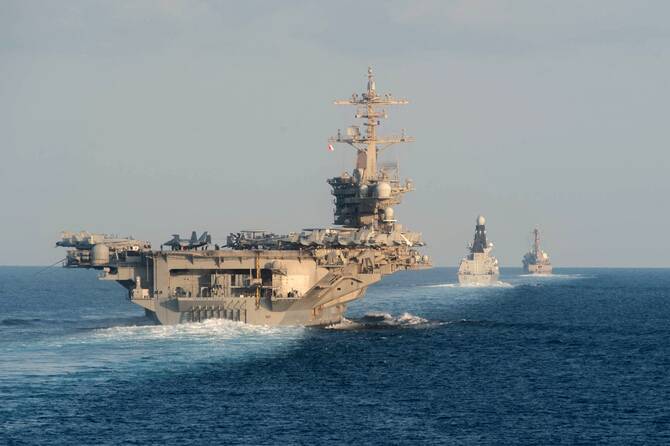
RIyadh – The United States continues to weigh its strategic options toward Iran as regional tensions rise and global attention focuses on Washington’s next move. The deployment of the aircraft carrier USS Abraham Lincoln toward the Middle East has heightened anticipation across the region, coming at a time when Iran is facing widespread domestic protests and increasing international scrutiny.
US officials have reiterated that all options remain on the table in dealing with Tehran, underscoring concerns over Iran’s internal stability, its regional activities, and the potential implications for broader Middle East security. The movement of a major US naval asset is widely viewed as both a signal of deterrence and a message of preparedness, aimed at reinforcing American presence amid uncertainty.
Saudi sources have firmly denied any attempts to influence decision-making in Washington regarding possible action against Iran. Officials in Riyadh have rejected reports suggesting that the Kingdom advised the US against military strikes, emphasizing that Saudi Arabia is closely monitoring developments without lobbying for a specific outcome. This stance reflects a careful diplomatic posture as regional actors seek to avoid further escalation.
A senior Saudi official based in the United States described claims of Saudi intervention in US policy debates as inaccurate, stressing that Riyadh has not sought to steer Washington’s response. The official highlighted that the Kingdom’s priority remains regional stability and the reduction of risks that could spill across borders in an already volatile environment.
Saudi Minister of State for Foreign Affairs Adel Al-Jubeir, speaking earlier this week at a major business conference, acknowledged the gravity of the situation in Iran. While refraining from commenting directly on potential military action, he noted that the international community is watching events unfold very closely and expressed hope that tensions could be resolved in a way that minimizes damage and disruption.
Saudi analysts have echoed this position, emphasizing that Riyadh is not actively lobbying either for or against a strike. Commentator Ali Shihabi stated that Saudi Arabia has not taken part in discussions advocating military action, reinforcing the message that the Kingdom is maintaining a cautious and observant role as events develop.
At the same time, regional commentary has pointed to Iran’s own decisions as a critical factor in determining the path forward. Some analysts argue that Tehran holds the key to avoiding further escalation by addressing core issues related to its nuclear program and its external activities. Such steps, they suggest, could reduce the likelihood of foreign intervention at a moment of intense internal pressure.
The current unrest within Iran has been described by regional observers as one of the most serious challenges the Islamic Republic has faced in decades. Protests driven by economic hardship and political grievances have spread across the country, placing the leadership under unprecedented strain. Combined with external pressure, this has created a situation many describe as a defining moment for the regime.
As Washington deliberates its next steps, the broader Middle East remains on edge. Any decision by the US could have far-reaching consequences, affecting regional security, energy markets, and diplomatic relations. Allies and adversaries alike are assessing signals from Washington, Tehran, and other key capitals, aware that miscalculation could trigger wider instability.
For now, anticipation dominates the regional mood. With US military assets moving into position and diplomatic statements carefully calibrated, the coming days are likely to prove critical. Whether the situation de-escalates through restraint and dialogue or intensifies through confrontation will depend on choices made in multiple capitals, as the region waits for clarity on Washington’s ultimate course of action.