India’s leading renewable state plans coal expansion to meet rising power demand
Rajasthan – India’s top renewable energy–producing state, is expected to add significant coal-fired power capacity over the next decade to meet rising electricity demand, highlighting the complex balance between clean energy ambitions and energy security needs. Despite rapid growth in solar and wind generation, advisers say coal will continue to play a stabilizing role in the state’s power mix through 2036.
According to a government document, Rajasthan will require around 4,400 megawatts of new coal-based power capacity by 2036. This figure is more than double earlier estimates and reflects revised assessments by the Central Electricity Authority, a technical body under India’s federal power ministry. The updated projection underscores concerns about ensuring reliable, round-the-clock electricity supply as consumption continues to rise.
Rajasthan currently leads India in renewable energy output, with nearly 70 percent of its electricity coming from solar and wind sources. Vast desert land and high solar irradiance have helped the state emerge as a clean energy hub, attracting large investments in renewable infrastructure over the past decade.
However, officials and advisers argue that renewables alone cannot yet guarantee uninterrupted power. Solar and wind generation are inherently intermittent, depending on weather and time of day. Large-scale battery storage systems, which could smooth out these fluctuations, remain expensive and are not yet deployed at the scale required to support a fully renewable grid.
The revised coal capacity estimate comes as Rajasthan prepares to retire about 1,350 megawatts of ageing coal-fired power plants. These older units are less efficient and more polluting, and their planned closure aligns with India’s broader push to modernize its power sector. Even so, replacing them entirely with renewables is seen as risky given current technological and storage limitations.
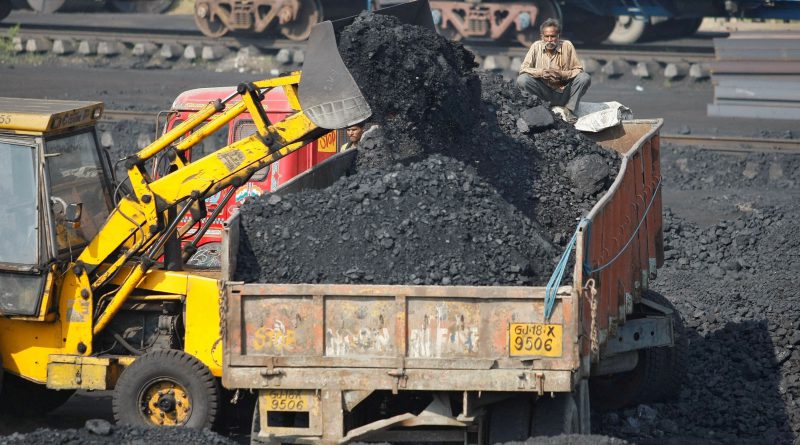
India as a whole continues to rely heavily on thermal power, which accounts for roughly one-third of national electricity generation. While the country has set an ambitious target of achieving net-zero emissions by 2070 and expanding renewable capacity to 500 gigawatts, policymakers acknowledge that coal will remain part of the energy mix for decades.
Government data shows that India’s power demand is expected to surge as the economy grows, urbanization accelerates, and industrial activity expands. Meeting this demand may require up to a 40 percent increase in coal-fired capacity nationwide by 2035, even as renewable installations continue to scale up.
In Rajasthan, the upward revision of coal requirements has prompted regulatory reconsideration. The state’s power regulator has decided to review an earlier decision that denied approval for a proposed 3,200-megawatt coal-fired power plant. The review was initiated after the state power utility argued that additional baseload capacity is essential for grid stability.
The utility maintained that while renewable energy capacity is expanding rapidly, it cannot yet replace coal’s role in providing consistent power during peak demand periods or when renewable output falls. Officials pointed out that until storage technology becomes more affordable and widespread, coal plants remain a reliable fallback.
Rajasthan’s situation reflects a broader national trend. Several Indian states are accelerating coal procurement and power plant planning, citing the need to avoid shortages and blackouts. Recent years have seen sharp spikes in electricity demand during heatwaves, straining grids and reinforcing the importance of dependable baseload generation.
Energy experts note that India’s transition strategy is increasingly pragmatic rather than ideological. Instead of abruptly phasing out coal, the focus is shifting toward improving efficiency, retiring the dirtiest plants, and pairing renewables with flexible thermal capacity. This approach aims to balance climate commitments with economic growth and social stability.
The debate also highlights a key challenge for emerging economies: managing the energy transition without compromising development goals. For Rajasthan, a state that has become synonymous with renewable energy leadership, the need for new coal capacity illustrates the gap between long-term climate targets and short-term energy realities.
As India moves forward, policymakers are expected to emphasize hybrid solutions that integrate renewables, storage, and cleaner thermal power. Until storage and grid technologies mature, coal is likely to remain a critical component of energy planning, even in states that lead the renewable revolution.