Syrian Defence Ministry Announces Four Day Ceasefire After New Accord With Kurdish Forces
Hasakah – Syria’s defence ministry on Tuesday announced a four-day nationwide ceasefire following a new agreement reached with the Kurdish-led Syrian Democratic Forces, marking a significant development in efforts to de-escalate tensions in the country’s northeast after days of heightened military activity.
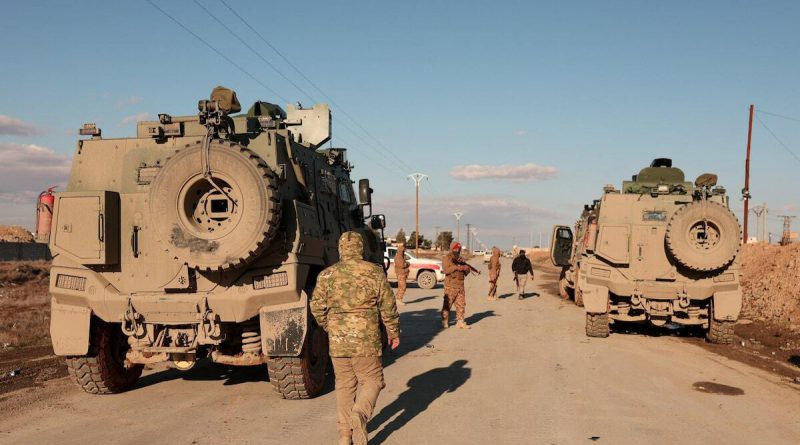
The ceasefire came into effect at 2000 local time and is intended to stabilise key areas where clashes and security operations had intensified.
The announcement followed negotiations between Damascus and the SDF after Syrian government forces moved into parts of Hasakah province earlier this week.
Those deployments came amid accusations that Daesh detainees had been released from detention facilities, raising fears of renewed militant activity and prompting swift military responses from the Syrian army.
The new accord aims to halt hostilities while allowing security arrangements to be reviewed.
According to Syrian officials, the ceasefire is designed to create space for dialogue and coordination on security, administration and the transfer of certain facilities to state control.
Army units that had advanced toward strategic locations in the Jazira region are expected to suspend offensive operations during the truce, while maintaining defensive positions to prevent instability or militant infiltration.
The agreement reflects a broader attempt by the Syrian government to reassert authority in northeastern regions long controlled or administered by the SDF, which is backed by Kurdish forces and has played a central role in the fight against Daesh.
Relations between the two sides have fluctuated over the years, ranging from tactical coordination to armed confrontations, depending on shifting political and military circumstances.
In recent days, tensions rose sharply after reports emerged that detainees affiliated with Daesh had been released from a prison in Al-Shaddadi.
Syrian military leaders blamed the SDF for the release, arguing it posed a direct threat to national security. The army responded by deploying units to secure prisons and surrounding areas, triggering fears of a wider confrontation.
The ceasefire announcement suggests that both sides are seeking to prevent further escalation, particularly at a time when regional and international attention remains focused on Syria’s fragile stability.
Analysts say the truce could serve as a confidence-building measure if it leads to concrete steps on coordination, detainee management and civilian protection.
For residents of Hasakah and surrounding towns, the ceasefire offers a temporary respite after days of uncertainty. Civilians had expressed concern over troop movements, checkpoints and the possibility of renewed clashes disrupting daily life.
Local sources say humanitarian access and basic services had also been affected by the recent tensions, underscoring the need for calm.
The Syrian defence ministry said the ceasefire would be monitored closely and warned that any violations would be dealt with firmly.
Officials stressed that the truce does not signal a retreat from the government’s objective of restoring full sovereignty over all Syrian territory, but rather reflects a tactical pause aimed at achieving longer-term stability.
The SDF has not issued a detailed public statement on the terms of the ceasefire, but sources familiar with the talks said the agreement includes commitments to avoid provocative actions and to continue discussions through designated mediators.
Previous accords between Damascus and Kurdish forces have often struggled to hold, breaking down over disagreements on governance, military integration and resource control.
Regional observers note that the four-day duration of the ceasefire suggests it is a short-term measure, possibly intended to test intentions and reduce immediate risks rather than resolve deeper political disputes.
Much will depend on whether talks continue beyond the truce and whether confidence can be rebuilt after recent accusations and deployments.
Internationally, the ceasefire may be viewed as a positive signal amid broader concerns about Syria’s security landscape, including the potential resurgence of Daesh cells and the involvement of external actors.
Any reduction in fighting between Syrian forces and the SDF could help refocus efforts on counterterrorism and humanitarian recovery.
As the ceasefire takes effect, attention will turn to whether it holds on the ground and whether it opens the door to more durable arrangements.
For now, the four-day pause offers a narrow but important window to ease tensions in one of Syria’s most sensitive regions and to prevent a new cycle of conflict from taking hold.