Syria accuses Kurds of breaking ceasefire, raising doubts over fragile deal
Damascus – Syria’s government has accused the Kurdish-led Syrian Democratic Forces of violating a newly announced ceasefire, warning that the incident could derail efforts to reach a broader political and security agreement after days of intense fighting in the country’s northeast.
The accusation follows a reported drone strike that Damascus says killed seven Syrian soldiers, an event the government described as a dangerous escalation at a moment when negotiations were meant to reduce tensions and open the door to integration talks.
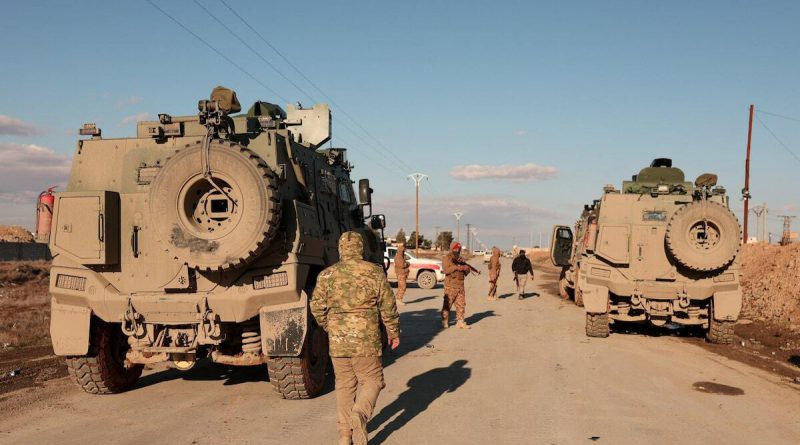
According to Syrian officials, the alleged strike took place as government troops were securing a military base recently taken from Kurdish forces, a site that reportedly contained explosives, increasing the risk of wider instability in the area.
The Syrian Democratic Forces have firmly denied carrying out any drone attack, saying the explosion occurred accidentally while Syrian soldiers were moving explosive materials, and counter-accusing government forces of breaching the truce with attacks in multiple locations.
This exchange of blame comes just a day after Damascus announced it had reached an initial understanding with the SDF on a four-day ceasefire, intended to pave the way for negotiations on the group’s full integration into the Syrian state.
Government advances in recent days have significantly weakened the Kurdish administration that has exercised de facto autonomy across much of northeastern Syria for years, raising fears among Kurdish leaders that their political and military influence could soon come to an end.
Syrian authorities have made clear that their ultimate demand is the dissolution of the SDF as an independent force, insisting that all armed groups must fall under the command of the central government to preserve national sovereignty.
The situation has major regional implications, particularly for relations between Syria, Turkey and the United States, all of which have long been deeply involved in the conflict dynamics surrounding Kurdish forces.
Turkey, a key ally of Damascus, has repeatedly labelled the SDF a terrorist organisation and renewed calls for the group to disarm and disband, warning that failure to do so would result in further bloodshed and military action.
President Tayyip Erdogan said the window for a peaceful outcome was closing rapidly, adding pressure on Kurdish leaders to accept the government’s terms or face a broader offensive.
The United States, which once relied heavily on the SDF as its primary partner in the fight against Islamic State militants, has signalled a major shift in its position by urging the group to accept Damascus’s offer.
Washington said the original reasons for its partnership with the SDF had largely expired, though it remains concerned about the fate of thousands of Islamic State prisoners and affiliated civilians held in detention centres guarded by Kurdish forces.
U.S. officials confirmed that American troops had launched a mission to transfer Islamic State prisoners from Syria to Iraq, underlining concerns that renewed fighting could lead to mass escapes or a resurgence of militant activity.
The uncertainty surrounding the ceasefire has heightened fears among international observers that a breakdown in talks could trigger a new phase of conflict, destabilising a region already scarred by more than a decade of war.
Analysts say the coming days will be crucial, as even limited violations could erode trust and push both sides back toward open confrontation, particularly if external actors escalate their involvement.
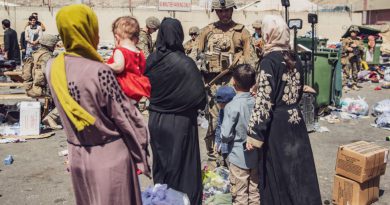
For civilians in northeastern Syria, the renewed tension has brought fresh anxiety over displacement, shortages of basic supplies and the possibility of prolonged violence.
As diplomatic pressure mounts and military manoeuvres continue on the ground, the fragile ceasefire remains under severe strain, with the prospects for a negotiated settlement hanging in the balance.