Zelenskiy says Ukraine territorial issue remains unresolved after Trump talks
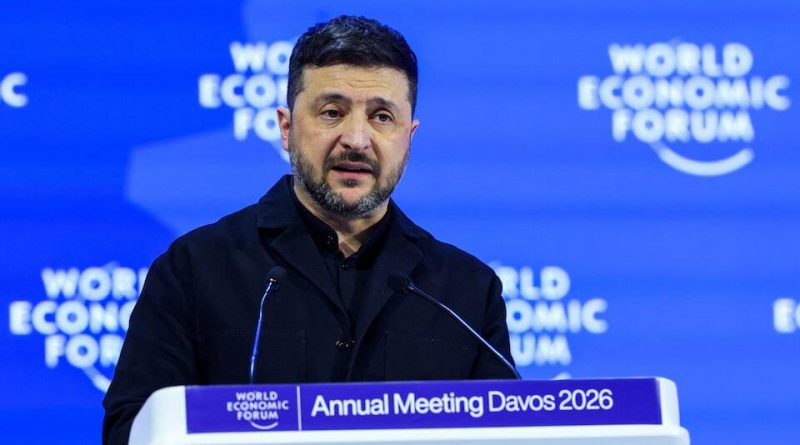
Davos – Ukrainian President Volodymyr Zelenskiy said the question of territory in Ukraine’s war with Russia remains unresolved, even as progress has been made on security guarantees following talks with U.S. President Donald Trump on the sidelines of the World Economic Forum in Davos. Zelenskiy described the meeting as constructive, signalling momentum in diplomatic efforts aimed at ending the four-year conflict.
Speaking after the talks, Zelenskiy said the framework for security guarantees for Ukraine had been finalised, marking a key step forward in negotiations that Kyiv sees as essential to any lasting peace. However, he stressed that territorial integrity remains the most sensitive and unresolved issue, underscoring the deep divisions that still exist between the warring sides.
Zelenskiy also announced that negotiators from Ukraine, Russia and the United States are set to hold trilateral talks for the first time in Abu Dhabi on Friday and Saturday. He framed the meetings as a positive development and a potential breakthrough, as direct engagement among all three parties has been limited since the conflict began.
Alongside security discussions, Zelenskiy said an agreement on Ukraine’s post-war economic recovery is close to completion. Such a deal would be a cornerstone of Kyiv’s strategy to rebuild infrastructure and revive growth after years of devastation, while also countering earlier peace proposals that Ukrainian officials believe leaned too heavily in Moscow’s favour.
Both leaders struck an optimistic tone after their meeting. Trump told reporters the discussion with Zelenskiy had been good and described the peace process as ongoing, while reiterating his belief that the war must end. He confirmed that U.S. envoys were travelling to Moscow to continue talks, adding to a flurry of high-level diplomatic activity.
Zelenskiy, who has made security guarantees a precondition for broader negotiations, said earlier this week that he would only attend Davos if agreements with Washington could be reached. Ukraine continues to face an energy crisis at home after repeated Russian air strikes damaged power and heating infrastructure, leaving millions without basic services during winter.
The Ukrainian leader accused Russia of attempting to freeze civilians into submission through sustained attacks on energy facilities, describing the strategy as a form of warfare against the population. He questioned why Russian President Vladimir Putin had not yet faced accountability, drawing comparisons with other international cases pursued by the United States.
U.S. envoy Steve Witkoff said progress was being made in peace talks after meeting Ukrainian and Russian officials in Davos. He added that if all sides genuinely wanted a solution, an agreement was achievable, echoing cautious optimism among diplomats observing the process.
Witkoff and fellow U.S. envoy Jared Kushner were expected to meet Putin in Moscow later on Thursday, before heading to Abu Dhabi for further discussions. The talks are set to include military-level contacts and debate over a broader economic package linked to a potential settlement.
Russia has reacted cautiously to the U.S.-led initiative, maintaining demands that Ukraine cede parts of eastern territory, including areas Moscow has struggled to fully control militarily. Putin has said discussions would include reconstruction of occupied regions and proposals for new international peace mechanisms.
Financial markets responded positively to the diplomatic activity, with Ukraine’s international bonds rallying as investors grew hopeful that negotiations could lead to an end to Europe’s deadliest conflict since World War Two. Despite the talks, fighting continued on the ground, with Russian strikes hitting several Ukrainian cities and causing civilian casualties.