Art Therapy Program Brings Healing and Hope to Cancer Patients in Eastern Province
Dhahran – A year-long cultural initiative using art therapy has begun at King Fahd University Hospital in the Eastern Province, offering cancer patients and survivors a space for emotional healing beyond medical treatment.. The program opened with its first monthly workshop, designed to help participants process fear, pain, and uncertainty through creativity and shared human connection..
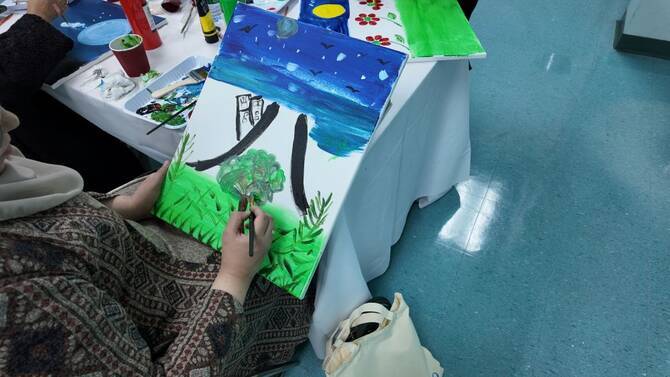
The inaugural session gathered women from different stages of their cancer journeys, including survivors and patients who arrived shortly after chemotherapy sessions.. Despite initial hesitation, the room gradually transformed into a vibrant, supportive environment filled with color, quiet laughter, and gentle conversation..
Participants, many of whom had not painted since childhood, began exploring acrylic paints freely, focusing less on technique and more on expression.. As brushes moved across canvases, tension eased, conversations flowed, and a collective sense of calm settled into the space..
The program is structured to run until the end of the year, with monthly workshops designed to be playful, accessible, and emotionally grounding.. Organizers emphasized that the sessions are meant to complement medical care, not replace it, by addressing the emotional and psychological weight of illness..
The initiative was founded on personal experience, shaped by years spent supporting a family member through cancer treatment.. That journey highlighted how isolation and emotional exhaustion often go unaddressed in clinical environments, inspiring the creation of a program centered on togetherness and creative release..
Each workshop is built around group interaction, encouraging patients to socialize, share moments, and feel less alone in their struggles.. The emphasis is on building a sense of community where participants can connect through shared experiences rather than diagnoses..
Cultural organizations collaborated to bring structure and depth to the program, contributing artistic guidance and creative frameworks.. Their involvement reflects a belief that culture and art are essential tools for self-expression, especially during times of emotional vulnerability..
Facilitating artists approach the sessions with sensitivity, observing how participants choose colors, shapes, and textures.. These choices often reveal emotions that may be difficult to articulate verbally, allowing patients to release feelings without pressure or judgment..
The workshops intentionally avoid perfectionism, encouraging instinctive and intuitive creativity instead.. This approach helps participants overcome self-doubt and rediscover confidence in their ability to create something meaningful from their emotions..
Many attendees arrived claiming they had no artistic ability, only to leave surprised by their own work and emotional shift.. Several expressed a desire to continue painting at home, seeing it as a new coping tool during treatment or recovery..
The hospital setting plays a crucial role, making the sessions easily accessible to those undergoing active treatment.. Holding the workshops within the care environment reinforces the idea that emotional wellbeing is part of the healing process, not separate from it..
Organizers noted that even patients feeling physically unwell benefited from attending, as creative engagement helped redirect focus away from discomfort.. Medical professionals supported participation, recognizing the therapeutic value of such activities..
As the program moves forward, additional workshops are planned to expand creative themes and reach more patients.. There are also long-term goals to introduce remote sessions, ensuring access for those unable to attend in person..
At its heart, the initiative aims to create a safe, judgment-free space where patients feel seen, supported, and emotionally lighter when they leave.. The focus remains on human connection, gentle creativity, and the quiet power of shared experiences..
For many participants, the workshop offered more than an art session — it provided a moment of joy, connection, and rediscovered inner strength.. The program stands as a reminder that healing is not only physical, but deeply emotional and communal as well..