
Five Takeaways from Davos 2026
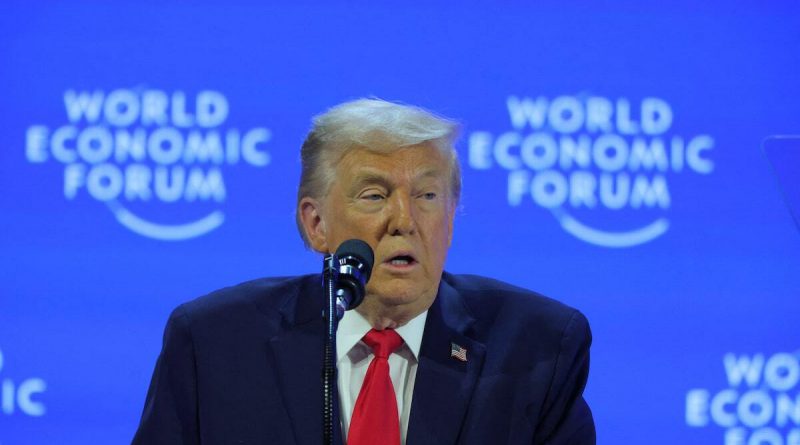
Davos – The 2026 World Economic Forum in Davos concluded with global leaders and top business executives leaving with more questions than answers, as discussions were dominated by the assertive and unpredictable posture of U.S. President Donald Trump.
Geopolitics, markets, and technology intersected sharply this year, revealing deep anxieties about global stability, economic coordination, and the future of leadership.
The meeting made it clear that traditional alliances are under strain and that nations are reassessing how quickly and independently they must act in a rapidly changing world.
Europe emerged from Davos more united but also more cautious, having learned the cost of confronting U.S. pressure directly. Trump’s controversial remarks and actions related to Greenland crossed long-standing European red lines on territorial sovereignty, prompting rare resistance from European leaders.
While financial market reactions may have played a role in Trump stepping back, the episode badly shook Europe’s confidence in the transatlantic relationship.
European officials openly admitted that decision-making within the European Union is often too slow, and conversations in Davos focused heavily on accelerating collective responses to future crises.
Ukraine briefly faded into the background early in the meeting but returned to the spotlight as President Volodymyr Zelenskiy arrived for high-level talks.
Despite public statements suggesting progress, a peace agreement remained distant, with territorial disputes still unresolved.
The presence of a Russian envoy for talks with U.S. officials, the first such visit since the 2022 invasion, highlighted how geopolitical realities are reshaping diplomatic engagement.
Davos also became a forum for debating potential U.S. action against Iran, with leaders questioning not just the likelihood of intervention but the consequences of regime instability.
Economic discussions at Davos were dominated by uncertainty and concern over rising protectionism. Threats of U.S. tariffs against European allies heightened fears that the global trading system is fragmenting.
Business leaders repeatedly stressed the need for stability, predictability, and respect for the rule of law, qualities many felt were increasingly scarce.
These tensions strengthened arguments for diversifying trade away from over-reliance on the U.S. and building stronger regional and multilateral economic ties.
Financial leaders expressed cautious optimism about growth but warned of policy risks. Banking executives discussed challenges ranging from artificial intelligence disruption to regulatory pressure and consumer affordability.
Warnings were issued about proposals such as capping credit card interest rates, which some leaders argued could destabilize credit markets.
At the same time, crypto executives promoted stablecoins and blockchain as transformative tools, while traditional banks remained divided between experimentation and skepticism.
Concerns about asset bubbles, central bank independence, and long-term inflation lingered over market discussions.
Artificial intelligence was one of the most visible themes in Davos 2026, with major technology leaders making rare appearances. AI companies used the event to push enterprise adoption and reassure investors after months of valuation doubts.
Unlike late 2025, executives now expressed greater confidence that AI investment is moving from hype to practical implementation.
Still, worries about concentration of power, regulation, and long-term societal impact remained part of the conversation, underscoring that AI’s promise comes with complex trade-offs.
Overall, Davos 2026 reflected a world grappling with leadership unpredictability, shifting alliances, economic fragmentation, and technological acceleration. The meeting underscored that while global cooperation is under pressure, the urgency to adapt has never been greater.
The forum ended not with clear solutions but with a shared recognition that the global order is entering a more volatile and uncertain phase.
Global leaders left Davos aware that speed, adaptability, and trust will define the next chapter of international politics and economics.


