UAE’s Badr Jafar says philanthropy can unlock investment
Davos – At the World Economic Forum in Davos, Emirati businessman Badr Jafar highlighted the transformative power of philanthropy, explaining how it can not only generate social good but also stimulate additional capital from both government and business sectors.
He emphasized that philanthropy should be seen as a strategic tool, not merely the act of wealthy donors giving money, and that it can act as a catalyst to de-risk and crowd in private investment, particularly in sectors such as technology and social entrepreneurship.
Jafar, CEO of Crescent Enterprises and chairman of Gulftainer, noted that philanthropic capital is often underestimated globally, with private philanthropy in the U.S. surpassing $600 billion in recent years and global philanthropy reaching around $2 trillion annually.
He argued that aligning capital across philanthropy, business, and government creates a multiplier effect that can accelerate development and humanitarian outcomes.
According to Jafar, strategic philanthropy helps address pressing challenges including regional conflicts, political extremism, refugee crises, and environmental issues, complementing government aid and development programs.
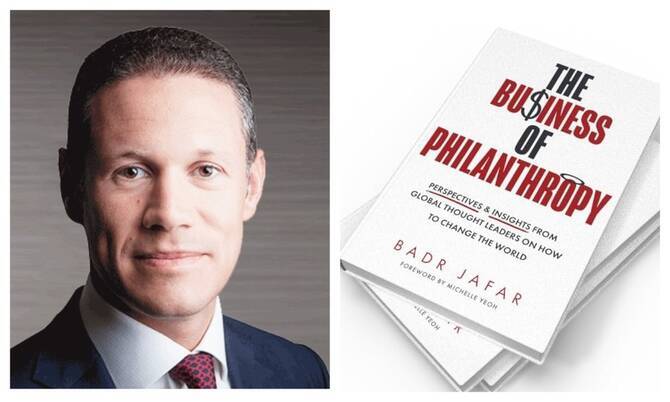
He also discussed his book, “The Business of Philanthropy: Perspectives and Insights from Global Thought Leaders on How to Change the World,” which features interviews with 50 leading philanthropists including Bill Gates, Kristalina Georgieva, and Razan Al-Mubarak.
The book’s provocative title aims to challenge the business world to learn from philanthropy while encouraging philanthropists to adopt strategic approaches informed by business principles.
Jafar stressed that the combination of public and private capital, when effectively coordinated, can unlock unprecedented opportunities for investment and social impact.
Growing up in Sharjah, Jafar credited his family with instilling a strong sense of giving and responsibility to the community, and he donates all royalties from his book to the International Rescue Committee to support children affected by armed conflict.
He highlighted that modern philanthropy goes beyond charity, acting as a significant part of the global capital system, often regarded as peripheral or viewed with suspicion, but with the potential to address some of the world’s most urgent humanitarian and development challenges.