Israel recovers last hostage body from Gaza, opening path for Rafah crossing
Jerusalem – Israel has recovered the remains of the final hostage held in Gaza, marking a significant and emotionally charged milestone in the long conflict and fulfilling a central condition tied to the current ceasefire framework.
The discovery brings closure to a painful chapter for Israeli society and clears the way for limited humanitarian and logistical steps, including the reopening of Gaza’s southern border crossing.
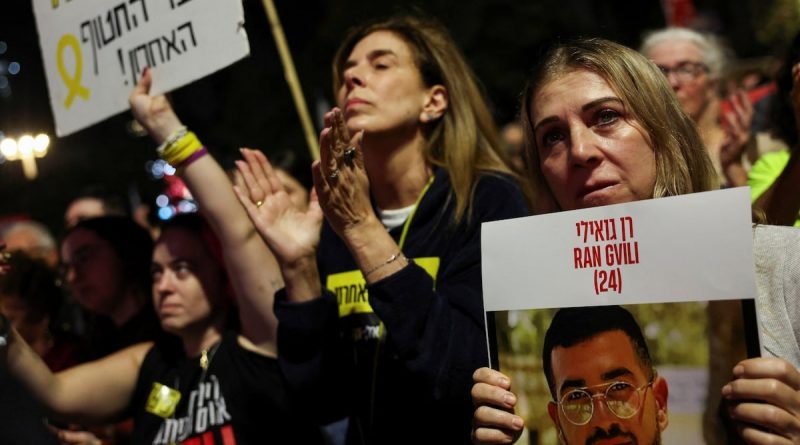
The Israeli military confirmed that the remains of police officer Ran Gvili, who had been held in Gaza for more than two years, were identified and would be returned to his family for burial.
Officials said the operation was completed after extensive searches and intelligence coordination, describing it as a moment of national importance.
With the recovery complete, Israeli authorities reiterated that preparations were underway to allow the Rafah Crossing between Gaza and Egypt to reopen under controlled conditions.
The crossing is Gaza’s primary gateway to the outside world and has remained largely shut during the conflict, contributing to severe humanitarian strain.
Israeli officials said the reopening would be limited and closely monitored, reflecting long-standing security concerns.
A U.S.-backed committee of technocrats expected to administer Gaza has indicated that the crossing could become operational within days.
Gvili was killed during the October 7, 2023 attack when Hamas-led fighters stormed southern Israeli communities, an assault that triggered a prolonged and devastating war.
Although he was off duty and recovering from an injury, Gvili joined the fighting and was later taken into Gaza, where his remains were held.
Images broadcast by Israeli media showed soldiers gathered at the recovery site, singing songs associated with hope and remembrance.
Another widely shared image depicted a coffin draped in the Israeli flag, underscoring the solemnity of the moment.
Israeli Prime Minister Benjamin Netanyahu described the recovery as an extraordinary achievement and praised Gvili’s actions as heroic.
Family members echoed that sentiment, saying his return brought both grief and a sense of long-awaited closure.
The return of the final hostage means that, for the first time since 2014, no Israeli captives remain in Gaza. This fact has carried deep symbolic weight in Israel, where the hostage issue has dominated public discourse for years.
Across the country, yellow ribbons and posters bearing the faces of hostages became enduring symbols of national trauma and solidarity. Weekly rallies at Tel Aviv’s Hostages Square reflected persistent public pressure on leaders to secure their return.
The recovery also activates the next phase of a U.S.-led plan aimed at ending the war, which envisions reconstruction of Gaza and its eventual demilitarization.
Negotiators say that while major disagreements remain, the fulfillment of the hostage condition removes a major obstacle.
Hamas said the discovery of Gvili’s remains demonstrated its commitment to the agreement and claimed that information it provided assisted in locating the body. The group added that it would continue cooperating with the proposed civilian administration for Gaza.
Despite these statements, distrust between the sides remains profound, and Israeli officials have emphasized that any further steps will be taken cautiously. Disputes persist over security arrangements, governance, and the long-term future of the territory.
Israel has indicated it intends to strictly regulate movement through Rafah, limiting the number of Palestinians entering Gaza and subjecting travelers to screening procedures. These measures reflect fears that militant groups could exploit the crossing if controls are loosened too quickly.
The broader conflict has exacted a devastating toll on civilians. Israeli authorities say the October 2023 attack killed around 1,200 people, while Gaza’s health officials report that more than 71,000 Palestinians have died during Israel’s military campaign.
For many Israelis, the return of Gvili’s remains is seen as a moment of collective mourning and healing rather than celebration.
It underscores both the human cost of the war and the unresolved challenges that lie ahead.
As attention shifts toward reconstruction and fragile diplomatic efforts, the recovery stands as a rare point of consensus in an otherwise divided landscape. Whether it leads to lasting progress will depend on the willingness of all parties to move beyond symbolism toward sustainable solutions.