The Kurdish Frontline: A Moral and Strategic Call for Trilateral Action

The Kurdish struggle matters because it is on the front line against the same extremist ideologies that threaten these countries.
Northern Syria is in a cataclysmic crisis. Kurdish communities in Rojava are facing relentless attacks by Turkish-backed militias and Syrian regime forces. Villages are being razed, civilians executed, women raped, and entire neighbourhoods systematically targeted.
Turkey’s involvement is central: Erdoğan manipulates proxies and leaders, such as Syria’s interim president Al-Jolani, to press his agenda, pursuing Ottoman-style expansionist ambitions while advancing a ruthless campaign to erase Kurdish autonomy. The Kurds, who have built pluralistic and stable governance systems in a region dominated by authoritarianism and sectarianism, now face existential threats.
What is unfolding against the Kurds in Syria carries lethal implications throughout the Middle East and beyond. The Kurdish struggle underscores a larger geopolitical reality: unchecked aggression here emboldens expansionist and Islamist forces throughout the region.
Saudi Arabia, Pakistan, and Turkey are moving to form a NATO-style alliance, called the Strategic Mutual Defence Agreement (SMDA), whereby any attack on one party is considered an attack on all.
Turkey’s destabilising ambitions, combined with Pakistan’s support for Islamist networks and Saudi Arabia’s regional influence, are forming a bloc whose goals clash directly with the security and values of Israel, India, and the UAE — three powers on the Middle-East-Asia Corridor with shared strategic and democratic imperatives. For these three countries, the threat and consequences of extremism are immediate.
Israel and India maintain solid defence cooperation, forged over decades of shared security challenges and strategic alignment. India and the UAE have recently strengthened economic and security partnerships, including agreements in energy, defence collaboration, and trade, with the aim of doubling bilateral commerce to $200 billion over the next six years.
Together, Israel, India, and the UAE form a natural coalition committed to protecting citizens, countering extremist ideologies, and preserving regional stability.
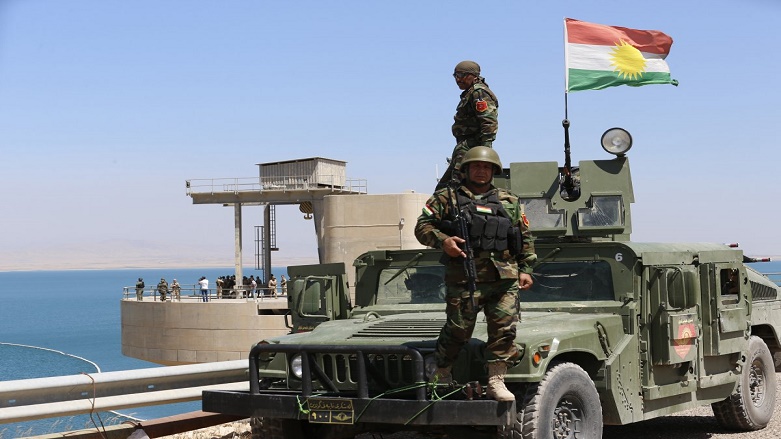
The Kurdish struggle matters because it is on the front line against the same extremist ideologies that threaten these countries. Kurdish forces bravely fought off ISIS between 2014 and 2017, when much of the region collapsed, protecting religious minorities and detaining thousands of terrorists on behalf of the international community.
Today, these efforts are under severe strain. Prison breaks in north-eastern Syria, escalating attacks on Kurdish-held territory, and the vulnerability of displacement camps signal a potential resurgence of ISIS.
ISIS had never truly disappeared. Since losing its territorial caliphate in 2019, it restructured into a decentralised global network with regional affiliates. By the end of 2024, it remained the most lethal terrorist organisation worldwide. Its digital presence, financial networks using cryptocurrencies, and ideological influence over minors and lone actors make it a persistent global threat.
Weakening Kurdish control creates space for ISIS to regroup and export violence far beyond the Middle East — to Europe, India, and beyond.
ISIS has also preserved and expanded its digital capabilities. Through social media, encrypted messaging platforms, and online propaganda, the organisation radicalises and recruits globally, particularly among minors.
ISIS-inspired attacks involving teenagers in Europe, including Austria and Germany, demonstrate how rapidly online radicalisation can translate into real-world violence, often beyond early detection by security services.
Geopolitics, however, is not just about land and strategy; at its heart lies a spiritual dimension that is often overlooked. The current chaos is unfolding around the Euphrates, a river whose surrounding lands are historically sacred. This was where Abraham, the father of monotheistic faiths, settled, amassed wealth and influence, and lived in coexistence with people of different faiths.
The values Abraham embodied, such as respect, dignity, coexistence — continue to shape the cultural DNA of the Kurds. Today, those same values, reflected in the Kurdish society, which I have personally witnessed in their respect for human dignity, women’s rights, and pluralism, are under direct threat from extremist ideologies seeking to destroy them.
The Kurds’ defence of pluralism, coexistence, and local governance mirrors values shared by Israel, India, and the UAE. Failing to protect them is not neutral; it constitutes strategic negligence with consequences that will be felt far beyond Syria.
The opportunity for trilateral cooperation is clear. Israel and India already maintain strong defence ties, sharing expertise in counterterrorism, military technology, and intelligence operations. India and the UAE have deepened strategic, economic, and security partnerships, building a foundation for coordinated action in the region. The existing intelligence-sharing framework between Israel, India, and the UAE is a critical asset.
Strengthened and fully integrated, it could become a force that regional aggressors would approach with caution, knowing that any misstep against the trio carries immediate, precise consequences. Such strengthened coordination would allow pre-emption of terrorist operations, disruption of financing channels, prevention of further prison breaks escalating into global attacks, and early identification of radicalisation in vulnerable populations.
This is not abstract geopolitics; it is about protecting citizens under threat, whether in Kobane in Syrian Kurdistan, Tel Aviv, Delhi, or Dubai.
The Kurdish crisis also has profound moral resonance. Jews and Kurds are both ancient peoples shaped by exile, persecution, and the longing for homeland and dignity. Both have survived through resilience, shared values, and a commitment to coexistence rather than domination. This shared ethos should compel Israel to safeguard regional allies by building strong, long-term partnerships with stable partners such as the UAE and India.
The systematic dismantling of Kurdish society is not only a regional tragedy — it is a blow against the principles that govern other modern, pluralistic nations. For India, which faces Pakistan-sponsored jihadism and digital radicalisation, the Kurdish struggle mirrors its own fight against extremist ideologies that weaponise religion and erase pluralistic traditions.
For me personally, these countries matter deeply. My Indian background and consistent time spent in Israel give me a unique perspective on the stakes involved.
The UAE has proven to be a strong and reliable Middle Eastern partner, and I hope for even closer trilateral cooperation with Israel and India. Together, these nations have both the strategic capability and the moral imperative to act decisively.
But the capability should not just be expressed in words, but through concrete, coordinated action to prevent further atrocities and the resurgence of ISIS.
The human toll is urgent. Displacement, executions, and destruction in north-eastern Syria (Rojava) are accompanied by women’s lives in grave danger and children living amid trauma and extremist influence.
ISIS’s adaptability, both digital and operational, means that failing to act now risks renewed terror reaching far beyond Syria. Supporting the Kurds is about defending humanity against an extremist ideology that threatens us all.
The question is simple: will the world stand by, or will it recognise the moral and strategic necessity of supporting those on the front lines of extremism? The Kurdish crisis is a stark reminder that regional ambitions must be firmly contained.
For India, Israel, and the UAE, strengthening trilateral cooperation is not only about countering ISIS. It is also about ensuring that Pakistan’s proxies and Turkey’s expansionist ambitions remain within their own borders and fantasies. Coordinated intelligence, rapid-response networks, and strategic alignment can send a clear message: no aggression will go unchecked, and no extremist ideology will reshape the region. The time to act is now.
Disclaimer: Views expressed by writers in this section are their own and do not reflect Milli Chronicle’s point-of-view.