Gaza Rafah Crossing Reopens for Limited Civilian Movement Amid Ongoing Humanitarian Crisis
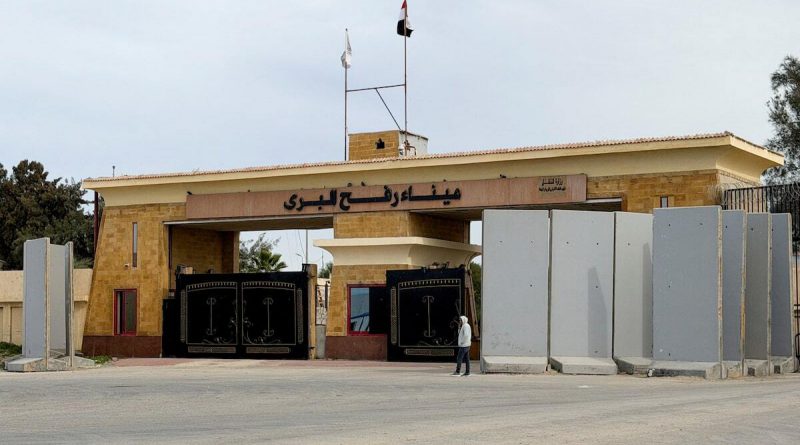
Jerusalem – The Rafah border crossing between Gaza and Egypt is set to reopen on Sunday, marking the first time in many months that people will be allowed to pass through what is effectively Gaza’s only gateway to the outside world.
The reopening follows prolonged diplomatic discussions and comes under strict conditions, allowing only limited civilian movement rather than the flow of aid or commercial goods.
According to official statements, the crossing will permit the return of Gaza residents who had previously left for Egypt during the course of the war.
Each individual will be required to undergo prior security clearance, underscoring the highly controlled nature of the reopening and the continued security concerns surrounding the enclave.
The border crossing had been closed since May 2024, after Israeli forces took control of the area amid escalating conflict.
Since then, Gaza’s population of over two million people has faced extreme isolation, with movement in and out of the territory almost entirely blocked.
Officials have not disclosed how many people will be allowed to cross per day, leaving uncertainty for families waiting on either side of the border.
Sources familiar with the matter suggest that discussions are still ongoing, with proposals indicating that only a small number of people may be permitted daily.
One of the key points of contention is Israel’s reported intention to limit the number of Palestinians returning to Gaza. The aim, according to earlier reports, is to ensure that more people exit the territory than enter, a condition that Egypt has not formally accepted.
Despite these unresolved issues, the reopening is expected to proceed, reflecting broader political commitments tied to ceasefire arrangements. The move was also linked to conditions set earlier, including developments related to hostages taken during the conflict.
While the reopening has been welcomed as a symbolic step, humanitarian organizations stress that it does little to address Gaza’s dire needs. The crossing will remain closed to aid deliveries, fuel, construction materials, and commercial supplies, all of which are urgently required.
Large parts of Gaza remain in ruins after nearly two years of sustained military operations. Entire neighborhoods have been flattened, basic services have collapsed, and most residents continue to live in temporary shelters or damaged buildings.
Humanitarian groups warn that winter conditions have worsened an already catastrophic situation. Many families lack adequate shelter, clean water, heating, and medical care, making daily survival an ongoing struggle.
International relief agencies have repeatedly called for broader access to allow the repair of essential infrastructure. Items such as water pipes, electricity generators, and sanitation equipment are considered critical for restoring basic living conditions.
However, long-standing inspection policies continue to restrict materials classified as having potential dual civilian and military use. These controls, in place well before the current war, have significantly slowed reconstruction and recovery efforts.
For Gaza’s residents, the partial reopening of Rafah offers limited relief but little certainty. Thousands remain stranded, separated from relatives, medical treatment, or educational opportunities outside the territory.
The situation highlights the gap between political agreements and humanitarian realities on the ground. While diplomatic steps may ease specific restrictions, the broader crisis facing Gaza remains unresolved and deeply entrenched.
As Sunday approaches, attention will focus on how the reopening is implemented and whether conditions may eventually expand.
For now, the Rafah crossing stands as a narrow opening in an otherwise sealed environment, offering movement to a few while millions continue to wait.