Iran President Accuses Trump Netanyahu and Europe of Fueling Protest Tensions
Tehran – Iranian President Masoud Pezeshkian has accused the United States, Israel, and several European governments of exploiting Iran’s internal economic struggles to inflame unrest and destabilize the country during recent nationwide protests.
Speaking in a televised address, Pezeshkian said foreign leaders took advantage of public frustration caused by inflation and currency collapse, turning social grievances into what he described as an externally encouraged crisis.
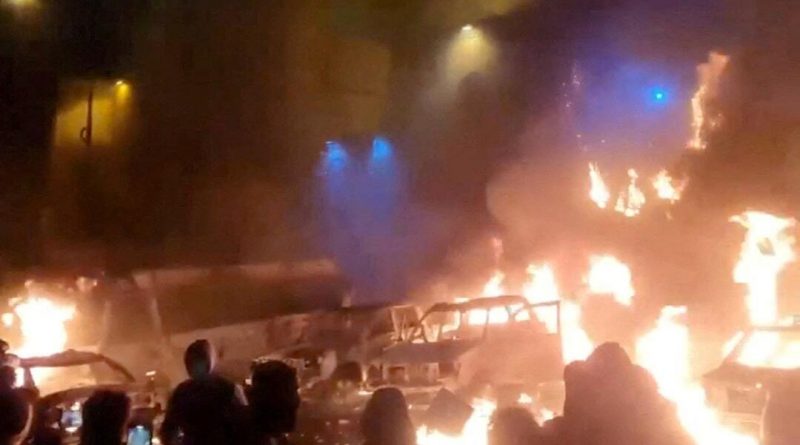
The protests erupted in late December after sharp rises in food prices, housing costs, and unemployment placed heavy pressure on ordinary citizens
Demonstrations spread across multiple cities, drawing in thousands who voiced anger over economic mismanagement and declining living standards.
According to Iranian officials, the unrest lasted nearly two weeks before subsiding following a forceful security response by the authorities.
Human rights groups outside the country have reported very high casualty figures, while Iranian officials have provided lower but still significant numbers, highlighting the scale and intensity of the confrontation.
President Pezeshkian alleged that Washington, Tel Aviv, and European capitals provided encouragement and resources that pushed some protesters toward violence.
He claimed that foreign leaders were not motivated by concern for Iranian citizens but by a desire to weaken national unity and fracture society.
He argued that while the protests began as economic demonstrations, they were later transformed into something more dangerous.
In his words, the unrest was no longer just about livelihoods but had become a coordinated effort to sow hatred, division, and long term instability within Iran.
The Iranian president directly named U.S. President Donald Trump, Israeli Prime Minister Benjamin Netanyahu, and unnamed European leaders as key actors.
He said they publicly supported demonstrators while privately seeking to undermine Iran’s political system.
Trump has repeatedly expressed support for the protesters and warned Tehran against continued crackdowns.
U.S. officials have indicated that various options remain under review, including potential military measures, though no final decision has been announced.
Meanwhile, reports of increased U.S. naval activity in the region have heightened concerns about escalation.
Regional observers say such developments add to an already volatile security environment in the Middle East.
Iranian Foreign Minister Abbas Araqchi echoed the president’s claims during interviews abroad, stating that thousands had been killed during the unrest, including security personnel.
He insisted that the protests were not a purely domestic phenomenon and accused foreign governments of interference.
Despite the sharp rhetoric, regional diplomacy has continued behind the scenes.
Countries such as Turkey, Saudi Arabia, and the United Arab Emirates have reportedly been working to ease tensions and prevent a direct military confrontation between Tehran and Washington.
At the center of the broader dispute remains Iran’s missile programme and nuclear related concerns.
The United States has demanded limits on missile development as a condition for renewed talks, a demand Iran has firmly rejected.
Araqchi stated that missiles would never be part of negotiations and warned that Iran was prepared for both dialogue and conflict if necessary.
He also dismissed talk of regime change, calling it an unrealistic fantasy promoted by Iran’s adversaries.
Iranian leaders maintain that the political system is resilient and deeply rooted, capable of withstanding both internal unrest and external pressure.
They argue that while economic reforms are needed, foreign intervention only worsens hardship and delays solutions.
The protests have faded for now, but analysts believe the underlying economic challenges remain unresolved.
Rising costs, sanctions, and regional tensions continue to shape daily life in Iran and influence its foreign policy posture.
As rhetoric intensifies between Tehran and Western capitals, the risk of miscalculation remains high.
Whether diplomacy can prevail over confrontation will likely depend on how both sides address security concerns and economic pressures in the months ahead.