Musk’s expanding tech vision highlights smoother path for SpaceX and xAI while Tesla evolves at its own pace
Elon Musk’s companies continue to explore strategic alignment, with SpaceX and xAI seen as a natural fit, while Tesla focuses on long-term innovation in autonomy, robotics and artificial intelligence.
Elon Musk’s idea of a tightly connected ecosystem of companies is gaining renewed attention as discussions around combining SpaceX and xAI gather momentum.
Industry observers see this potential move as a logical extension of Musk’s long-term vision, bringing together rockets, satellites, data and artificial intelligence under one streamlined structure.
SpaceX and xAI share complementary goals, with both focused on massive computing needs, advanced engineering and scaling frontier technologies for the future.
Because both companies are private and founder-controlled, analysts believe operational and financial alignment could be achieved with relatively fewer hurdles.
The integration could accelerate ambitious projects such as space-based data centers, which Musk has described as a cost-efficient solution for powering AI systems.
For investors who follow Musk’s ventures closely, the idea of cross-pollination between SpaceX and xAI represents a chance to back innovation across multiple high-growth domains.
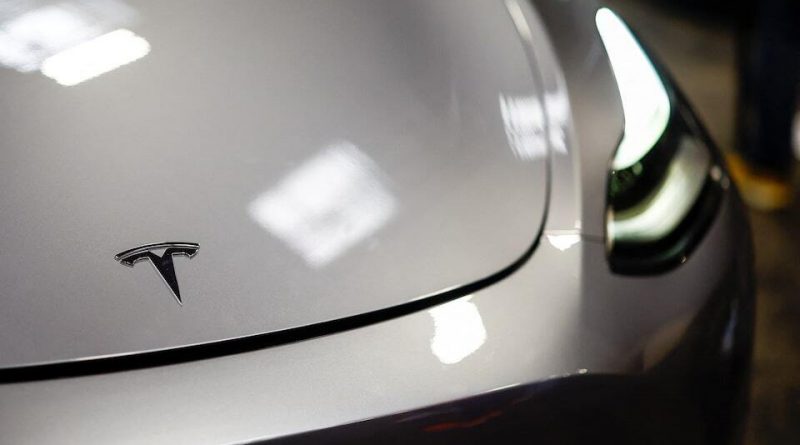
Tesla, however, occupies a different position within Musk’s portfolio, as a large public company navigating a complex transformation.
The electric vehicle maker is in the midst of shifting from traditional car manufacturing toward autonomous driving, robotaxis and humanoid robots.
This transition requires intense focus, long-term capital and careful execution, making a near-term merger with SpaceX less likely in the eyes of many analysts.
Even so, the strategic logic linking Tesla and SpaceX remains compelling over the longer horizon, particularly through shared AI ambitions.
SpaceX’s satellite networks could eventually support Tesla’s autonomous systems, robotics and global connectivity needs.
Supporters of Musk’s integrated approach argue that his companies are designed to reinforce one another, forming a vertically aligned innovation engine.
Tesla investors have historically shown strong confidence in Musk’s vision, often prioritizing long-term technological leadership over short-term volatility.
At the same time, market participants recognize the importance of transparency and valuation clarity when public and private companies intersect.
A future SpaceX public listing could make any deeper alignment with Tesla more straightforward by providing clear market-based benchmarks.
Until then, Tesla continues to advance its roadmap independently, investing heavily in AI, software and next-generation manufacturing.
Meanwhile, SpaceX’s progress toward an eventual public offering keeps attention focused on its scale, profitability and global reach.
For Musk-focused investors, the broader appeal lies in the opportunity to participate across a constellation of companies shaping transport, space, energy and intelligence.
Rather than a single mega-merger, many see incremental integration as a pragmatic way to balance innovation with financial discipline.
This approach allows each company to mature on its own terms while still benefiting from shared expertise and strategic collaboration.
As Musk’s ventures continue to evolve, the emphasis remains on building long-term platforms capable of redefining industries rather than chasing quick structural changes.
Overall, the discussion underscores confidence in Musk’s ecosystem, where SpaceX, xAI and Tesla each play distinct yet interconnected roles in a future driven by AI and advanced engineering.