
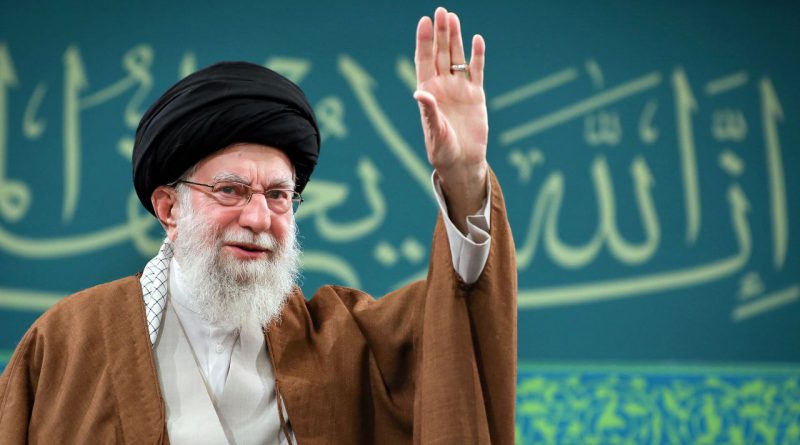
Iran Foreign Ministry confirmed: Supreme Leader Ayatollah Khamenei has died
Tehran – The Foreign Ministry of the Islamic Republic of Iran on Saturday confirmed the death of Supreme Leader Ayatollah Seyyed Ali Khamenei, issuing a statement praising his life and legacy and portraying his political and religious leadership as central to Iran’s independence, resistance to foreign domination and national resilience.
The ministry issued a heavy worded statement praising the life and legacy of Supreme Leader Ayatollah Seyyed Ali Khamenei, framing his political and religious role as central to the country’s independence and resistance to foreign influence.
In the statement, the ministry said Khamenei “lived a pious life, loved Iran, secured Iran’s independence, opposed foreign domination, and worked tirelessly for our country’s resilience and fortitude,” language that echoes long-standing official narratives promoted by the Islamic Republic since the 1979 revolution.
A statement heavy with symbolism
The ministry’s message went further, using highly symbolic and emotive language to describe what it called the “last phase” of Khamenei’s life, portraying his death as “honorable and dignified” and describing it as martyrdom occurring “on the 10th day of Ramadan.”
It alleged he was killed “at the hands of the most corrupt and criminal individuals on earth,” without naming those responsible or providing evidence.
Such language reflects the Islamic Republic’s deep-rooted political culture, in which martyrdom holds powerful religious and national significance, particularly in the context of confrontation with perceived external enemies.
Analysts say official references to martyrdom are often used to reinforce internal unity and frame geopolitical conflict in moral and existential terms.
Independence, resistance and legitimacy
By emphasizing themes of independence and resistance to foreign domination, the Foreign Ministry’s statement reinforces a core pillar of Iran’s state ideology: the portrayal of its leadership as guardians of sovereignty against outside interference.
This narrative has been a constant feature of official discourse amid decades of sanctions, regional rivalries and strained relations with Western powers.
The ministry said Khamenei would remain “a living nightmare for his killers forever,” a confrontational tone Tehran frequently adopts when addressing its adversaries, particularly during periods of heightened regional tension.
Domestic and regional implications
While the statement does not outline any immediate policy steps, its rhetoric is likely to resonate with hardline constituencies inside Iran and among allied groups across the region. Observers note that such messaging can serve multiple purposes: consolidating domestic support, signaling defiance abroad and framing ongoing conflicts as part of a broader historical struggle.
No independent confirmation of the ministry’s claims was immediately available, and the statement offered no further details beyond its symbolic and ideological assertions.


