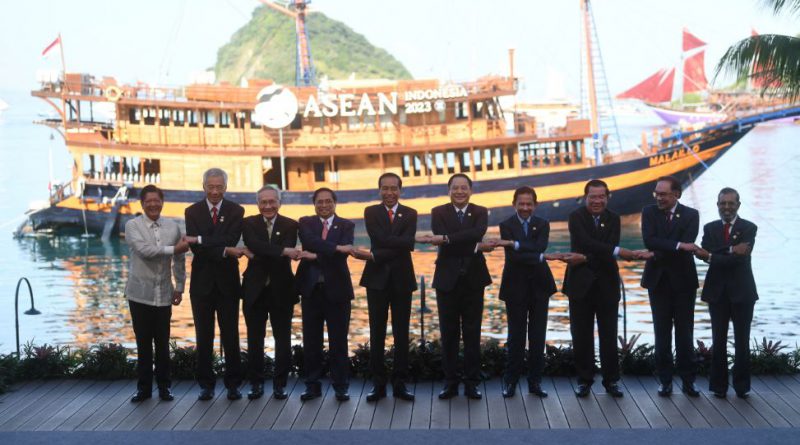
ASEAN Ministers Convene Urgent Talks as Middle East War Jolts Energy Markets
Manila, Economic and foreign ministers from the Association of Southeast Asian Nations (ASEAN) will hold meetings on Friday to assess the economic fallout from the escalating Middle East conflict, as surging oil prices and shipping disruptions threaten inflation, trade flows and energy supplies across the export-dependent region.
The Philippines, which holds the rotating ASEAN chairmanship this year, is hosting an economic ministers’ retreat while foreign ministers are scheduled to convene virtually on the same day to discuss the widening crisis and its implications for Southeast Asia.
Philippine Trade Undersecretary Allan Gepty said the conflict’s economic impact would feature prominently in discussions, particularly as energy prices and logistics disruptions ripple through regional economies.“The concern is a given,” Gepty told reporters, noting that ASEAN governments could not ignore the potential effects on inflation, employment and supply chains.
Joint strikes by the United States and Israel on Iran launched nearly two weeks ago have killed around 2,000 people and disrupted global energy markets and transportation routes, according to officials cited in the discussions.
The conflict has effectively closed the Strait of Hormuz, a strategic maritime chokepoint through which roughly a fifth of the world’s oil and liquefied natural gas shipments pass, sending crude prices above $100 per barrel and triggering volatility in global markets.
Several Southeast Asian economies depend heavily on crude oil and LNG imports from the Gulf, raising concerns over fuel costs and energy security if disruptions persist.
The Philippines imports a significant portion of its oil from the Middle East, while a halt in liquefied natural gas exports from QatarEnergy has tightened regional supply conditions.
Authorities in Manila have shortened the government work week to conserve fuel, and President Ferdinand Marcos Jr. has asked Congress for authority to suspend fuel excise taxes to cushion rising costs.
Elsewhere in the region, Vietnam cut retail fuel prices overnight after a recent easing in global crude benchmarks but warned volatility could persist amid ongoing supply disruptions.
Earlier this month, Thailand halted energy exports to all countries except Laos and Myanmar in an effort to safeguard domestic supply.
ASEAN foreign ministers have described the escalation of the conflict as “particularly regrettable” and called for an immediate cessation of hostilities, urging all sides to exercise restraint, protect civilians and resolve differences through dialogue in accordance with international law.
Regional officials say coordinated policy responses will be essential to manage the economic shock if disruptions to energy supplies and trade routes continue.
“It is important that our actions and responses to the ongoing conflicts must be synchronised,” Gepty said.