Dubai Arrests British Tourist Over Missile Strike Video as UAE Tightens Grip on “Rumours” Amid Conflict
Dubai — A British tourist is facing up to two years in prison in the United Arab Emirates after allegedly filming and sharing footage of missile strikes hitting Dubai, highlighting the country’s increasingly strict approach toward online information during a period of regional conflict.
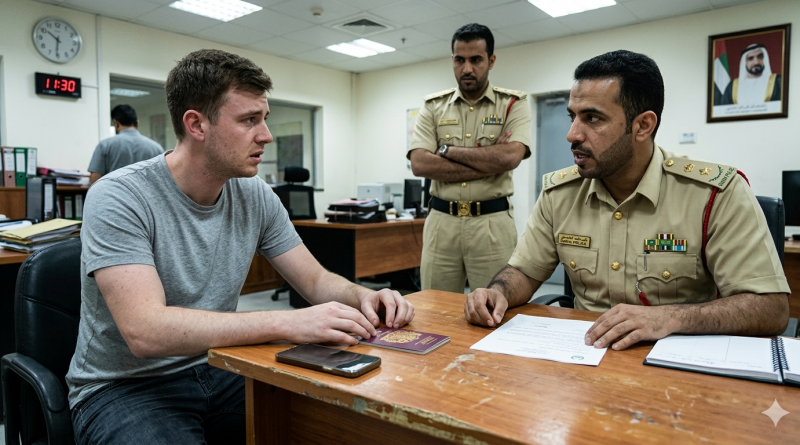
The 60-year-old visitor from London was detained on Monday night and charged alongside approximately 20 other individuals accused of sharing videos, images, or online commentary related to recent Iranian missile attacks targeting the emirate.
Authorities say the suspects circulated content that could “disturb public security,” an offense that carries a maximum prison sentence of two years under the UAE’s cybercrime laws.According to reports, the British tourist filmed missiles striking the city during the latest wave of Iranian attacks. When confronted by authorities, he reportedly deleted the footage immediately and insisted that he had no intention of violating local laws.
Despite this, prosecutors charged him with “broadcasting, publishing, republishing, or circulating rumours or provocative propaganda,” a serious offense in the UAE’s tightly regulated digital environment.The case has quickly drawn attention both in Britain and internationally, underscoring the risks faced by residents and visitors who share content related to security incidents in the Gulf state.
The UAE government has made it clear that the dissemination of unverified or sensitive information online will not be tolerated, particularly during periods of heightened tension.Officials in the Emirates have warned that anyone spreading information which could “incite panic among people” or undermine public order may face prosecution. The government argues that strict regulation of online content is necessary to maintain stability and prevent the spread of misinformation during a volatile security situation.
The arrests come at a time when Dubai, long celebrated as one of the safest and most stable cities in the Middle East, has been thrust into an unprecedented security crisis. Over the past two weeks, the emirate has become one of several Gulf targets struck by Iranian missiles and drones amid escalating regional hostilities.
Several missiles have struck buildings in Dubai, including areas near the city’s international airport and the iconic Fairmont hotel on Palm Jumeirah, a luxury landmark known worldwide for its opulence and tourism appeal. The attacks have shaken confidence in a city that has spent decades cultivating a reputation as a secure global hub for finance, trade, and tourism.
For years, Dubai has marketed itself as a tax-free sanctuary for business leaders, expatriates, and vacationers seeking stability and luxury in the Gulf region. The recent strikes, however, have punctured that carefully curated image, exposing the city to the same geopolitical risks that have long plagued other parts of the Middle East.
Across the Gulf states, Iranian strikes in the current escalation have reportedly killed at least twelve civilians. In the United Arab Emirates, every civilian casualty recorded so far has been a migrant worker, many of whom form the backbone of the country’s construction, service, and logistics sectors.The attacks have not only caused physical destruction but have also sparked an intense effort by the UAE authorities to control the narrative surrounding the crisis.
Government officials appear determined to prevent images or videos of missile impacts from spreading widely online, fearing that such footage could damage the country’s reputation as a secure destination for global investors and tourists.In response, the government has launched a sweeping crackdown on social media activity.
Authorities are monitoring platforms for posts that depict the attacks or discuss the security situation in ways officials believe could cause public alarm.Under the UAE’s cybercrime legislation, publishing or sharing information deemed harmful to national security or public order can lead to significant fines and prison sentences.
Even forwarding content created by others can potentially expose users to prosecution if the material is considered misleading or destabilizing.The British tourist’s case illustrates how easily visitors unfamiliar with local regulations can find themselves entangled in legal trouble.
In many Western countries, recording and sharing footage of major events including disasters or military incidents is generally protected as a form of citizen journalism. In the UAE, however, such actions can be treated as criminal offenses if authorities believe they threaten public stability.
Diplomatic officials in the United Kingdom are likely monitoring the situation closely, particularly given the large number of British nationals living and working in Dubai.
The emirate hosts an estimated 240,000 British expatriates, making it one of the largest overseas British communities in the world.Many Britons are drawn to Dubai by its lucrative job opportunities, tax-free income policies, and high standard of living. The city’s cosmopolitan culture, luxury shopping districts, and world-class entertainment have also made it a popular holiday destination for British tourists.
However, the ongoing conflict and the government’s strict enforcement of cybercrime laws have raised concerns among expatriates and visitors about what they can safely post onlineAt the same time, a contrasting trend has emerged on social media within the UAE.
Influencers and content creators based in Dubai have increasingly shared posts praising the government and emphasizing the leadership of Sheikh Mohammed bin Rashid Al Maktoum, the ruler of Dubai and vice president of the UAE
Many of these posts highlight Dubai’s resilience and portray the city as continuing to function normally despite the attacks. Videos showing luxury hotels, bustling shopping malls, and calm beaches have been widely circulated, often accompanied by messages affirming confidence in the government’s ability to maintain security.
Critics, however, argue that the government’s aggressive control over online narratives risks suppressing legitimate reporting and public discussion during a time of crisis. Human rights advocates have long criticized the UAE’s cybercrime laws for their broad language, which allows authorities considerable discretion in determining what constitutes harmful or destabilizing content.
Supporters of the policy counter that strict information control is necessary to prevent panic and to protect national security during periods of military threat.For the British tourist now facing prosecution, the consequences could be severe.
If convicted, he could receive a prison sentence of up to two years, a penalty that would serve as a stark warning to residents and visitors alike about the boundaries of digital expression in the Emirates.The unfolding case reflects the complex intersection of geopolitics, digital media, and national security in an era when nearly every major event is instantly recorded and shared online.
As missiles continue to fall across parts of the Gulf and governments struggle to manage both physical threats and information flows, the incident in Dubai demonstrates how even a short video clip can become entangled in the broader battle over narratives, security, and global perception.