‘It Was Like Doomsday,’ Says Kabul Hospital Survivor After Pakistan Air Strike
Kabul— Flames tore through a drug rehabilitation centre in Kabul late Monday night after what Afghan authorities described as a Pakistani air strike, leaving hundreds dead and survivors recounting scenes of devastation that one witness likened to “doomsday.
”Ahmad, a 50-year-old patient undergoing treatment at the facility, said he watched helplessly as fire engulfed the dormitory he shared with 25 others. He was the only one to survive.
“The whole place caught fire. It was like doomsday,” he told Reuters, describing how cries for help echoed through the building as the blaze spread rapidly following the explosions.
The Taliban-led government in Kabul said at least 400 people were killed and around 250 injured in the attack making it one of the deadliest incidents in the Afghan capital in recent months.
Pakistani officials, however, denied targeting any civilian or medical facility, stating that the strikes were aimed at militant infrastructure.
The incident underscores escalating tensions between Pakistan and Afghanistan, which have seen periodic flare-ups along their shared border. The latest strike comes during the holy month of Ramadan, a time typically marked by restraint but increasingly overshadowed by violence in the region.
Ahmad said the attack came shortly after evening prayers, when patients had gathered inside their dormitory. Within moments, explosions ripped through the premises,triggering fires that spread uncontrollably.
Trapped inside, many were unable to escape.Mohammad Mian, a radiology worker at the hospital, described the destruction as overwhelming. He said many patients were housed in container-like units across the campus, where survival chances were slim once the bombs struck.
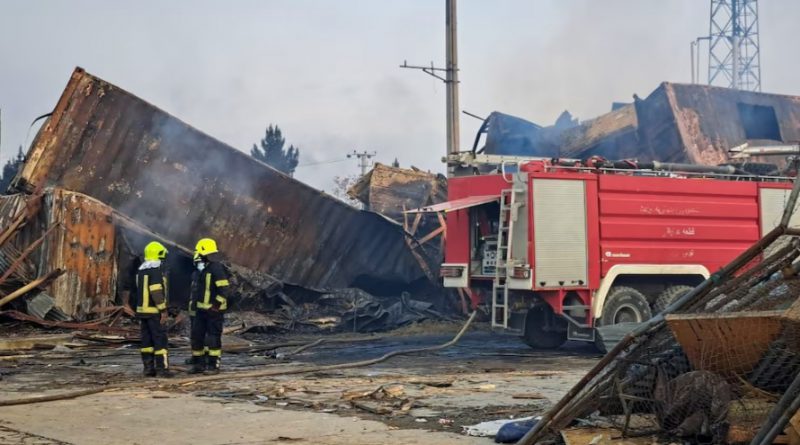
“It was extremely terrifying,” he said. “Those who survived were the ones whose rooms were not destroyed. But where the bombs fell, everyone there was killed.”When Reuters reporters visited the site on Tuesday, they found charred walls, collapsed structures, and debris scattered across the premises.
Personal belongings pillows, shoes, and clothing lay buried under rubble, silent reminders of those who had lived there just hours before.Inside Ahmad’s dormitory, some bunk beds remained upright, their bedding eerily undisturbed.
The ceiling had been blown away, exposing the room to the sky. The contrast between intact objects and total destruction around them highlighted the randomness of survival.Dr. Ahmad Wali Yousafzai, a health officer at the facility, said the hospital housed around 2,000 patients at the time of the strike. He recalled hearing three powerful explosions that sent shockwaves through the building.
“The blasts threw people from one wall to another,” he said. “Then fires started, and there were screams for help from all directions.”Medical staff and volunteers struggled to respond amid the chaos.
With limited personnel and resources, many victims could not be reached in time.“We were too few in number to save all of them,” Yousafzai added.
Emergency responders worked through the night and into the next day. Ambulance driver Haji Fahim said he transported at least eight bodies over several hours to a nearby facility, the Afghan-Japan Hospital.
“Now we have come again,” he said on Tuesday. “There are still bodies under the rubble.”The taliban government condemned the strike and called for international attention, while Islamabad reiterated that its operation targeted what it described as “terrorist support infrastructure.”
The conflicting accounts could not be independently verified.Analysts say the incident risks further destabilizing an already fragile relationship between the two neighbours, where cross-border militancy, refugee flows, and security concerns have long fueled mistrust.
For survivors like Ahmad, however, the geopolitical narratives offer little comfort. Standing amid the ruins, he said the memories of that night the flames, the screams, and the helplessness would stay with him forever.
“I could hear them calling for help,” he said quietly. “But there was nothing I could do.”