Trump presses Japan on Iran as Takaichi walks diplomatic tightrope in Washington
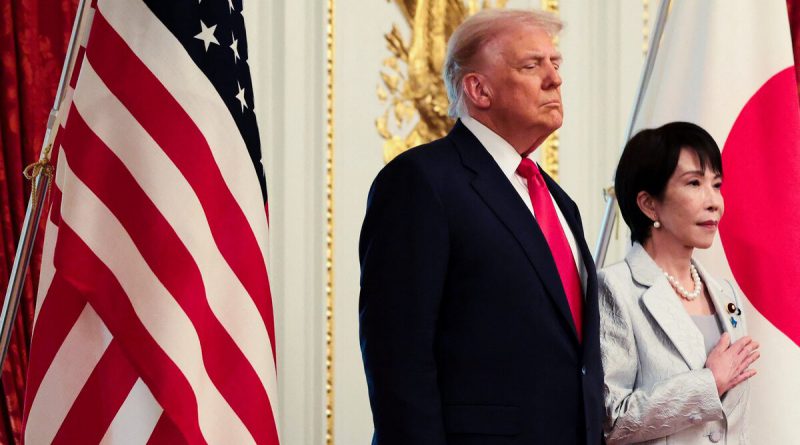
Tokyo– Japanese Prime Minister Sanae Takaichi will meet Donald Trump at the White House on Thursday as Washington pushes Tokyo to support its Iran war effort, placing strain on a long-standing alliance amid demands for maritime security deployments in the Strait of Hormuz.
Takaichi will be the first major ally to hold face-to-face talks with Trump since he urged Japan and other partners to send naval vessels to escort tankers through the strategically vital waterway, which has been largely disrupted by Iran during the conflict.
“The biggest risk is that Trump publicly presses her for security commitments that she can’t deliver on,” said David Boling of the Asia Group consultancy in Tokyo, a former U.S. trade negotiator with Japan.
The Strait of Hormuz handles roughly a fifth of global energy supplies, with about 90% of Japan’s crude oil imports passing through it, underscoring Tokyo’s exposure to the crisis.
Japanese officials said Takaichi had initially planned to steer discussions toward concerns over China’s regional posture ahead of a delayed visit, but shifting U.S. priorities have forced a focus on Iran and maritime security.
Japan has received no formal request from Washington, Takaichi told parliament earlier this week, adding that the government was assessing possible responses within the constraints of its pacifist constitution.
Several U.S. allies, including Germany, Italy and Spain, have ruled out joining a Gulf mission. Kaja Kallas said on Tuesday that no country was prepared to risk personnel in the conflict zone.
Public sentiment in Japan also remains cautious. Fewer than 10% of respondents support U.S. and Israeli strikes on Iran, according to a poll by the Asahi newspaper.
Trump has alternated between criticising allies for their reluctance and downplaying their necessity, singling out countries like Japan that rely on U.S. security guarantees while depending heavily on Middle Eastern oil flows.
Tokyo has historically limited its role in Middle East operations to logistical and intelligence support. Analysts say deploying Japanese vessels into an active conflict zone would face significant legal and political hurdles.
“It has turned into a discussion that shakes the very foundations of the Japan–U.S. security alliance,” said Kazuhiro Maeshima, a politics professor at Sophia University in Tokyo.