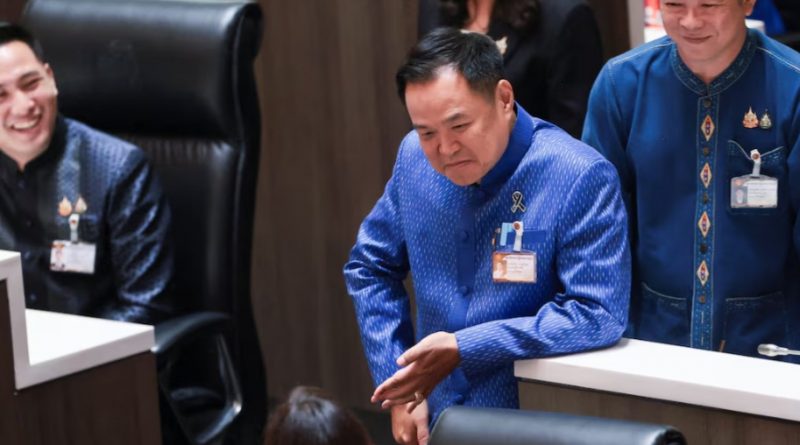
Anutin secures renewed mandate in Thailand on nationalist wave after border tensions
Bangkok – Thailand’s parliament on Thursday backed veteran politician Anutin Charnvirakul to return as prime minister following a February general election shaped by a surge in nationalist sentiment after a border conflict with Cambodia, consolidating support from conservative and royalist factions.
Anutin, leader of the Bhumjaithai Party, leveraged heightened public concern over territorial security in the wake of last year’s tensions with Cambodia, framing his campaign around sovereignty and stability. His messaging resonated with voters and key political stakeholders, helping him regain power after triggering snap polls less than 100 days into his previous tenure.
At a pre-election rally in Bangkok, Anutin cast his party as the defender of national integrity, urging voters to back Bhumjaithai as a patriotic choice.
His campaign emphasized safeguarding Thailand’s land and security, aligning closely with broader nationalist currents that gained traction after the border dispute.
Analysts say the strategy proved effective in consolidating a fragmented electorate and appealing to establishment forces wary of instability. The political climate, shaped by external tensions, created conditions favorable to candidates projecting strong national leadership.
Establishment support consolidates powerPolitical observers noted that Thailand’s conservative-royalist establishment rallied behind Anutin, providing crucial backing in both the electoral process and parliamentary vote.
This alignment helped secure his return to office despite the short-lived nature of his previous administration.The support underscores the continued influence of traditional power centers in Thai politics, particularly during periods of geopolitical strain. Anutin’s positioning as a stabilizing figure appears to have reassured key stakeholders amid uncertainty.
Anutin’s decision to call snap elections shortly after assuming office initially drew scrutiny, but the timing coincided with rising nationalist sentiment that ultimately worked in his favor.
The February polls became a referendum not only on governance but also on national security priorities.
His swift return to power reflects both the effectiveness of his campaign messaging and the broader political recalibration driven by regional tensions.