Europe braces for migration surge amid Iran war concerns
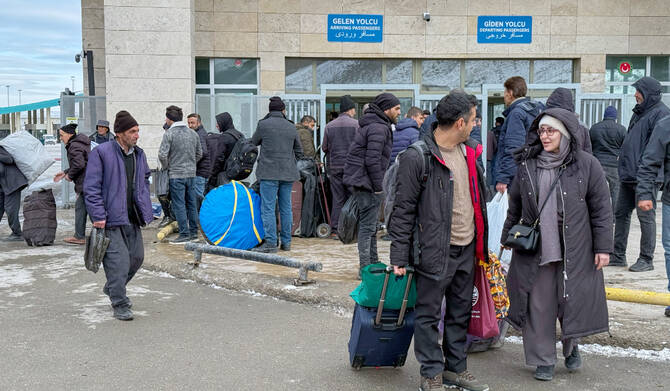
Copenhagen — The prime ministers of Denmark and Italy warned that the ongoing conflict involving Iran could trigger a new wave of migration toward the European Union, calling for tighter border controls and increased humanitarian support to prevent a repeat of the 2015–2016 crisis.
In a joint letter to EU leaders, Mette Frederiksen and Giorgia Meloni said Europe “cannot risk a repeat” of the earlier influx, when hundreds of thousands arrived, many fleeing the Syrian civil war.
The two leaders urged the European Commission to adopt a 458-million-euro ($527 million) humanitarian aid package aimed in part at supporting populations affected by the Middle East conflict before displacement leads to onward migration toward Europe.
“The ongoing conflict in the Middle East is increasingly worrying,” they wrote, noting that the region already hosts large numbers of displaced people. They warned that unmanaged flows could have implications not only for those directly affected but also for the “security and cohesion” of the European Union.
Their proposal emphasizes assistance to countries in the region to manage displacement locally, reducing the likelihood of large-scale migration toward Europe.
Frederiksen and Meloni said the EU must strengthen its external borders and improve preparedness to respond to potential migration pressures. “We cannot afford to be taken by surprise as in the past,” they said, calling for proactive steps if the situation deteriorates.
The initiative reflects a broader push among some EU leaders to tighten migration policies in response to geopolitical instability and evolving security concerns.
The issue has also been raised by other European leaders. Friedrich Merz warned earlier this month that instability in Iran could have “far-reaching consequences,” including increased migration flows.
Frederiksen and Meloni were joined by Rob Jetten and other EU representatives in informal discussions with the European Commission on “innovative” approaches to limit immigration in light of the conflict.
The warnings come as the war, which began with a bombardment of Iran by the United States and Israel in late February, continues to reshape regional dynamics and raise concerns across Europe.