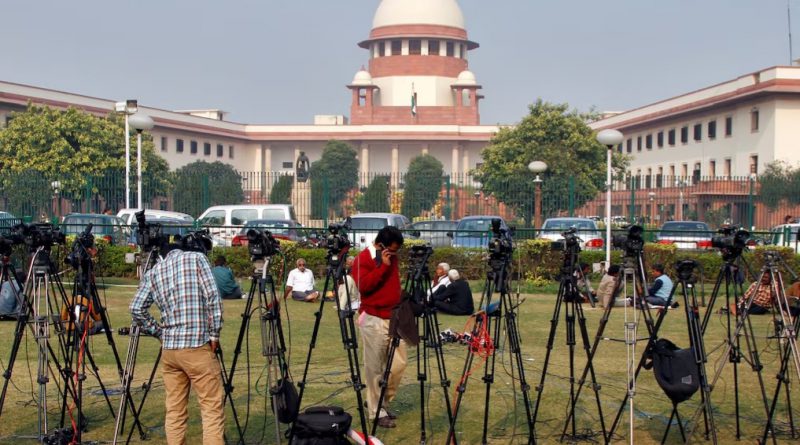
India’s privacy law faces Supreme Court test amid press freedom concerns
New Delhi-Transparency activists and journalists have challenged the Indian government in the Supreme Court of India over a new privacy law, arguing it could restrict access to information and have a “chilling” effect on journalism.
At least four petitions are scheduled to be heard on March 23, targeting amendments linked to the Digital Personal Data Protection Act that critics say weaken the country’s two-decade-old Right to Information framework.
The dispute centers on a provision excluding “personal information” from disclosure under the Right to Information Act. Previously, such information could be released if it served the public interest.
Petitioners argue the change could allow authorities to withhold key data, including details about public spending or officials involved in controversial projects, thereby undermining accountability.
Anjali Bhardwaj said the amendment could enable the government to block disclosure of information critical to public scrutiny, while activist Venkatesh Nayak described the move in court filings as a “death knell for participatory democracy.”
The government of Narendra Modi has rejected allegations that it is curbing transparency, saying the law maintains a balance between privacy rights and access to information.
IT Minister Ashwini Vaishnaw told parliament the changes would “not restrict the disclosure of personal information” and adhere to the principle of “maximum disclosure and minimum exemptions.
”Officials have also denied broader accusations of suppressing dissent, stating that content removal orders are limited to unlawful material.
The controversy comes amid wider scrutiny of India’s transparency framework. The country’s position in a global ranking by the Centre for Law and Democracy has fallen from second place in 2013 to ninth, with researchers citing expanding exemptions under the RTI regime.
Journalists and civil society groups have expressed concern that the amended law, combined with stricter digital regulations, could affect investigative reporting and access to public-interest information.
The privacy legislation also introduces significant financial penalties for non-compliance by technology companies, adding another layer of regulatory oversight in India’s digital ecosystem.