
Japan weighs Hormuz minesweeping role contingent on ceasefire
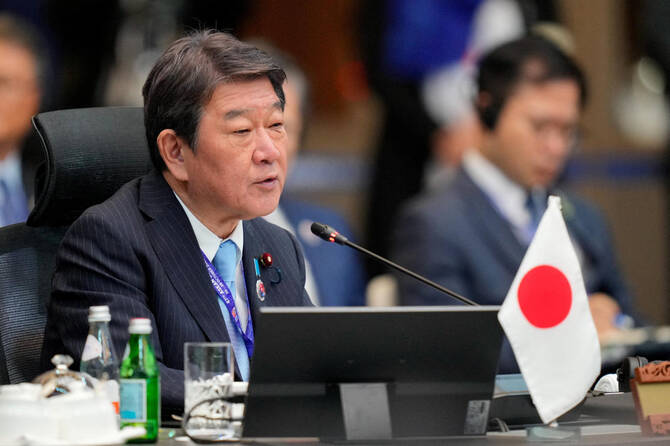
Tokyo — Japan could consider deploying its Self-Defense Forces for minesweeping operations in the Strait of Hormuz if a ceasefire is reached in the U.S.-Israeli conflict with Iran, Foreign Minister Toshimitsu Motegi said on Sunday, outlining a conditional and hypothetical role tied to post-conflict navigation safety.
Speaking on a Fuji TV programme, Motegi said minesweeping could be an option if naval mines obstruct shipping lanes following a “complete ceasefire,” stressing that any such step would depend on conditions stabilising in the waterway, a conduit for roughly a fifth of global oil shipments.
Japan’s potential involvement would be constrained by its postwar pacifist constitution, which restricts military activity abroad. However, security legislation enacted in 2015 allows overseas deployment of the Self-Defense Forces if a crisis threatens Japan’s survival and no alternative measures are available.
Motegi said Tokyo had no immediate plans to pursue arrangements to secure passage specifically for Japanese vessels, but emphasised the importance of restoring safe navigation through the strait. Japan relies on the route for around 90% of its oil imports, leaving it highly exposed to disruptions.
The near-closure of the Strait of Hormuz amid the ongoing conflict has contributed to a surge in global oil prices, prompting Japan and other countries to release crude from strategic reserves.
Iranian Foreign Minister Abbas Araghchi told Japan’s Kyodo news agency he had discussed with Motegi the possibility of allowing Japan-linked vessels to transit the strait.U.S. President Donald Trump has urged allies, including Japan, to increase their role in securing the waterway, though Tokyo has so far signalled limits based on its legal framework.
Prime Minister Sanae Takaichi said she had briefed Trump on the scope of support Japan could provide under domestic law.
Separately, Motegi said one of two Japanese nationals detained in Iran had been released on Wednesday and would return to Japan. He said the release followed repeated diplomatic representations to Tehran, while confirming that a second Japanese citizen remains in custody.


