Energy brinkmanship intensifies as U.S., Iran widen conflict targets
Dubai— U.S. President Donald Trump threatened to strike Iranian power plants if Tehran does not reopen the Strait of Hormuz within 48 hours, prompting Iran to warn it would retaliate by targeting U.S. and allied energy, information technology and desalination infrastructure across the region, as the conflict entered its fourth week.
Trump issued the warning in a social media post on Saturday, saying Washington would “obliterate” Iranian power facilities if the strategic waterway remained closed. The strait, a critical conduit for global oil flows, has been effectively shut amid the ongoing hostilities.
Iran’s military command, Khatam al-Anbiya, said any attack on its fuel and energy infrastructure would trigger strikes on U.S. and Israeli assets, including critical civilian-linked systems.
The statement, carried by state media, underscored a widening scope of potential targets beyond conventional military sites.
Iranian officials also indicated that access through the Strait of Hormuz would be restricted, with passage permitted selectively, reflecting Tehran’s control over the route during the conflict.
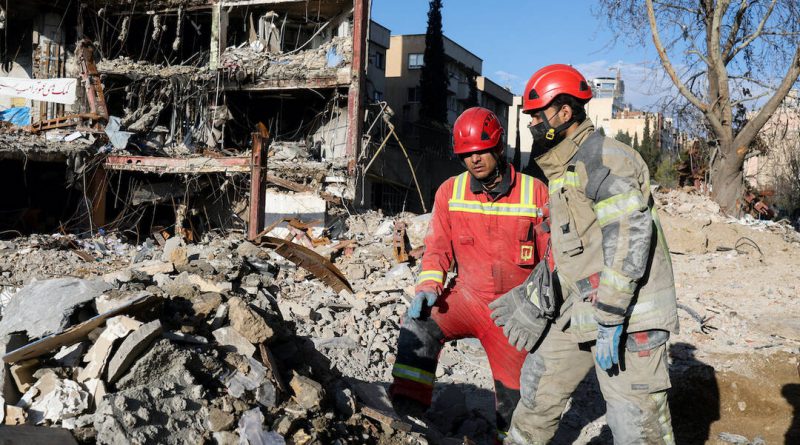
The escalation coincided with renewed Iranian missile barrages on Israel, including strikes near the southern cities of Dimona and Arad, close to the Negev Desert nuclear research area.
Israeli authorities said dozens were injured and residential buildings sustained heavy damage.Israeli Prime Minister Benjamin Netanyahu said the impact in Arad caused extensive destruction but no fatalities, while urging adherence to air raid warnings. Israel’s military acknowledged that some missiles were not intercepted, marking a breach in air defence coverage in the area.
Iran’s parliament speaker Mohammad Bagher Ghalibaf said the strikes indicated a shift to a new operational phase in the conflict.
The conflict has extended beyond Iran and Israel, with Hezbollah claiming responsibility for a deadly strike in northern Israel, while Gulf states reported drone and missile activity targeting energy infrastructure.
Iran also targeted the joint UK-U.S. military facility at Diego Garcia in the Indian Ocean, though officials said the strike was unsuccessful. Military assessments cited in reports suggested the possibility of longer-range capabilities or alternative launch methods, though no confirmation was provided by Tehran.
The disruption to shipping through the Strait of Hormuz has halted most tanker traffic, contributing to supply constraints and rising global energy prices. Countries including the United Arab Emirates, Britain, Germany, France and Japan have expressed readiness to support efforts to restore safe navigation through the waterway.
U.S. Central Command said earlier that strikes on Iranian coastal facilities had degraded Tehran’s ability to target vessels in the strait. Additional U.S. naval assets and personnel are being deployed to the region as part of ongoing operations.
Casualties have mounted across multiple theatres, with Iran reporting more than 1,500 deaths, while Israel, the United States and Gulf states have also recorded military and civilian losses.