Taiwan opposition leader defends China outreach, rejects anti-U.S. narrative
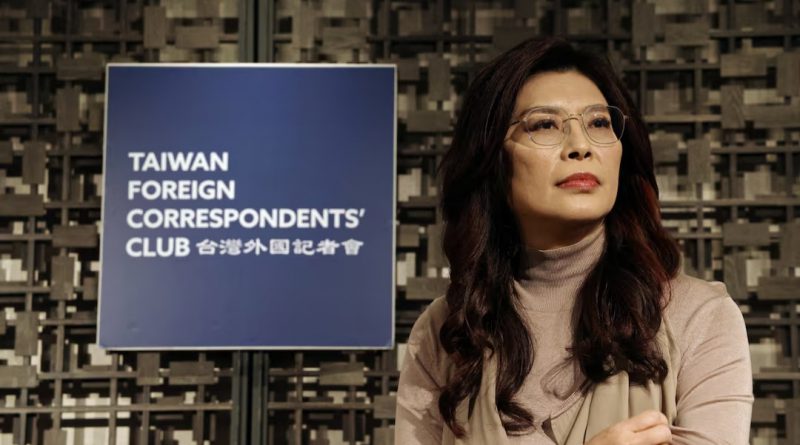
Taipei— Cheng Li-wun, leader of Taiwan’s main opposition Kuomintang (KMT), said on Monday that improving ties with Beijing does not equate to being anti-American, stressing that Taiwan’s survival depends on maintaining stable relations with China.
Speaking at the Taiwan Foreign Correspondents’ Club in Taipei, Cheng said her party’s long-standing ties with the United States would remain intact even as it seeks closer engagement with mainland China. “There is no contradiction between the two, and there is no need to choose one over the other,” she said, rejecting criticism that outreach to Beijing would weaken relations with Washington.
Cheng, a former lawmaker who became KMT chair in October, has signalled a stronger push for engagement with Beijing compared to her predecessor Eric Chu, who did not visit China during his tenure starting in 2021. She has expressed interest in meeting Chinese President Xi Jinping, though she did not provide details on any potential timeline.
China, which views Taiwan as its own territory, has refused to engage with the government of President Lai Ching-te, whom it labels a separatist. However, Beijing has maintained contacts with senior KMT figures, underscoring the party’s role as an alternative channel for cross-strait communication.
The ruling Democratic Progressive Party (DPP) has criticised the KMT’s approach, accusing it of undermining Taiwan’s democracy and aligning too closely with Beijing. Cheng rejected those claims, saying her party supports arms purchases from the United States, though she emphasised that such spending must be carefully evaluated.
The KMT, alongside the smaller Taiwan People’s Party, holds a parliamentary majority, allowing it to influence defence budgets and legislative priorities, including measures related to security cooperation with Washington.
Taiwan’s political parties are preparing for mayoral and county chief elections in November, seen as a key indicator of public sentiment ahead of the 2028 presidential race. Analysts say cross-strait policy and defence spending are likely to remain central campaign issues.
China has intensified military pressure on Taiwan and has not ruled out the use of force to bring the island under its control, keeping geopolitical risks elevated in the region.