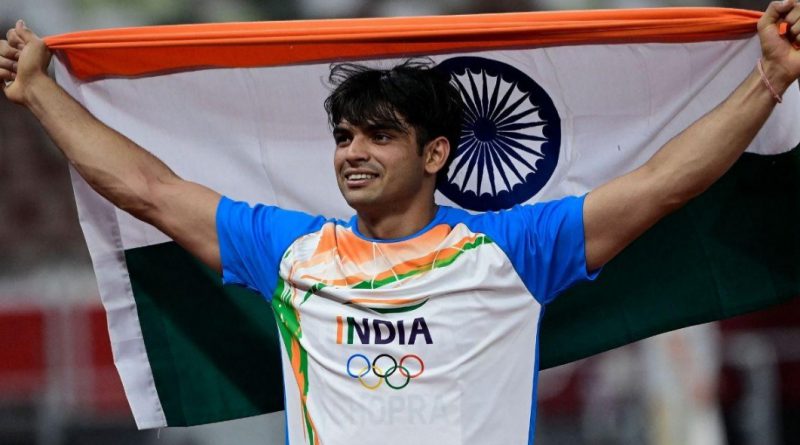
From desert dust to global glory: how Neeraj Chopra redefined Indian athletics
I just wanted to throw farther than yesterday — I never imagined it would change a nation.”
In the small town of Khandra in Haryana, a young boy once picked up a javelin not out of ambition, but curiosity. Neeraj Chopra, born into a farming family, struggled with obesity as a child.
His family encouraged him to take up physical activity, leading him to a local stadium in Panipat. It was there, almost by accident, that he discovered javelin throwing.Without elite facilities or global exposure, Chopra trained with basic equipment and limited resources.
Early coaches noticed his natural technique and discipline. His progress was steady rather than explosive, built on repetition and a quiet determination that would later define his career.
Chopra’s early success came at the junior level, where he set a world junior record in 2016. But his journey was not without setbacks. Injuries, including a significant elbow surgery in 2019, threatened to derail his momentum.
During recovery, he rebuilt his technique and physical conditioning, often away from public attention.His training philosophy remained simple: consistency over spectacle.
Coaches and analysts have pointed to his biomechanical precision and mental composure as key factors distinguishing him from competitors.
At the Tokyo 2020 Olympics, Chopra entered the final as a strong contender but not the favourite. On his second attempt, he launched the javelin to a distance of 87.58 metres, a throw that secured India’s first-ever Olympic gold medal in athletics.
The victory carried significance beyond sport. For decades, India’s Olympic successes had been concentrated in shooting, wrestling and field hockey. Chopra’s win expanded the country’s athletic identity, inspiring investment and participation in track and field disciplines.
His composure during the event stood out. While competitors faltered under pressure, Chopra maintained a calm rhythm, focusing on execution rather than outcome.impact beyond medalsFollowing his Olympic success, Chopra became a central figure in India’s sporting narrative.
His achievements contributed to increased visibility for athletics, particularly in rural regions where access to infrastructure remains uneven.
Sports administrators have since cited his influence in expanding grassroots programs and encouraging youth participation.
His story has also been used to highlight the importance of long-term athlete development rather than short-term results.
Despite global recognition, Chopra has maintained a low-profile public persona. Interviews and public appearances reflect a focus on training and performance rather than celebrity status.
His journey from a small-town athlete to an Olympic champion illustrates the intersection of individual persistence and evolving sports ecosystems in India.
It underscores how a single performance, built over years of preparation, can reshape national expectations and redefine what is considered possible.