Northern Nigeria Faces Escalating Malnutrition Crisis Amid Strained Health System and Funding Gaps
“Malnutrition weakens immune systems, increasing demand for treatments at exactly the moment supply chains are most strained.”
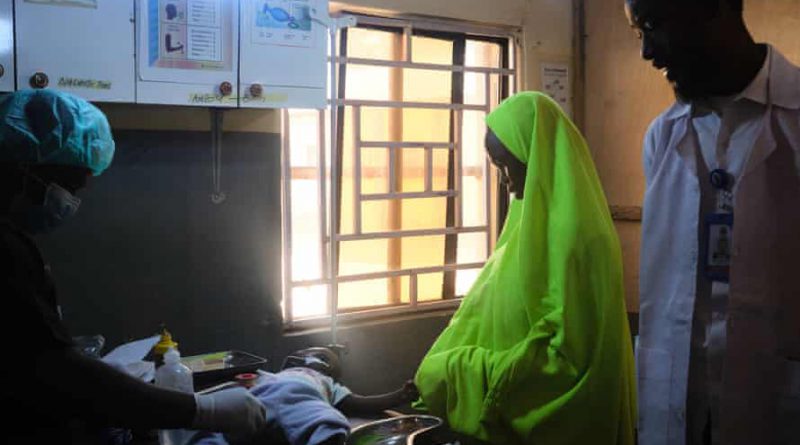
Zuwaira Hanafi stood outside a healthcare facility in Kaita, in Nigeria’s northern Katsina state, as medical staff hurried into a ward where her eight-month-old daughter lay semiconscious, underscoring the urgency confronting health workers in a region grappling with rising levels of severe malnutrition.
At the entrance, clinicians used colour-coded measuring tapes to assess the mid-upper arm circumference of children, a standard method for diagnosing malnutrition.
A steady flow of mothers, including teenagers, arrived with infants in critical condition, reflecting what humanitarian agencies describe as a deepening hunger crisis affecting large parts of the country.The International Federation of Red Cross and Red Crescent Societies has warned that as many as 33 million Nigerians could face severe hunger in 2026, a record level.
Data from the United Nations Office for the Coordination of Humanitarian Affairs indicates that approximately 6.4 million children in Nigeria are expected to be acutely malnourished by the end of the year, with the burden concentrated in northern regions such as Katsina.
Dr Soma Bahonan, head of the Nigeria mission for the Alliance for International Medical Action (Alima), which operates the Kaita facility in partnership with local authorities, said the crisis is expanding beyond children. Increasing numbers of mothers are also presenting with acute malnutrition, compounding the risks to infant health and survival.
Alima has expanded its operations to include mobile clinics designed to reach remote populations unable to travel to fixed facilities. These services include transport support for critical cases from surrounding communities.
However, Bahonan described the scale of need as exceeding operational capacity, particularly in Katsina, which has become a focal point of what aid workers describe as an intergenerational hunger crisis.Longstanding drivers of food insecurity, including climate variability and structural governance challenges, have been intensified by rising insecurity.
Attacks by jihadist groups and other non-state actors have disrupted farming activities and restricted access to agricultural land, further weakening household food production and income stability.The strain on the healthcare system is evident in workforce shortages. Nigeria’s doctor-to-patient ratio is estimated at roughly 1:9,000, significantly below the World Health Organization’s recommended ratio of 1:600.
Medical professionals continue to leave the country, citing delayed salary payments and limited career prospects, further reducing service capacity in already underserved areas.While digital health startups and private-sector partnerships have made progress in urban centres such as Lagos and Abuja, their reach remains limited in rural and conflict-affected regions due to infrastructure deficits and high inflation.
This uneven distribution of innovation has widened disparities in healthcare access.Analysts describe Nigeria’s current situation as a convergence of multiple crises. Joachim MacEbong, a senior analyst at Control Risks in Lagos, said the country faces overlapping economic, security, and human development challenges that reinforce one another.
He noted that these interconnected pressures are contributing to deteriorating health outcomes and weakening institutional response capacity.Humanitarian organisations have begun planning for the annual lean season, typically spanning June to September, when food stocks decline and malnutrition rates tend to rise.
The period is expected to place additional stress on already constrained health and nutrition services.Policy interventions have been introduced, though their impact remains uncertain.
In 2025, the Nigerian government partnered with the World Bank to implement the Accelerating Nutrition Results in Nigeria project, aimed at delivering basic nutrition services to vulnerable households.
A second phase of the programme is currently under way, but experts say broader structural reforms are required to improve food affordability and strengthen social protection systems.Supply chain inefficiencies continue to limit access to essential medicines and equipment.
Peter Bunor Jr, co-founder and head of growth at Field Intelligence, a health technology company focused on pharmaceutical logistics in Africa, said disruptions in global and domestic supply chains are contributing to shortages at the point of care.
Patients often travel long distances only to find that prescribed drugs are unavailable or replaced with alternatives, frequently at higher cost.Bunor said the impact of these shortages is amplified during a hunger crisis, as malnourished individuals are more susceptible to infections and require timely medical intervention.
He emphasised the need for better data integration and forecasting to prevent stockouts.In 2018, Field Intelligence launched the Nigeria Health Logistics Management Information System, a platform designed to track pharmaceutical supply data across public health programmes.
The system, now managed by the federal health ministry, has been expanded with support from UNICEF, and stakeholders are encouraging wider adoption among health agencies to improve coordination and anticipate shortages.Funding constraints remain a central concern.
Nigeria allocated approximately 5.2% of its 47.9 trillion naira national budget to the health sector, well below the 15% target set under the Abuja Declaration by African Union member states. Per capita health spending remains among the lowest on the continent.
In February, Health Minister Muhammad Ali Pate disclosed that of the 218 billion naira allocated for operations and capital projects under the ministry, only 36 million naira had been released. The figure, representing a small fraction of the approved budget, has raised concerns about implementation capacity and fiscal prioritisation.
MacEbong said the funding gap illustrates broader structural challenges in public finance management, noting that limited budget execution undermines service delivery even where allocations exist. He added that the scale of the crisis requires sustained government attention, particularly in sectors directly linked to human capital development.
Aid organisations continue to call for increased domestic investment in health and nutrition, alongside improved coordination with international partners.
As conditions in northern Nigeria worsen, frontline health workers face mounting pressure to manage a growing caseload with limited resources, highlighting systemic vulnerabilities in one of Africa’s largest economies.