Saudi-Austrian Billionaire Al-Jaber Urges Federal Yemen, Warns of Secession Threat
London — A Saudi-born Austrian billionaire and philanthropist has warned that Yemen risks deeper fragmentation and potential secessionist movements if current conflict dynamics persist, according to a statement issued on Sunday.
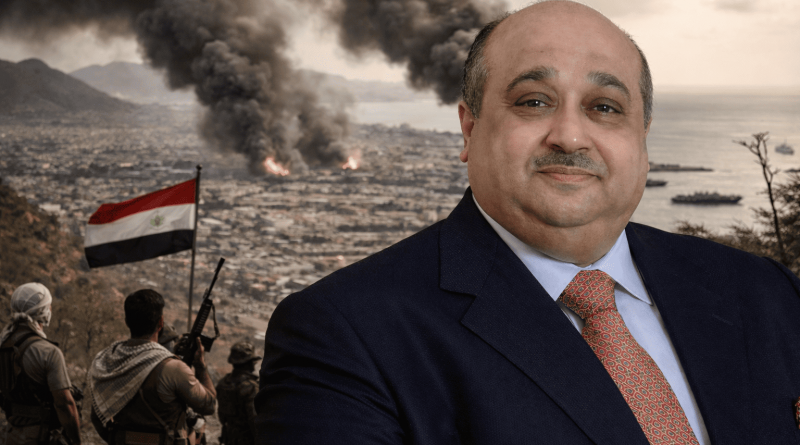
In the declaration, Mohammed bin Issa Al-Jaber—founder, chairman and chief executive of the MBI Group, a multinational conglomerate with assets exceeding $10 billion—said decision-making over war and peace in Yemen has shifted away from the state and into the hands of actors aligned with a regional agenda linked to Iran.
Power Fragmentation and Loss of Sovereignty
Al-Jaber argued that Yemen’s institutional framework has effectively collapsed into a dual structure: an internationally recognised government lacking operational authority, and a rival administration in Sanaa dominated by the Houthi movement, which he said imposes military decisions without public consent.
He characterised this imbalance as a “confiscation of national sovereignty,” warning that Yemenis are being drawn into conflicts that do not serve their national interests. His remarks echo broader assessments that Yemen’s war has increasingly become entangled in regional geopolitical competition, particularly involving Iran and Gulf states.
Federalism as a Structural Remedy
Positioning federalism as a viable exit strategy, Al-Jaber called for a decentralised Yemeni state in which regions are granted full administrative and political authority. He argued that such a framework would enable local governance, reduce corruption, and shield communities from externally driven military escalations.
He pointed to developments in Hadramout, where intervention by Saudi Arabia helped stabilise tensions late last year. Saudi Arabia has been a central actor in Yemen since 2015, backing the recognised government against Houthi forces.
Federal restructuring has previously been proposed during Yemen’s National Dialogue process, though implementation has stalled amid ongoing conflict and institutional breakdown.
Tihama and the Self-Determination Debate
Al-Jaber highlighted Tihama as particularly exposed to the consequences of continued instability. Home to more than eight million people and possessing strategic access to the Red Sea, he said the region holds the economic and geographic foundations of a viable state.
He warned that, in the absence of sovereign decision-making and public consent, calls for self-determination could intensify. “When people are forced into wars that do not serve their interests, self-determination becomes a legitimate political option,” he said.
While such claims remain legally and politically contentious, the principle has been invoked in cases where state authority collapses or fails to represent local populations (UN Charter, Article 1).
International Appeals and Escalating Rhetoric
The statement also urged former U.S. President Donald Trump and the international community not to interpret current developments as reflective of the Yemeni population’s will. It called on the United Nations and the UN Security Council to convene urgently and organise elections under international supervision.
Al-Jaber further issued a 48-hour ultimatum to Houthi leadership to cease claiming representation of the Yemeni people and to issue an apology, warning that failure to do so could trigger widespread public mobilisation across regions from Mahra to Saada and from Aden to Medie.
He concluded that Yemen should only engage in war in self-defence, stressing that long-term stability depends on political consensus and national interest rather than what he described as “reckless military adventurism.”