Art Criticism Under Pressure: Memory, Subjectivity and the Limits of Judgement in Contemporary Practice
“What do I really think when the deadline arrives and certainty refuses to follow experience?”
Art criticism, even when grounded in direct observation, often operates within conditions of uncertainty, where memory, perception and interpretation intersect in complex ways.
The act of witnessing an artwork does not necessarily produce clarity. Instead, as reflected in decades of exhibition-going and reviewing, impressions can become unstable over time, shaped as much by recollection and context as by the work itself.A painting such as Johannes Vermeer’s Woman Writing a Letter, With Her Maid (c.1670–71) illustrates this ambiguity.
The scene withholds key visual information, including the contents of the letter and the source of the maid’s attention. Yet the composition generates a sense of intimacy and narrative proximity. The viewer is required to construct meaning independently, filling gaps left deliberately unresolved.
This interpretive process underscores a broader condition in art criticism, where definitive readings remain elusive and subjective engagement becomes central.Large-scale exhibitions have historically contributed to shaping critical frameworks.
The Vermeer exhibition at the Rijksmuseum in 2023 is cited as a significant reference point, forming part of a longer continuum of influential shows. Earlier exhibitions, including a major Francisco Goya retrospective at London’s Royal Academy in 1963, an Édouard Manet exhibition at the Prado in 2003, and The Sacred Made Real at the National Gallery in 2010, demonstrate how institutional curation can influence both public reception and critical memory.
These exhibitions, widely documented and attended, contribute to an evolving narrative of art history that critics revisit over time.Recurring international exhibitions such as Documenta in Kassel and Manifesta across European cities, alongside events like the Venice Biennale and installations in spaces such as Tate Modern’s Turbine Hall, have expanded the scale and scope of contemporary art presentation.
Critics frequently encounter a saturation of visual experiences in these contexts, where the volume of exhibitions can blur individual impressions. This accumulation challenges the ability to maintain consistent evaluative criteria.Specific works and installations often remain embedded in memory due to their sensory or conceptual impact.
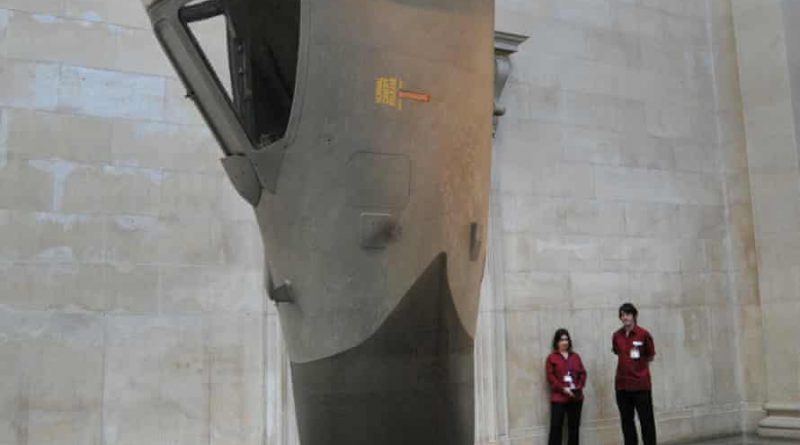
Installations such as Gregor Schneider’s Die Familie Schneider (2004), which recreated unsettling domestic environments, or Fiona Banner’s suspended jet installation at Tate Britain in 2010, exemplify immersive and disruptive approaches.
Similarly, Pipilotti Rist’s installation involving suspended garments and Roger Hiorns’ chemically altered interior space highlight the diversity of contemporary practice. These works are documented in exhibition records and critical reviews, reinforcing their place in recent art discourse.
The boundary between documentation and narrative is further complicated in projects like Emily Jacir’s Where We Come From (2001–03), which involved fulfilling everyday requests for Palestinians unable to travel. The work combined photographic evidence with performative elements, raising questions about authorship, access and representation.
Such projects illustrate how contemporary art can operate simultaneously as documentation and constructed narrative, complicating the critic’s role in verification and interpretation.Experiential installations have increasingly blurred distinctions between audience and artwork.
Projects such as Carsten Höller’s interactive environments, including overnight stays in gallery spaces, and temporary architectural transformations like the flooded sculpture deck at the Hayward Gallery, demonstrate a shift toward participatory engagement. These developments align with broader institutional trends toward immersive exhibition design, a phenomenon widely noted in museum programming over the past two decades.
Critical evaluation, however, remains constrained by time pressures and editorial demands. The requirement to assign ratings or definitive judgments within tight deadlines often contrasts with the evolving nature of perception. Critics acknowledge that some works reveal their significance gradually, while others lose impact upon reconsideration.
This temporal dimension complicates the notion of immediate critical authority.Certain exhibitions provide clearer interpretive pathways. Anni Albers’ textile works at Tate Modern and Richard Serra’s sculptures at the Grand Palais have been cited in critical literature as examples where material, scale and form communicate directly with viewers.
Similarly, Steve McQueen’s film Grenfell (2019), which documents the aftermath of the Grenfell Tower fire through aerial footage, has been widely discussed in critical and academic sources as an exercise in observational witnessing rather than interpretive commentary.
The evolution of critical perspective is also shaped by long-term engagement with artists. Paul Cézanne’s work, for example, has historically divided opinion among critics and audiences. Scholarly reassessment over decades has contributed to a broader appreciation of his approach to form and perception, though individual responses remain varied.
This reflects a broader pattern in art criticism, where initial resistance can give way to partial or conditional acceptance over time.The expansion of the global art market has further influenced critical practice. Increased financial investment, the rise of international galleries, and the growing prominence of art fairs have altered the ecosystem within which critics operate.
Reports by institutions such as Art Basel and UBS have documented the significant growth in global art sales over recent years, highlighting the commercial pressures that accompany cultural production. Despite these changes, the critic’s role remains distinct from market participation, focused on analysis rather than valuation.
Contemporary exhibition practices increasingly emphasize immersion and interactivity. Installations such as Tino Sehgal’s This Variation and Yayoi Kusama’s Infinity Rooms exemplify this trend, which has been widely documented in museum studies and curatorial literature.
These works prioritize sensory engagement and audience participation, reflecting broader shifts in how art is produced and consumed.At the same time, consistency and change among artists present ongoing challenges for evaluation. Some artists maintain a stable visual language, while others continuously alter their approach.
Figures such as Philippe Parreno, Ryan Gander and Dominique Gonzalez-Foerster have been noted in critical discourse for their ability to evolve while retaining identifiable conceptual frameworks. This dynamic complicates attempts to apply uniform criteria across different bodies of work.
Smaller-scale exhibitions, such as presentations of Georges Seurat’s seascapes at the Courtauld Gallery, demonstrate that even modest works can generate complex interpretive responses. These works, often characterized by subtle tonal variations and restrained composition, have been analyzed in art historical scholarship for their capacity to evoke psychological and atmospheric effects beyond their apparent simplicity.
The cumulative effect of decades of viewing, writing and revisiting exhibitions underscores the fluid nature of art criticism. Memory, context and repeated exposure all influence perception.
While artworks themselves remain materially unchanged, the frameworks through which they are understood continue to shift, shaped by personal experience and broader cultural developments.