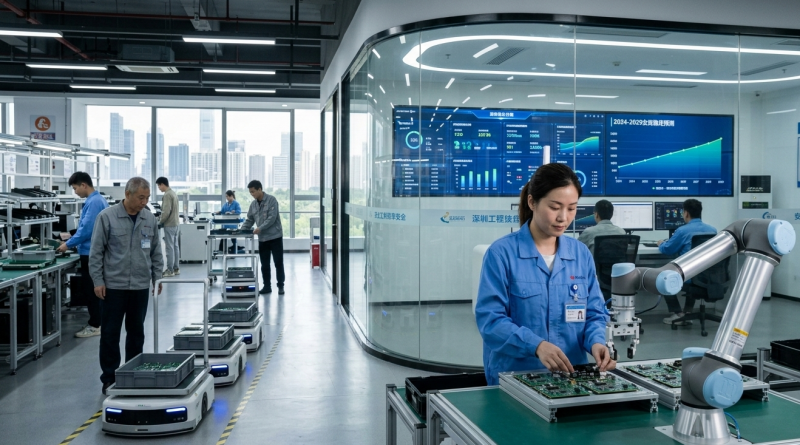
Employment resilience: China pledges labour stability despite AI disruption
BEIJING, March 7 — China will maintain stable employment and sustain positive labour market momentum over the next five years despite mounting challenges from labour market uncertainty and the rapid development of artificial intelligence, Human Resources Minister Wang Xiaoping said on Saturday
.Speaking to reporters on the sidelines of the annual parliamentary session in Beijing, Wang said authorities are working to expand job opportunities and mitigate pressures facing key segments of the workforce.Employment policy focusWang, who heads China’s Ministry of Human Resources and Social Security of China, said the government would prioritise employment policies aimed at supporting young people, university graduates and migrant workers, groups considered particularly sensitive to shifts in the labour market.
The comments were delivered during the annual meeting of the National People’s Congress, China’s top legislative body, where policymakers are outlining economic priorities and social policies for the coming years.Labour challenges emergeChina’s labour market has faced structural pressures in recent years, including demographic shifts, slower economic growth and evolving industrial demands. Officials have also acknowledged that technological advances, particularly in artificial intelligence and automation, could reshape employment patterns across multiple sectors.Wang said the government remains confident it can maintain employment stability while adapting to these changes, describing job creation and workforce support as key priorities in the country’s long-term economic strategy.
Focus on workforce inclusionThe minister said Beijing intends to strengthen measures that encourage hiring and expand employment channels, particularly for graduates entering the workforce and migrant labourers who make up a significant share of China’s urban employment base.Chinese authorities have frequently emphasised labour market stability as a cornerstone of economic and social policy, particularly during periods of structural transformation and technological change.