Cycling Resurgence Drives Focus on Low-Cost Bike Maintenance Amid Fuel Pressures
“Basic maintenance is one of the most satisfying ways of getting to know your bike.”
Rising fuel costs and supply disruptions are prompting renewed interest in cycling as a practical transport alternative, with increased attention on maintaining older bicycles to extend their usability.
While cycling cannot fully replace car travel, it is emerging as a cost-effective option for short-distance trips, particularly for commuting segments and local errands.Secondhand bicycles are increasingly being viewed as viable assets in this shift.
Older models, particularly those manufactured in the 1980s and 1990s, are often more durable and easier to repair than newer designs. Their lower resale value also reduces theft risk. Online marketplaces and community-run repair workshops continue to provide access to refurbished bicycles at relatively low cost, lowering the entry barrier for new users.
Basic maintenance remains central to ensuring functionality and safety. Core components requiring regular attention include the chain, brakes and tyres. These elements are subject to wear and degradation, particularly in bicycles that have remained unused for extended periods.
Routine checks can be conducted with minimal tools, typically limited to a spanner and Allen keys, while more complex servicing can be handled by local repair shops or community organisations.
Tyre condition is a primary consideration. Adequate inflation is necessary for efficient riding, with recommended pressure levels typically indicated on the tyre sidewall. Prolonged inactivity can lead to deterioration of inner tubes, increasing the likelihood of air leaks.
External signs such as cracking or worn tread indicate the need for replacement. Wheel integrity should also be assessed, as broken or loose spokes can compromise structural stability.
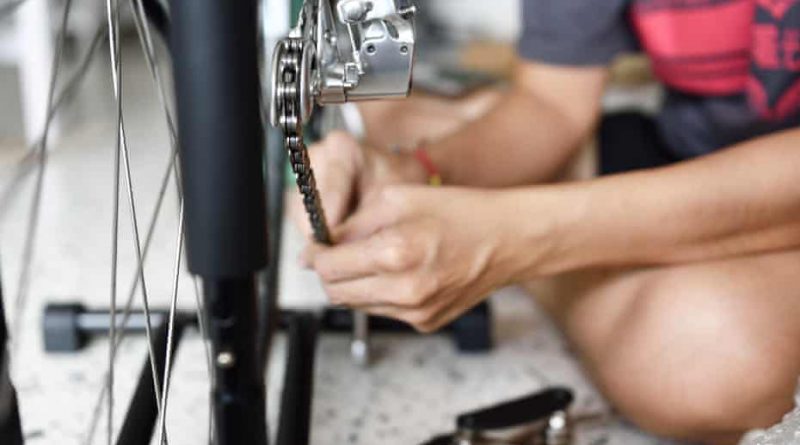
Chain maintenance is another critical factor. Accumulated dirt and residue can be removed using water and a cloth or brush, followed by careful drying and application of lubricant. Over-application of lubricant is discouraged, as it can attract additional debris.
While minor surface rust may not impair function, stiffness or corrosion within the links suggests replacement is necessary. Chains, along with cables and tyres, are designed as consumable components and typically require periodic renewal.Brake performance must be verified prior to use.
Insufficient stopping power or loose lever response may indicate the need for cable adjustment. Noise during braking can signal contamination on contact surfaces. The type of braking system rim or disc determines the complexity of maintenance, with rim brakes generally allowing easier adjustment.
Disc brake systems, while more advanced, often require professional servicing.Gear systems also require inspection where applicable. Difficulty in shifting or irregular movement across gears may point to alignment issues or wear in the derailleur mechanism.
While minor adjustments can be undertaken by users with guidance, persistent issues are typically resolved through professional tuning.Ergonomic setup plays a role in rider safety and comfort. Seat height should allow near-full leg extension at the lowest pedal position, reducing strain on joints.
Incorrect saddle angle or inadequate cushioning can lead to discomfort over time, although initial soreness is common among new riders. Handlebar configuration also affects posture, with more upright positions generally improving comfort for non-competitive use.Route planning is an additional factor influencing the uptake of cycling.
Navigation tools such as Google Maps and Komoot provide access to cycle-friendly routes, including designated bike lanes and lower-traffic streets. Public authorities in many regions have also developed cycling maps to support safer travel.For new or returning cyclists, confidence-building is often supported through group riding initiatives.
Local cycling clubs and community groups organise guided rides on quieter routes, offering an accessible entry point for individuals unfamiliar with road cycling conditions. These programmes are typically low-cost or free and serve both social and practical functions.
The broader shift toward cycling reflects both economic pressures and behavioural adaptation.
Maintenance knowledge, combined with access to affordable equipment, is enabling more individuals to incorporate bicycles into daily transport routines.