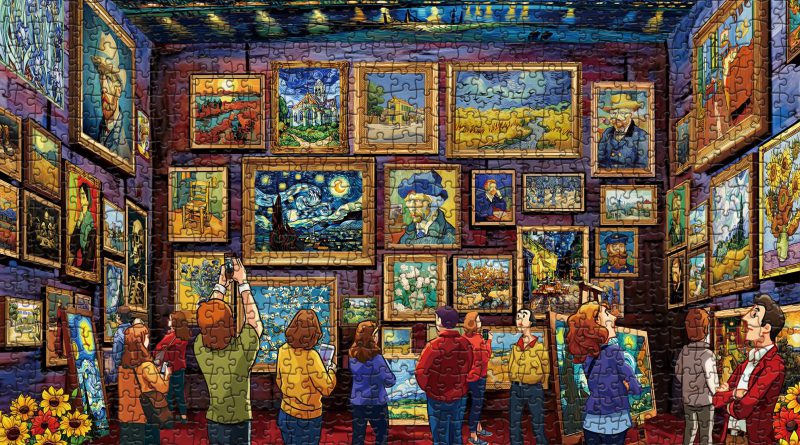
From Pastime to Therapy: How Jigsaw Puzzles Are Emerging as a Low-Tech Antidote to Modern Anxiety
“Every time I successfully place a piece, I get a little rush and a sense of achievement.”
What began as a casual attempt to pass time has evolved into a sustained coping mechanism for managing stress, reflecting a broader shift toward analogue activities in an increasingly screen-dominated environment.
A personal account of taking up jigsaw puzzles highlights how a traditionally overlooked hobby can serve as an effective tool for mental focus and emotional regulation.
The experience began with the rediscovery of a 1,000-piece puzzle depicting Agatha Christie, found during a period of domestic inactivity. Initially approached as a minor diversion, the activity quickly became habitual.
Completion of the puzzle extended over several weeks, with sessions varying from a few minutes to multiple hours, suggesting a flexible engagement pattern compatible with fluctuating schedules.The appeal of puzzling was attributed to its incremental reward structure.
Each correctly placed piece produced a measurable sense of progress, reinforcing continued engagement. This process-driven satisfaction contrasts with more outcome-oriented activities, shifting focus toward sustained attention rather than completion speed.
The adoption of the activity coincided with a period of significant personal transition, including a change in employment status, relocation and marriage within a short timeframe. These events contributed to heightened anxiety and a perceived loss of control.
Within this context, the structured and predictable nature of a jigsaw puzzle provided a stabilising counterpoint. The finite scope of the task and the clarity of its objective appeared to mitigate uncertainty, offering a contained environment in which progress could be easily tracked.
Previous attempts to manage stress through conventional methods had yielded limited success. Activities such as walking and reading were associated with distraction or rumination, while screen-based entertainment often led to divided attention.
Practices such as meditation and yoga proved difficult to sustain due to restlessness. In contrast, puzzling required continuous visual and tactile engagement, reducing the likelihood of multitasking and limiting exposure to digital interruptions.
The physical aspect of handling puzzle pieces, combined with the need for visual concentration, contributed to a form of enforced mindfulness. Unlike structured mindfulness exercises, which often require deliberate practice, puzzling achieved similar effects indirectly by demanding focus on a single, repetitive task.
The absence of screens was identified as a key factor, particularly in a daily routine otherwise dominated by digital interfaces.Following the initial experience, additional puzzles were acquired, though repetition of completed puzzles remained part of the routine.
This suggests that familiarity does not diminish the activity’s effectiveness, and may in fact reinforce its calming properties. Consideration was also given to practical adaptations, such as the use of storage mats, to accommodate the spatial demands of ongoing puzzles.
The activity’s broader relevance emerged through social interaction, when peers in a similar age group expressed comparable interest in puzzling. This indicates that the perception of jigsaw puzzles as a children’s activity may no longer reflect actual usage patterns.
Instead, the hobby appears to be gaining acceptance among adults as a low-cost, accessible form of stress relief.The account underscores a wider behavioural trend in which individuals seek offline alternatives to manage cognitive overload.
As work, communication and entertainment increasingly rely on digital platforms, activities that provide sustained focus without technological mediation are gaining renewed significance.
Jigsaw puzzles, by combining simplicity with engagement, illustrate how traditional pastimes can adapt to contemporary needs without modification.