In a Desert Community of 120, a Failed Banana Bread Led to a 20-Year Story
“The banana bread was terrible, but the kindness behind it was unforgettable.”
When Gillian Kennedy accepted a teaching position in the remote Mulan Aboriginal community in Western Australia’s Kimberley region in 2007, she expected professional challenge and personal isolation, not the beginning of a lifelong partnership.
At the time, Kennedy had been single for several years and had recently returned to Sydney after spending a year volunteering in a village in Bangladesh. Looking for a new direction, she took up a teaching role in Mulan, a small desert community located between Broome and Alice Springs, with a population of around 120 people.
The transition proved difficult. While she got along well with her housemate Kylie and formed friendships with nurses and residents from nearby communities, the absence of transport and the remoteness of daily life created a strong sense of loneliness. Weekends were often spent working, and the distance from city life became emotionally challenging.
During her first school term, Kennedy frequently heard about Wade Freeman, the coordinator of a nearby Indigenous protected area programme working with the Paruku Rangers. Community members spoke of him often, but he was away and they did not meet until the beginning of her second term.
After returning briefly to Sydney for school holidays, Kennedy said she was uncertain whether she wanted to continue living in the desert. She had committed to the teaching role for two years, but the emotional and physical isolation made her reconsider.
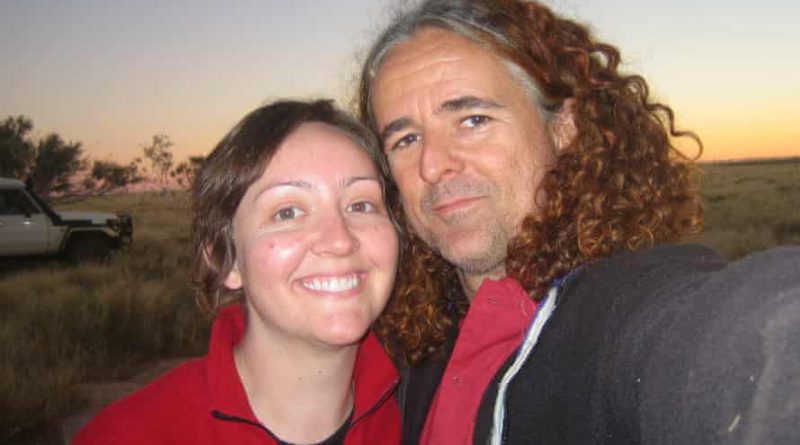
A few days after returning for term two, she met Freeman for the first time at the local community store.She remembers him as immediately warm and approachable, with striking wild red hair and an easy sense of kindness. He invited Kennedy and her housemate to his home for afternoon tea the following Saturday.
That visit became a turning point.Freeman had a small vegetable garden outside his house and music playing inside — a mix of The Cat Empire and French songs that matched Kennedy’s own taste. Their conversation quickly moved beyond small talk. He spoke about volunteering in Timor-Leste and his postgraduate studies in community development, subjects that resonated deeply with Kennedy’s own values and experiences.
In the kitchen, he was baking banana bread.Kennedy recalls that the bread itself was not particularly good. But the gesture mattered more than the result. Watching someone bake, share food, and create warmth in such a remote place left a stronger impression than perfection ever could.
She said it was in that moment she realised Freeman was someone capable, thoughtful and independent — someone whose life reflected the kind of values she admired.Soon after, Freeman offered to take Kennedy and Kylie to a nearby lake using his Toyota Troopy and a kayak.
They packed a picnic and spent the evening watching the sunset over the vast Paruku lake system, an area known for its seasonal water changes and rich birdlife.That year, the lake was full. Kennedy described it as one of the most beautiful landscapes she had experienced alive with birds, stillness and open skies. They kayaked to quiet camping spots, spent evenings outdoors, and built the kind of friendship that grows naturally in places where time moves differently.
Their relationship deepened through ordinary moments.One evening, Kennedy mentioned a documentary she wanted to watch on television. Freeman invited her over, made chai, and they watched it together. He invited her back the next day to watch more videos. That evening, the power went out.In the darkness, Freeman lit candles.
It was there, in the quiet of a desert blackout, that they shared their first kiss.Kennedy said she had not expected to find a partner at that point in her life, particularly not in such a remote place. But what drew her in was not simply romance it was the life Freeman had created around himself.
She said one of the qualities she came to love most was his ability to create meaningful experiences for others. In Mulan, he organised outdoor film nights by the lake, setting up a projector screen powered by a generator so the community could gather under the stars.
Though naturally introverted, Kennedy said Freeman expressed affection through acts of care and shared experience rather than words. Those gestures made life in the desert not just manageable, but beautiful.Instead of leaving after two years, she stayed longer.In 2009, Freeman accepted a job in Oecusse, a remote region of Timor-Leste.
The couple moved there together, and it was during that period that Kennedy became pregnant with their son, Bertie.They later relocated to Broome in Western Australia to raise their child, where they spent the next 12 years before eventually moving to Fremantle, where they now live.
Kennedy describes Freeman as an exceptional father practical, inventive and deeply engaged. In their backyard, he built a large jungle-style playground complete with swings and rope bridges through the bamboo for their son.
She compares him to MacGyver, someone who can fix almost anything and create something meaningful out of very little.Now approaching two decades together, Kennedy says the foundation of their relationship remains rooted in shared values: social justice, environmental sustainability, community-building and mutual support.
She says trust has always been central. They have consistently supported each other’s ambitions and created a life based on security rather than performance.Looking back, Kennedy believes their meeting could only have happened in a place like Mulan.
It was never going to be a city bar or a crowded social event. It happened in a desert community of just 120 people, where a failed banana bread and an invitation for tea quietly changed the course of two lives.