Beauty Pressures, Botox Talk and the Politics of Appearance Are Reshaping Modern Friendships
“Beauty anxiety becomes most powerful when it feels private, but much of it is produced by systems that profit from making people feel unfinished.”
Conversations about Botox, weight-loss drugs and anti-ageing treatments are increasingly becoming part of everyday friendships, reflecting how beauty standards are shaping not only personal choices but also social relationships.
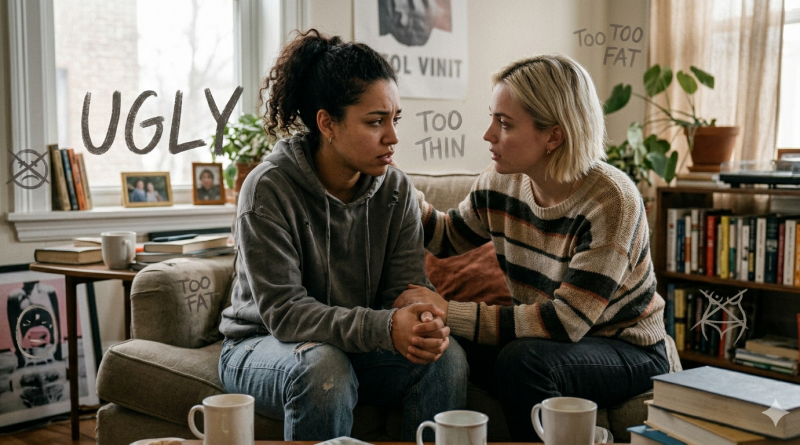
What was once considered private insecurity is now often discussed openly in group chats, at dinners and across social media, where conversations about wrinkles, body shape, Ozempic, fillers and cosmetic procedures have become common forms of bonding. Writers and cultural critics argue that these exchanges reveal a broader social pattern in which appearance anxiety is normalised and reinforced through routine conversation.
Author and cultural critic Tressie McMillan Cottom has described the rise of GLP-1 weight-loss drugs as part of what she calls the “everyday eugenics” of modern beauty culture, arguing that social pressure around thinness and desirability is increasingly framed as personal responsibility rather than structural coercion.
The visibility of drugs such as Ozempic and the mainstreaming of cosmetic procedures like Botox have intensified public conversations around ageing and body image. Rather than being confined to celebrity culture, these pressures now shape ordinary friendships, where appearance-based self-criticism often functions as a form of emotional intimacy.
Beauty journalist Val Monroe says she does not try to directly challenge friends who express dissatisfaction with their appearance because self-criticism is often driven by deeply internalised beliefs.“I will never be more persuasive than the critical voice that lives in their head,” Monroe says, explaining that she instead shares how she manages her own insecurities.
Her approach focuses less on correcting others and more on creating emotional recognition through shared vulnerability.That response reflects a broader shift among writers and therapists who suggest that reassurance alone often fails to address the deeper issue.
Simply telling someone they are beautiful may not challenge the social systems that taught them beauty determines value in the first place.
Virginia Sole-Smith, writer of the body liberation newsletter Burnt Toast, recommends what she calls a “hate the game, not the player” mindset. Instead of arguing over whether someone should feel insecure, she encourages redirecting the discussion toward the broader culture that produces those insecurities.
She suggests responses such as, “Wouldn’t it be cool if we didn’t have to devote so much time and money to all of this?”—a framing that shifts blame away from the individual and toward the beauty economy itself.
This perspective aligns with a growing body of criticism that links modern beauty standards to larger systems of inequality. Scholars and activists argue that ideals around thinness, youthfulness, symmetry and skin quality are deeply connected to histories of white supremacy, colonialism, sexism and capitalism.
Writer Moshtari Hilal, author of Ugliness, argues that friendships should be able to sustain deeper questions about why appearance matters so much.
Rather than offering automatic reassurance, she asks friends to reflect on the social meaning attached to beauty. Questions such as whether respect, love or dignity should depend on youthful skin or facial symmetry push the conversation beyond compliments and toward politics.
Hilal argues that discomfort in these discussions is necessary because beauty standards are not neutral preferences but social hierarchies with real consequences.Research supports concerns about the impact of what is often called “appearance talk.”
Studies have shown that both participating in and listening to negative commentary about bodies and faces can increase body dissatisfaction and anxiety. These effects can contribute to harmful dieting, obsessive self-monitoring and excessive spending on beauty interventions.
The pattern is familiar across generations. It can appear in a mother describing herself as “bad” for ordering dessert, or in peer groups where self-criticism becomes a form of social belonging.
Popular culture has repeatedly reflected this dynamic, including scenes such as the body-focused bonding rituals depicted in Mean Girls.Critics say the danger lies in how normal these conversations have become.
When dissatisfaction is repeated often enough, it begins to feel like common sense rather than cultural conditioning.“These ideas are contagious,” Hilal says.
Some writers compare resisting these patterns to the feminist practice of consciousness-raising, where personal experiences are connected to political structures. Discussing ageism in anti-ageing culture or questioning the logic behind anti-fatness may not directly change policy, but it can help people externalise shame and recognise that insecurity is often socially produced rather than individually earned.
Still, not every friendship can or should become a political seminar. Some people may want affirmation rather than analysis, and some conversations around appearance can be emotionally triggering for others.Sole-Smith says it is valid to set boundaries when beauty talk becomes harmful. Telling a friend, “I love you, but I’m just not the friend for Botox talk,” can be a necessary form of self-protection rather than rejection.
That boundary reflects a growing recognition that emotional health sometimes requires distance from relationships built around constant self-surveillance.Hilal says she finds it difficult to remain close to people whose fear of ageing or “ugliness” turns into active reinforcement of the same harmful standards.
If insecurity produces cruelty rather than compassion, she believes stepping back from the relationship can be justified.The broader debate reflects a cultural shift in how beauty is understood. Cosmetic procedures and aesthetic medicine are no longer simply consumer choices; they increasingly function as markers of morality, discipline and self-worth.
In that environment, friendships become one of the main places where these pressures are either reproduced or resisted.Whether the response is debate, empathy, silence or boundaries, the conversation around beauty standards is no longer only about appearance.
It is increasingly about power, belonging and the question of who gets to feel acceptable without having to earn it.