
After Golders Green Attack, Muslim-Jewish Groups Say Community Ties Must Outlast Fear
“If you increase connectivity, you decrease hostility. The key is to recognise we are all ordinary human beings.”
Muslim and Jewish community organisations in Britain say recent violence targeting Jewish residents in north London has reinforced the importance of long-term interfaith work, even as rising fear and tensions linked to the conflict in the Middle East make that work more difficult.
The latest concerns followed the alleged attempted murder of two Jewish men in Golders Green, an area of north London with a large Jewish population. Community leaders said the incident has deepened anxiety within British Jewish communities already facing heightened tensions since the October 7, 2023 attack on Israel and the subsequent war in Gaza.
Laura Marks, co-founder of Nisa-Nashim, a Jewish-Muslim women’s network established eight years ago, said repeated incidents of violence have left many community organisers emotionally exhausted.“I feel punch drunk,” Marks said. “Every day it feels like there is something else. It’s relentless.”
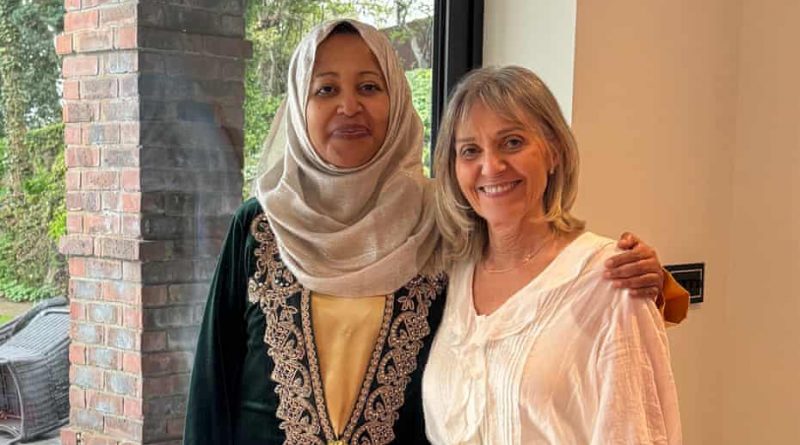
Nisa-Nashim was created to bring Jewish and Muslim women together through social gatherings, dialogue and community events aimed at reducing distrust and stereotypes between the two faith communities. The organisation’s founders said the goal was to strengthen local relationships that could withstand political tensions generated by international conflict.
Marks said incidents such as the Golders Green attack can feel discouraging for groups that have spent years working to improve community cohesion.“I do sometimes despair,” she said. “But if I don’t believe I can make things a bit better, then what am I doing?”She said the purpose of such organisations is not to address violent extremism directly, but to counter the wider social consequences of conflict, including fear, suspicion and growing separation between ordinary people.
“A lot of this work is not designed to address extreme radicalisation,” she said. “The aim is to help ordinary Jews and Muslims acknowledge their similarities as well as their differences, whether culture, history, scripture or food.”According to Marks, the conflict that followed the October 2023 Hamas attack on Israel made this work significantly harder.
As the humanitarian crisis in Gaza intensified and public debate in Britain became more polarised, support for interfaith initiatives weakened.She said some volunteers withdrew after experiencing online abuse or extremist threats, while others felt demoralised or faced pressure from family members who questioned participation in cross-community projects.
At present, she said, the immediate focus for many Jewish communities is physical security.“Right now, all people can hear is walls, police, security,” Marks said. “I understand that. It’s like a hierarchy of needs: if we are not safe, we can’t do anything else.”But she warned that permanent separation cannot be the long-term answer.“Long term, we can’t live behind walls,” she said.
“We have to build relationships.”Mohammed Amin, co-chair of the Muslim Jewish Forum of Greater Manchester, said he felt “horror and dismay” when he learned of the Golders Green attack. The forum, established more than two decades ago, brings Muslim and Jewish communities together through shared social events and dialogue.Amin said its work has produced practical improvements in local community relations by encouraging understanding and trust.
“People get to know each other,” he said. “We have seen real friendships emerge.”The group regularly organises visits, meals and cultural exchanges. Amin pointed to an upcoming visit to a kosher-halal fish and chip restaurant in Leeds, staffed by both Muslims and Jews, as an example of how ordinary social interaction can reduce suspicion and build familiarity.“You can’t change the course of international politics,” he said.
“But these things help change the atmosphere and defuse tension.”Amin, a businessman and former Conservative Party member who is now affiliated with the Liberal Democrats, said responsibility for improving cohesion cannot rest entirely with charities and volunteers. He argued political leadership is essential in shaping public attitudes.“Some politicians in our society trade on sowing division and resentment,” he said.
He cited comments made by Reform UK leader Nigel Farage following the Southport riots in 2024 as an example of rhetoric that can inflame tensions rather than reduce them.“If politicians are going to pour petrol on the flames, do not be surprised by the outcome,” Amin said.
Community organisations say funding for interfaith programmes remains limited despite growing concern over social division. Marks said government investment in cohesion work is often overlooked compared with visible security responses, despite its importance in preventing long-term fragmentation.“At the core of what we do is mixing people, bringing people together,” she said.
“This is social cohesion at the coalface.”She argued that while police protection and community security measures are necessary, they should not replace investment in trust-building between communities.Amin said tensions between Jewish and Muslim communities in Britain often rise and fall depending on developments in the Middle East, but local relationships can help reduce the impact of those external pressures.
For him, interfaith work is less about solving geopolitical conflict and more about preserving the everyday social fabric of British cities.“If you increase connectivity, you decrease hostility,” he said. “The key is to recognise we are all ordinary human beings.”


